#nosič#NASA#Apollo
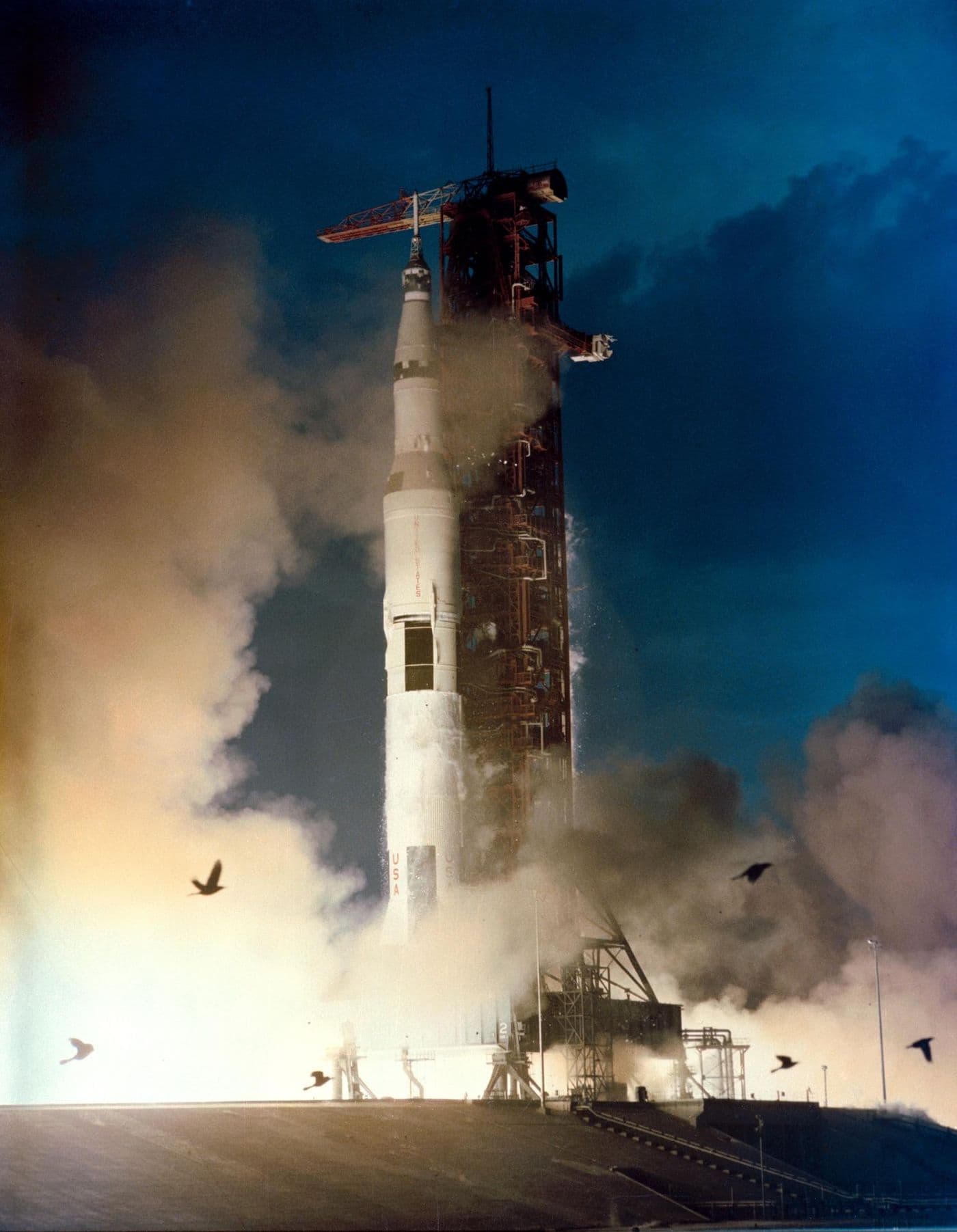
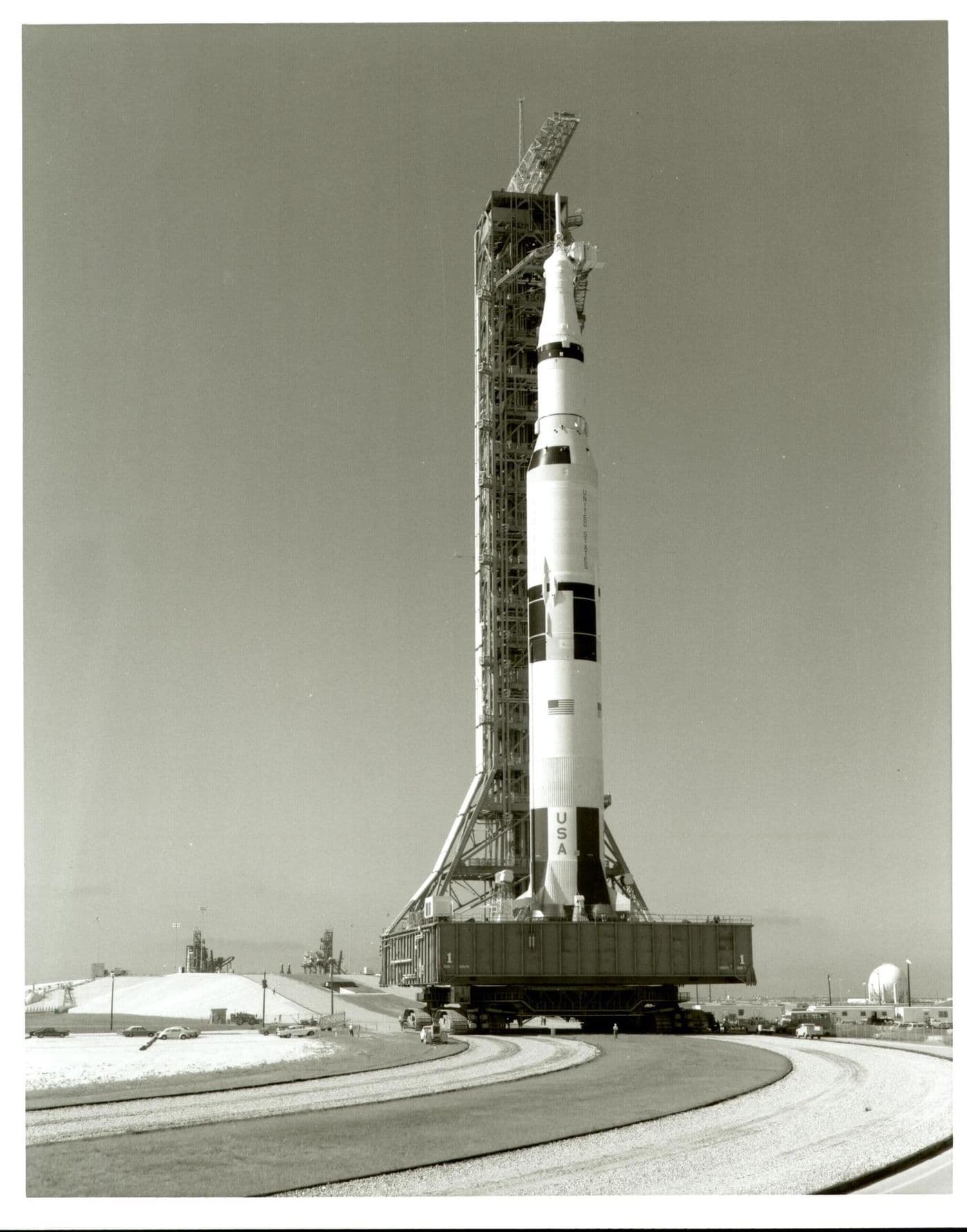
Saturn V was developed by Wernher von Braun's team at the Marshall Space Flight Center. It was a three-stage rocket capable of sending more than 43 tons of payload to the Moon — the combined lunar and service module together with the crew.
Throughout its career (1967–1973), Saturn V never suffered a failure that endangered a crew. Even so, every flight was accompanied by a suite of backup systems — from a triple-redundant guidance computer to the launch escape tower atop the Apollo spacecraft.
Rocket: Saturn V
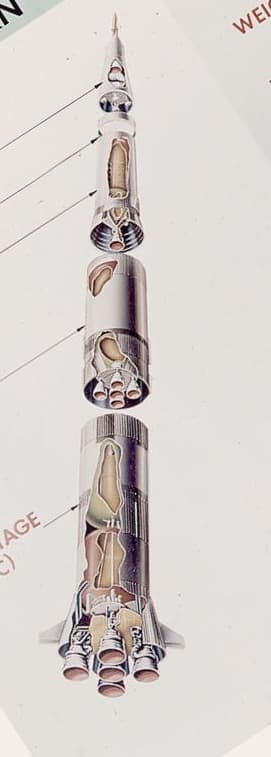
Home to the crew for the entire journey to the Moon and back.
- 1
- 2
- 3
- 4
- 5
Saturn V by the Numbers
- Height
- 110,6m
- Liftoff mass
- ~2 970 000kg
- Thrust at liftoff
- ~34,5MN
- Number of stages
- 3
Did you know
- The first stage's F-1 engines burned more than 12 tons of propellant per second.
- The complete rocket with the Apollo stack stood 110.6 meters tall — eighteen meters taller than New York's Statue of Liberty, including its pedestal.
- Saturn V remains the heaviest rocket ever to successfully carry a human crew beyond Earth orbit.
Follow us
Follow us on social media
New plates, trivia and behind-the-scenes updates as soon as they are ready.
Related entries
Gallery
Detailed breakdowns
Sources & further reading
- NSSDCA Master Catalog (NASA) — technical parameters of the Saturn V launch vehicle (Apollo 11 mission).
- Wikipedia: Saturn V — base structure of the article, CC-BY-SA 4.0.
- NASA History Office — Apollo Program.
Spaceflightpedia. (n.d.). Saturn V. Retrieved 9 October 2026, from https://spaceflightpedia.com/article/saturn-v
article text — CC-BY-SA · ◉ NASA photography — public domain · ✦ AI illustration — marked, generated from sources