#explainer
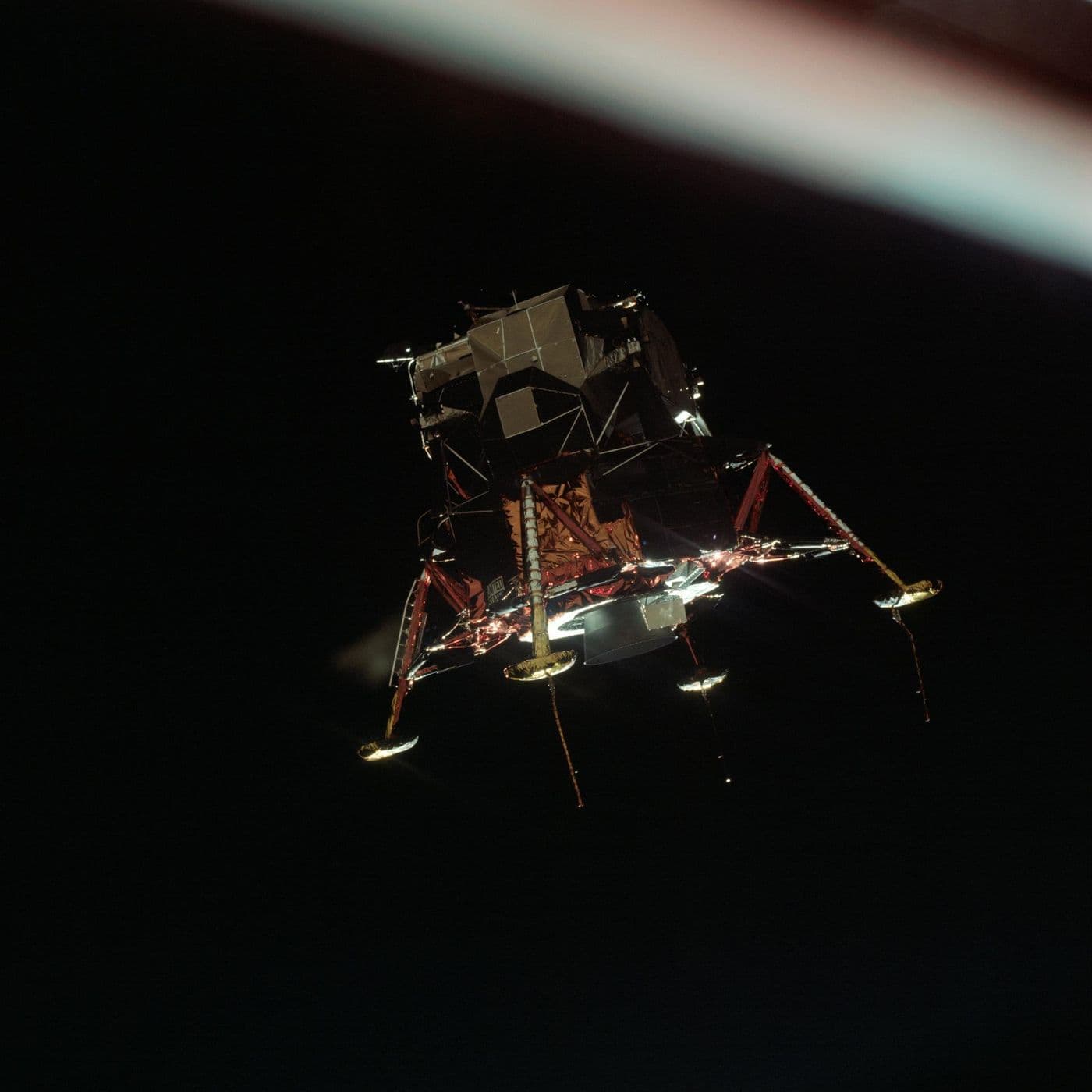
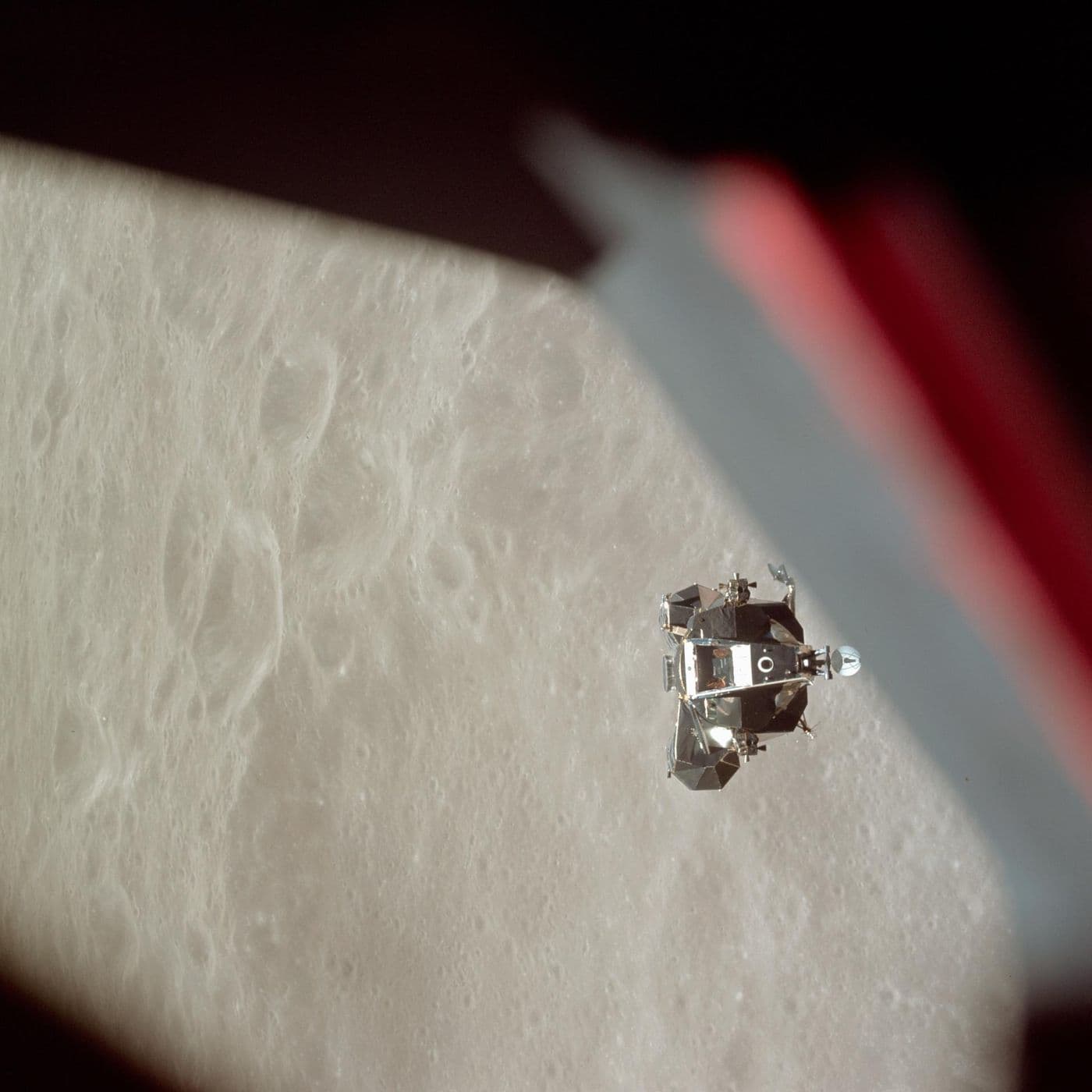
Each part of the Apollo spacecraft had a specific job. The descent stage stayed on the Moon, the ascent stage returned the astronauts to the mother spacecraft and was then discarded. Only the command module was equipped for atmospheric return.
Mass no longer needed
Bringing back landing legs, empty tanks and expended equipment would require more propellant and a larger launcher. Dividing the mission among specialized components allowed Saturn V to carry the crew and equipment to the surface. Samples and important records were transferred before separation.
Lunar insulation is not a re-entry shield
The module's thin thermal blankets protected it in a vacuum. They were not designed for intense aerodynamic heating during Earth return. The command module had the appropriate shape, heat shield and parachutes. Bringing the crew home therefore meant returning them in that cabin rather than preserving every spacecraft component.
What actually came home
The crew transferred lunar samples and selected equipment into the returning spacecraft. The objective was to recover people and their work, not the complete machine. Launcher staging follows a related logic: a component may finish its task before the mission ends. Apollo was designed from the outset as a sequence of separable components.
Follow us
Follow us on social media
New plates, trivia and behind-the-scenes updates as soon as they are ready.
Key points
- Bringing back landing legs, empty tanks and expended equipment would require more propellant and a larger launcher.
- The module's thin thermal blankets protected it in a vacuum.
- The crew transferred lunar samples and selected equipment into the returning spacecraft.
Sources & further reading
- Technical overview of lunar-module construction, crew stations and systems.
- Division of functions between command, service and lunar modules.
Spaceflightpedia. (n.d.). Why did the whole lunar module not return to Earth?. Retrieved 17 October 2026, from https://spaceflightpedia.com/article/lunar-module-left-behind
article text — CC-BY-SA · ◉ NASA photography — public domain · ✦ AI illustration — marked, generated from sources
More questions on this topic
- Why did astronauts stand during the Moon landing?
- Why did the lunar module look wrapped in foil?
- How did astronauts launch from the Moon without a launch pad?
- How did the lunar module save Apollo 13?
- Why did the flag appear to wave on the Moon?
- Why are there no stars in Moon photographs?