#explainer
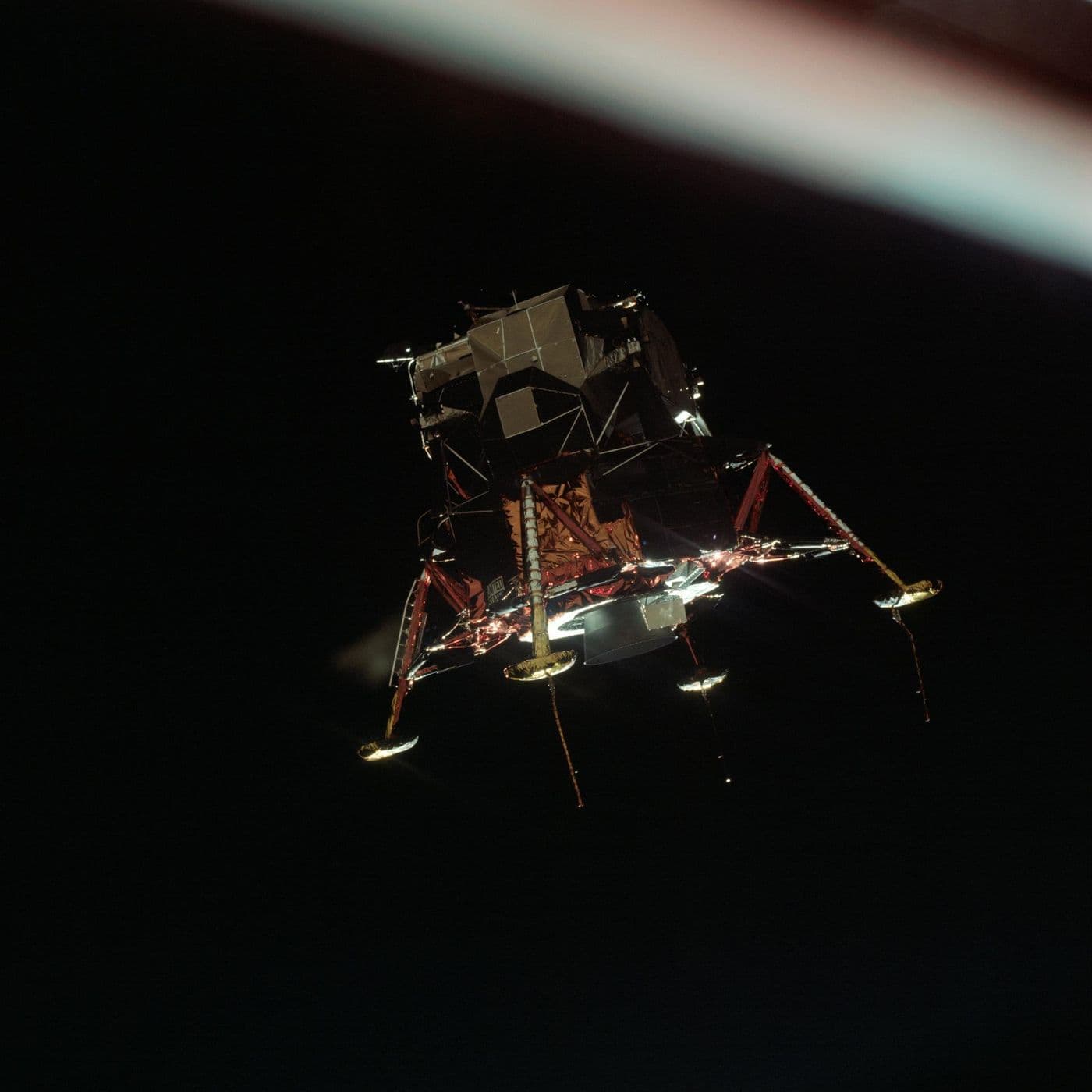
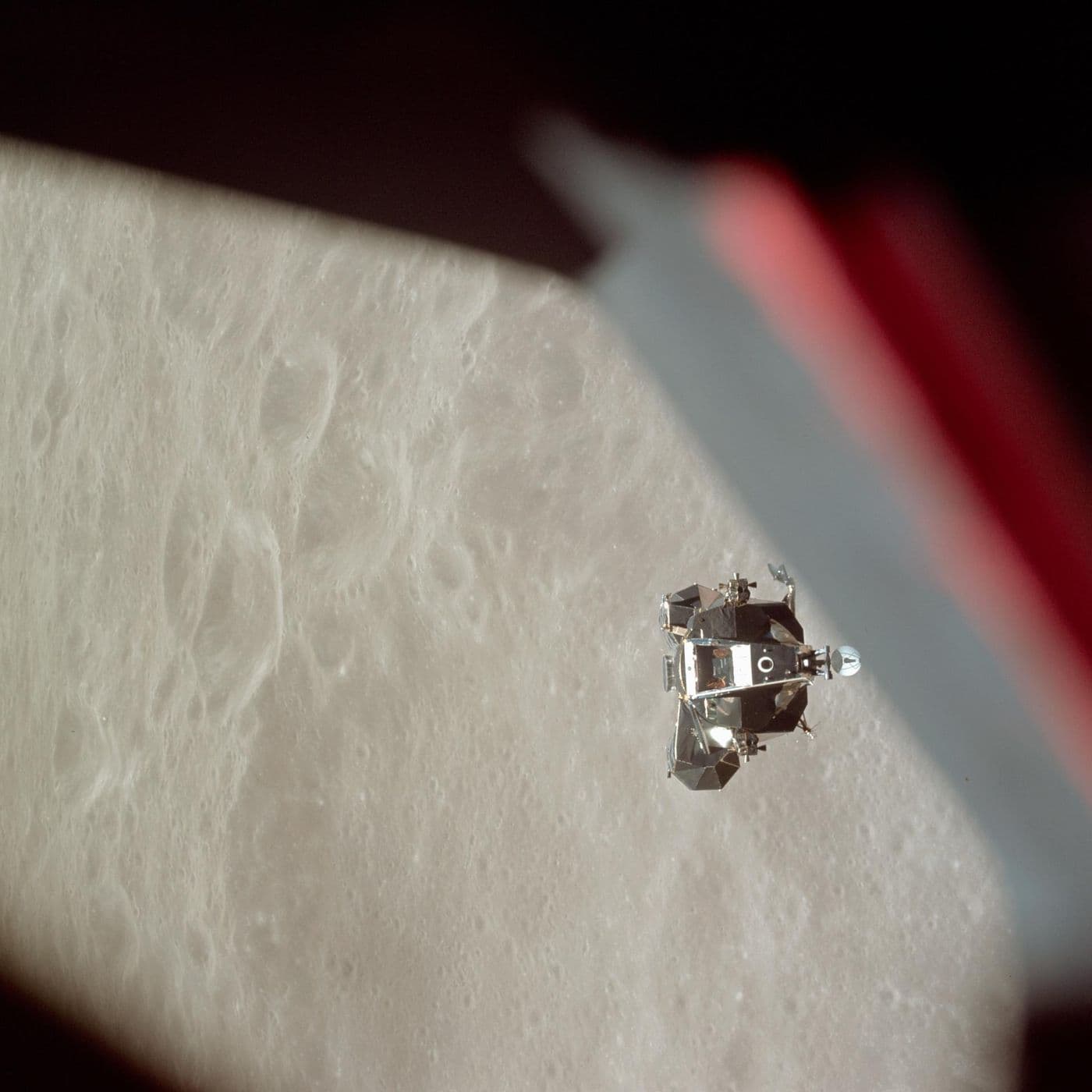
The lunar module's crinkled reflective surfaces were largely thermal protection rather than its load-bearing wall. Multilayer blankets helped limit radiative heat exchange. The actual structure, tanks and equipment were underneath.
Why the layers were so thin
There is no ordinary surrounding-air convection in a vacuum. Thin reflective layers with spaces between them can therefore limit radiative heat transfer effectively at low mass. Sunlit and shaded areas face different thermal conditions. Materials were selected according to location and expected heating.
Gold colour does not prove gold
The blankets used different metallized polymer films and other materials; some layers produced the familiar golden appearance. They were neither kitchen foil nor a single universal sheet. Since the module did not fly through Earth's atmosphere, it did not need an aircraft-like smooth aerodynamic exterior.
Why photographs can mislead about strength
A crinkled blanket reveals its own surface shape, not the thickness or layout of the structure underneath. Likewise, an appliance cover does not show how its internal frame carries loads. Comparing a lunar-module photograph with a technical cutaway is therefore useful. Load-bearing structure, pressure cabin and insulation are distinct parts with separate tasks.
Follow us
Follow us on social media
New plates, trivia and behind-the-scenes updates as soon as they are ready.
Key points
- There is no ordinary surrounding-air convection in a vacuum.
- The blankets used different metallized polymer films and other materials; some layers produced the familiar golden appearance.
- A crinkled blanket reveals its own surface shape, not the thickness or layout of the structure underneath.
Sources & further reading
- Technical overview of lunar-module construction, crew stations and systems.
- Thermal-blanket design and protection of different lunar-module regions.
- Inventory and preservation of historic equipment on the lunar surface.
Spaceflightpedia. (n.d.). Why did the lunar module look wrapped in foil?. Retrieved 17 October 2026, from https://spaceflightpedia.com/article/lunar-module-foil
article text — CC-BY-SA · ◉ NASA photography — public domain · ✦ AI illustration — marked, generated from sources
More questions on this topic
- Why did astronauts stand during the Moon landing?
- How did astronauts launch from the Moon without a launch pad?
- Why did the whole lunar module not return to Earth?
- How did the lunar module save Apollo 13?
- Why did the flag appear to wave on the Moon?
- Why are there no stars in Moon photographs?