#explainer
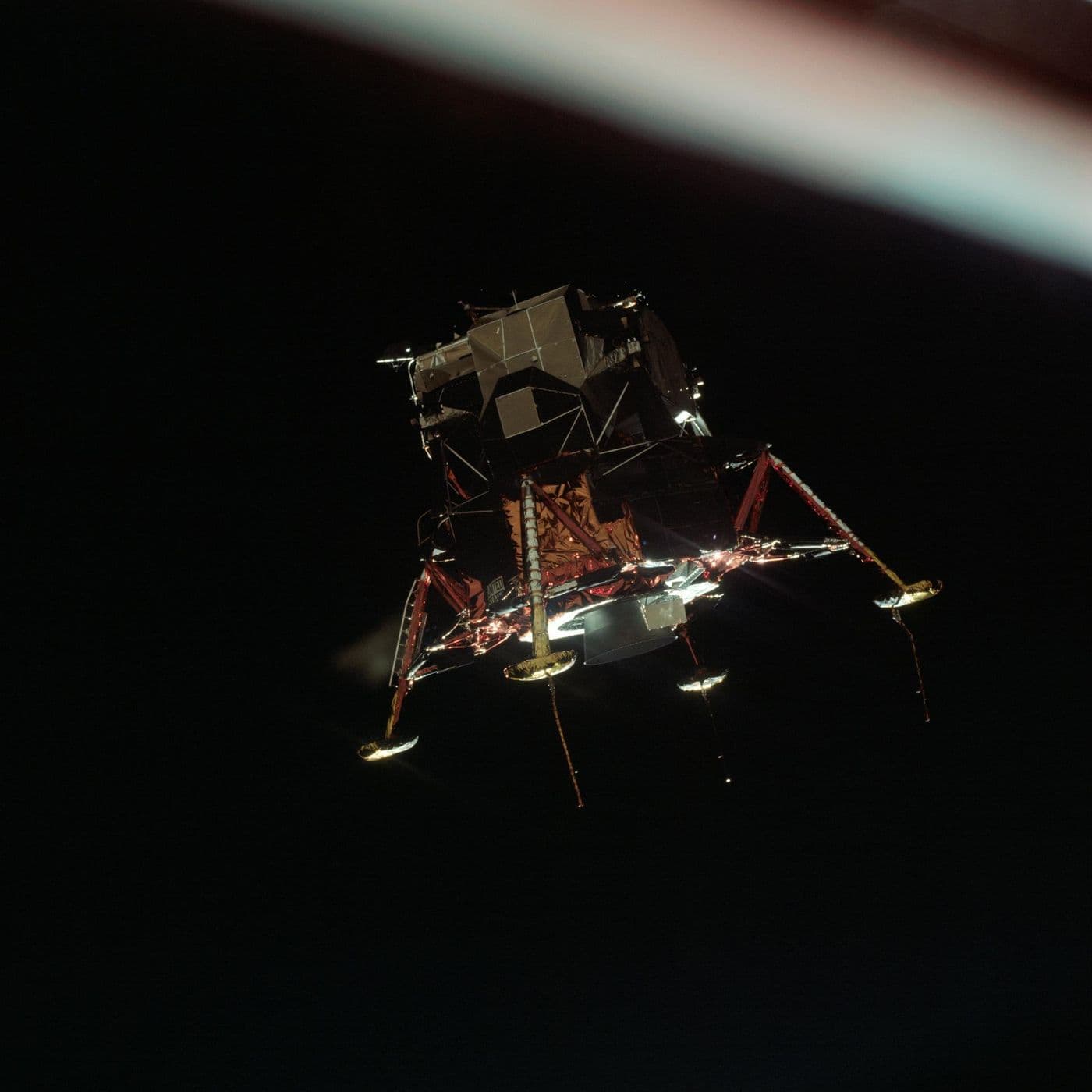
After a service-module oxygen-tank failure, the lunar module Aquarius provided independent life support and electrical power. Instead of landing on the Moon, it became a temporary lifeboat. The astronauts returned to command module Odyssey for the final passage through Earth's atmosphere.
A two-person system supporting three
The lunar module was designed for two astronauts and limited operation. Three people therefore had to conserve power and water. Mission control developed new procedures, including adapting command-module carbon-dioxide cartridges to Aquarius's system. An oxygen supply alone did not solve every problem.
Its engine helped shape the journey home
The lunar module's descent engine also performed important trajectory corrections. Aquarius lacked an atmospheric re-entry heat shield and was separated before the final return. The rescue combined independent hardware with crew and ground-team work; the module alone, without those procedures, would not have been enough.
Why shutting down Odyssey mattered
The command module had to remain usable for final return, when Aquarius could no longer help. Reducing its consumption preserved resources needed later. Near the end, the cabin had to be reactivated and the crew transferred into it. Deciding what to shut down and preserve was as important as the trajectory-correction burns.
Follow us
Follow us on social media
New plates, trivia and behind-the-scenes updates as soon as they are ready.
Key points
- The lunar module was designed for two astronauts and limited operation.
- The lunar module's descent engine also performed important trajectory corrections.
- The command module had to remain usable for final return, when Aquarius could no longer help.
Sources & further reading
- Accident sequence and use of the lunar module as a lifeboat.
- Crew, objectives and overview of the Apollo 13 rescue.
- Technical overview of lunar-module construction, crew stations and systems.
Spaceflightpedia. (n.d.). How did the lunar module save Apollo 13?. Retrieved 17 October 2026, from https://spaceflightpedia.com/article/apollo13-lunar-lifeboat
article text — CC-BY-SA · ◉ NASA photography — public domain · ✦ AI illustration — marked, generated from sources
More questions on this topic
- Why did astronauts stand during the Moon landing?
- Why did the lunar module look wrapped in foil?
- How did astronauts launch from the Moon without a launch pad?
- Why did the whole lunar module not return to Earth?
- Why did the flag appear to wave on the Moon?
- Why are there no stars in Moon photographs?