#Měsíc#NASA#Apollo
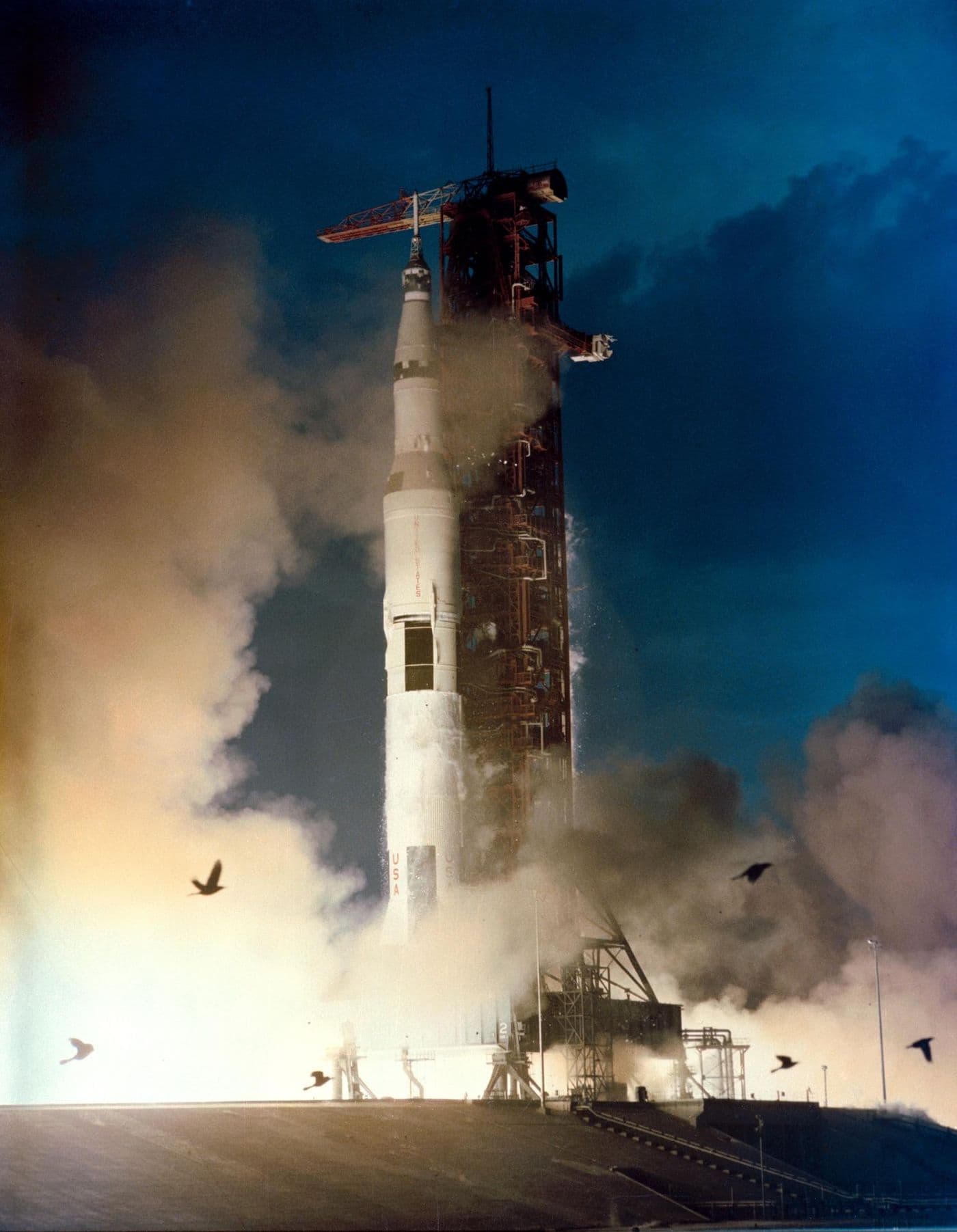
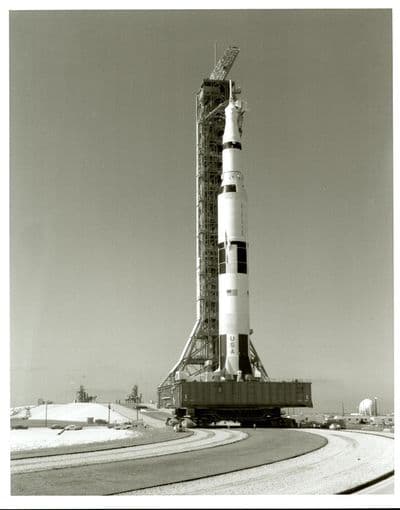
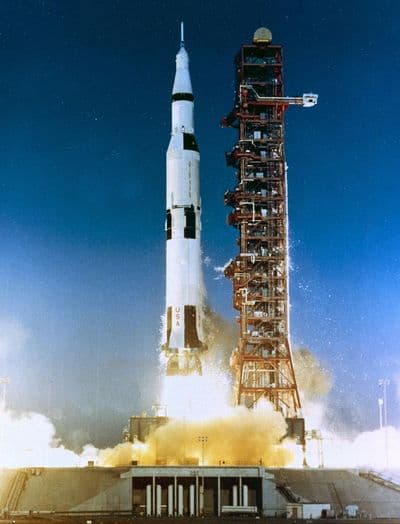
pollo 8 was the first time humans left Earth’s gravitational grip. On 21 December 1968 a Saturn V sent three astronauts toward the Moon, which they orbited ten times just 110 km above the surface.
Apollo 8 Crew
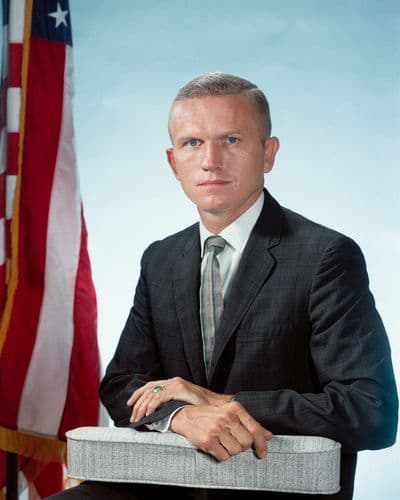 COMMANDERFrank BormanA veteran of Gemini 7 (1965, a two-week endurance flight and the first rendezvous in space). On Apollo 8 he was, somewhat unusually, not the most experienced crew member — that was Lovell. He fell briefly ill during the flight (likely a reaction to weightlessness) but still brought the mission home flawlessly.
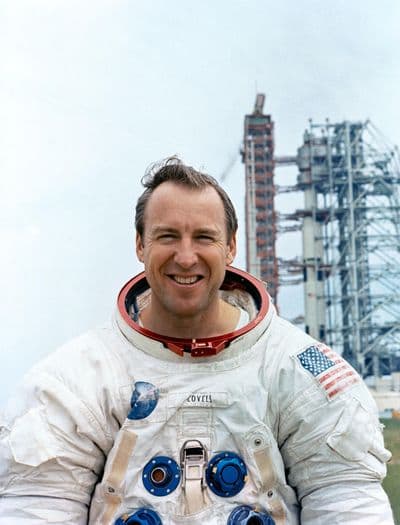 COMMAND MODULE PILOTJim LovellHe joined the crew in July 1968, replacing Michael Collins, who needed neck surgery. As navigator he used a sextant to verify the trajectory to the Moon in case contact with Earth was lost. He had already flown Gemini 7 and commanded Gemini 12 — making him the most experienced crew member on Apollo 8, despite not being in command.
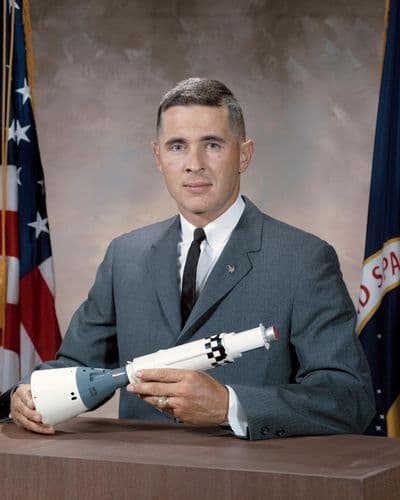 LUNAR MODULE PILOTWilliam AndersHe carried the title “lunar module pilot” only by the standard crew-position naming — Apollo 8 flew no lunar module. It was his first spaceflight. He took the Earthrise photograph, which became one of the most famous images of the 20th century.
The mission was boldly re-planned: a delay in the lunar module turned a low-orbit test into a leap straight to the Moon. A quarter of humanity watched the Christmas Eve broadcast, and Anders’ “Earthrise” became one of the most influential photographs of the 20th century.
Mission timeline
Select a phase to read what happened. Every chapter has its own detailed page.
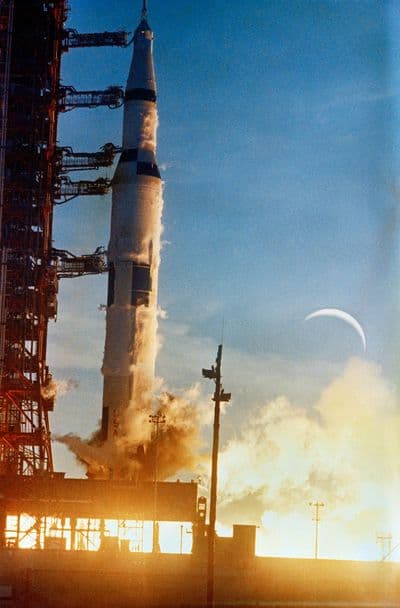
The bold decision to go straight to the Moon
Apollo 8 was originally planned to test the lunar module in low Earth orbit — in August 1968, less than four months before launch, NASA re-planned the mission because of the delayed module into a far bolder flight straight into lunar orbit, without a lunar module.
Read the chapter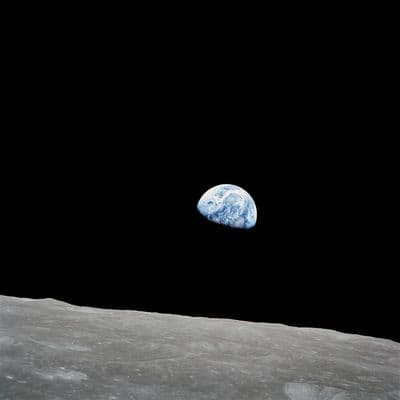
Ten orbits, Earthrise and a Christmas Eve reading from Genesis
The SPS engine ignited 69 hours, 8 minutes and 16 seconds after launch — on the far side of the Moon, out of contact with Earth — and burned for four minutes and seven seconds to place the ship into orbit. The crew later called it the longest four minutes of their lives.
Read the chapter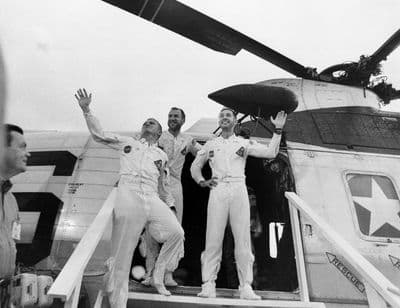
“Please be informed there is a Santa Claus” — the journey home
The most critical maneuver of the entire flight — the trans-Earth injection (TEI) burn — again took place on the far side of the Moon, out of contact. When the ship’s signal returned at the exact calculated moment, Lovell radioed CAPCOM Ken Mattingly: “Please be informed there is a Santa Claus.” Mattingly replied, “That’s affirmative, you are the best ones to know.”
Read the chapterMission in numbers
- Crew
- 3
- Launch
- 21. 12. 1968
- Splashdown
- 27. 12. 1968
- Duration
- ~6 dní
- Launch vehicle
- Saturn V (AS-503)
- Lunar orbits
- 10
- Top speed
- 10 822 m/s
- Max. distance from Earth
- 377 349 km
Follow us
Follow us on social media
New plates, trivia and behind-the-scenes updates as soon as they are ready.
Facts
- The mission was re-planned as a lunar flight less than four months before launch — because of the delayed lunar module.
- It was the first crewed flight of the Saturn V rocket — Apollo 4 had succeeded, while Apollo 6 suffered engine problems and did not meet all of its objectives.
- The crew were the first in history to leave Earth’s gravitational sphere of influence and see the far side of the Moon with their own eyes.
- The Earthrise photograph taken by Anders is among the most influential images of the 20th century and helped inspire the first Earth Day in 1970.
- On Christmas Eve the crew broadcast a reading from the Book of Genesis to what was then the largest television audience in history.
- Time magazine named the crew its “Men of the Year” for 1968 — a turbulent year scarred by assassinations, which, according to one telegram, they “saved.”
Related articles
Eyewitness account
“And from the crew of Apollo 8, we close with good night, good luck, a Merry Christmas, and God bless all of you — all of you on the good Earth.”
Sources & further reading
- NASA: Apollo 8 Mission Report, MSC-PA-R-69-1, 1969 — the primary source of mission data.
- Apollo Flight Journal (NASA) — communication transcripts and flight chronology.
- NASA Image and Video Library (images.nasa.gov) — mission photographs, public domain.
- Wikipedia: Apollo 8 — the starting structure of the article, CC-BY-SA 4.0.
- NSSDCA Master Catalog (NASA) — technical parameters of the spacecraft (COSPAR ID 1968-118A).
Spaceflightpedia. (n.d.). Apollo 8. Retrieved 9 October 2026, from https://spaceflightpedia.com/article/apollo-8
article text — CC-BY-SA · ◉ NASA photography — public domain · ✦ AI illustration — marked, generated from sources