#Měsíc#NASA#Apollo
The Apollo Program arose as a response to Soviet firsts in space and to Kennedy's May 1961 commitment to land a man on the Moon "before this decade is out." The path there led through the Mercury and Gemini programs, which proved out key techniques — orbital rendezvous, spacewalks, and extended stays in weightlessness.
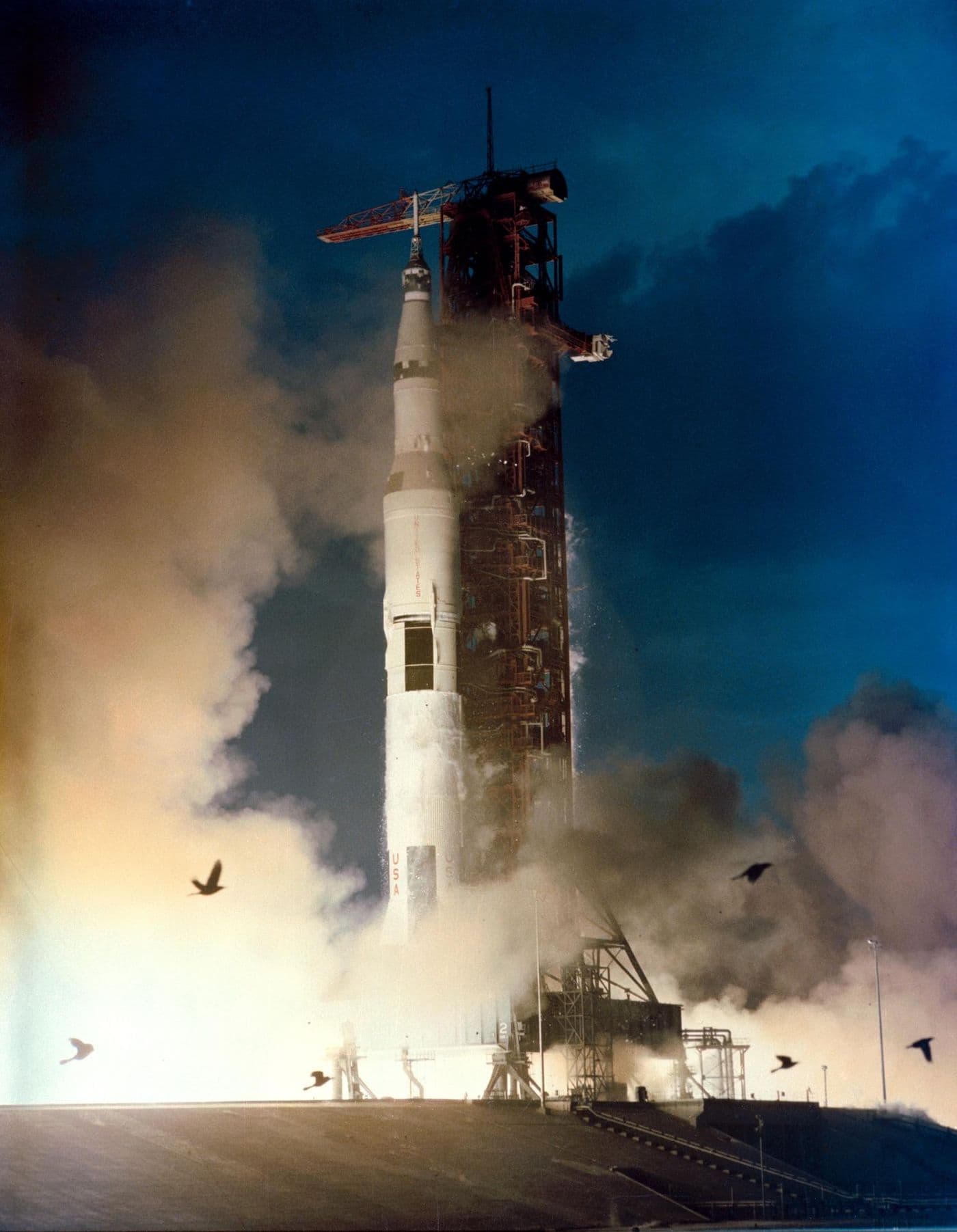
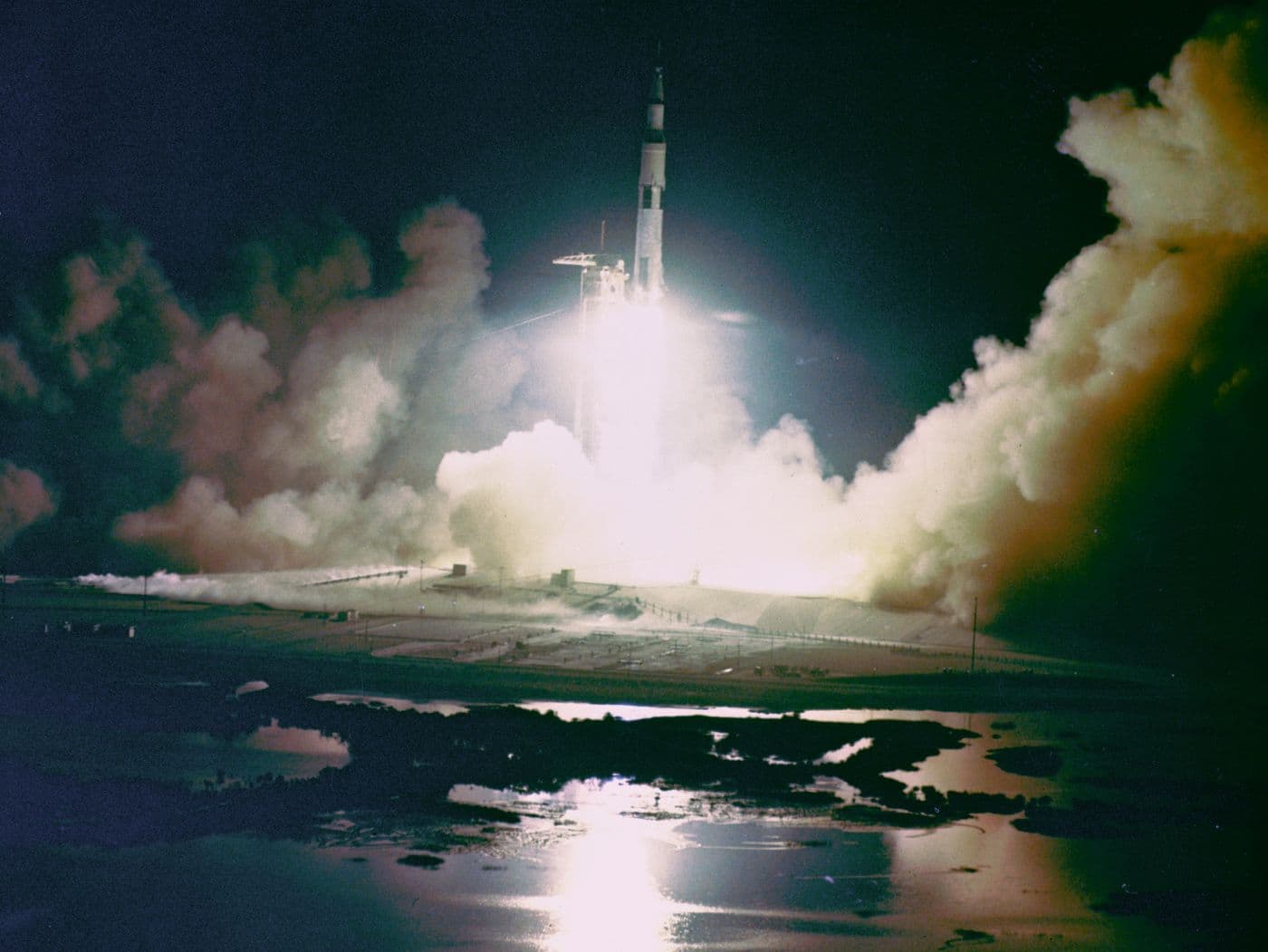
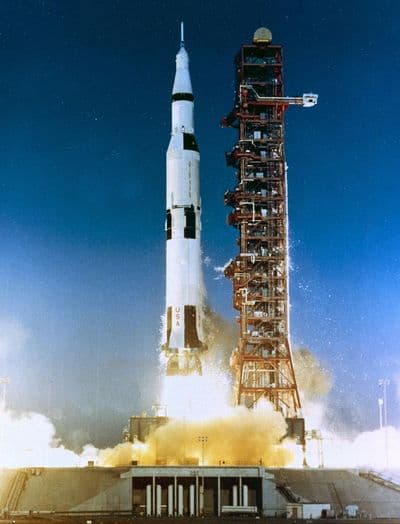
On July 16, 1969, a Saturn V rocket carrying Apollo 11 lifted off from Launch Complex 39A. The crew consisted of Neil Armstrong, Buzz Aldrin, and Michael Collins. Four days later, the Lunar Module Eagle landed in the Sea of Tranquility, and Armstrong spoke his legendary words about a "small step for man."
Crew of Apollo 11
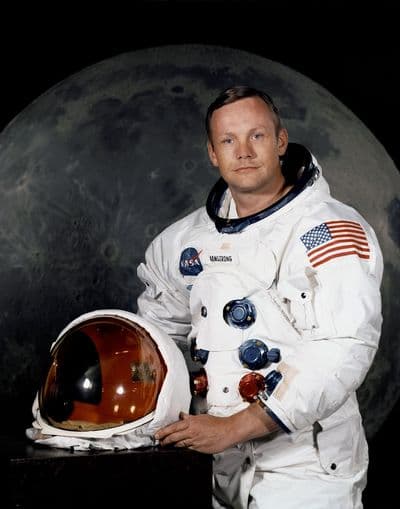 COMMANDERNeil ArmstrongA civilian test pilot and veteran of Gemini 8. The first human on the Moon; calm, precise, and an exceptional pilot.
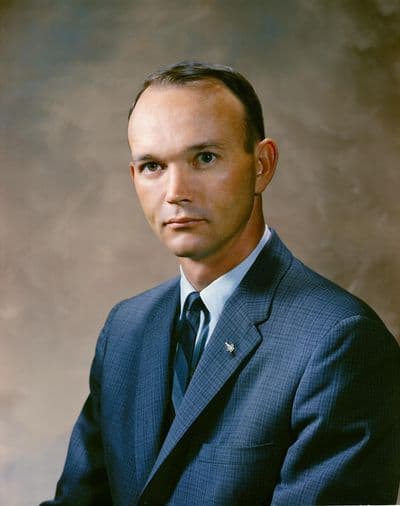 COMMAND MODULE PILOTMichael CollinsHe remained in lunar orbit and circled the Moon 30 times. He later became director of the National Air and Space Museum.
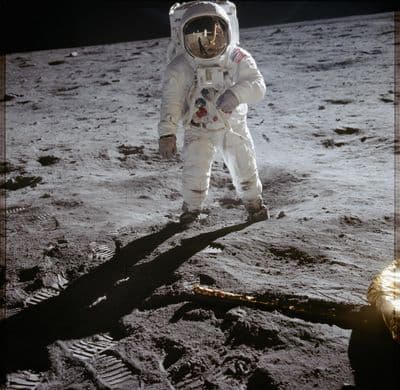 LUNAR MODULE PILOTEdwin "Buzz" AldrinA doctor of orbital mechanics from MIT, nicknamed "Dr. Rendezvous." The second human to walk on the Moon.
Course of the mission
Select a phase to read what happened. Every chapter has its own detailed page.
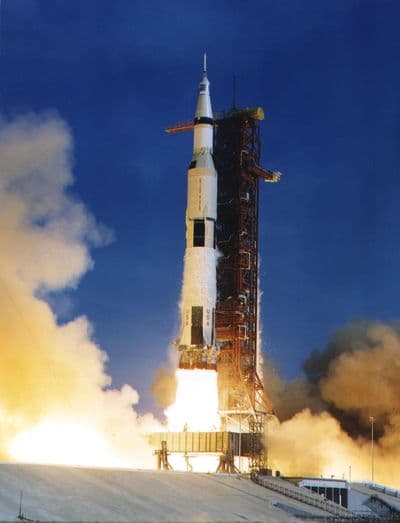
Launch from Earth
At 13:32 UTC, the Saturn V rocket lifted off from Pad 39A at the Kennedy Space Center. The first stage's five F-1 engines generated 34,500 kN of thrust, lifting the 2,975-tonne rocket skyward — the start of an eight-day journey to the Moon and back.
Read the chapter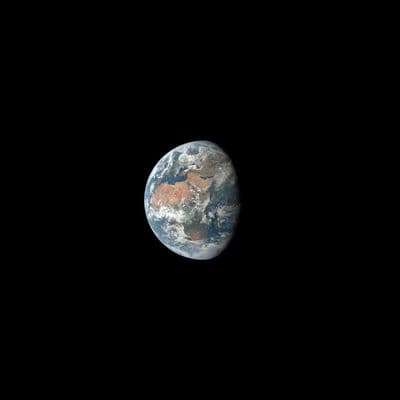
Journey to the Moon
Three days of flight through the emptiness between Earth and the Moon. Shortly after the TLI burn, the crew performed a critical maneuver: transposition, docking, and extraction of the Lunar Module from the rocket's third stage.
Read the chapter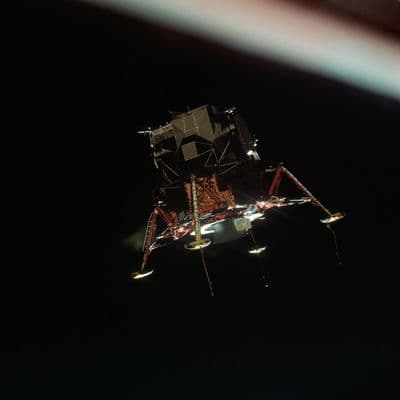
Landing in the Sea of Tranquility
The mission's most dramatic twelve minutes. The Lunar Module Eagle, carrying Armstrong and Aldrin, separated from Columbia and began its descent to the surface — one that nearly ended in an emergency abort.
Read the chapter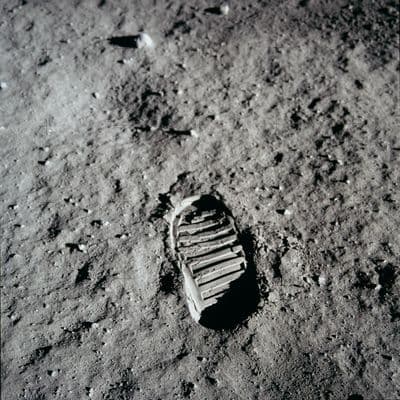
The First Human Step
Six and a half hours after landing, Armstrong opened the hatch and descended the ladder's nine rungs. On the way down, he deployed the MESA television camera — and 600 million people watched live as a human boot touched another world for the first time.
Read the chapter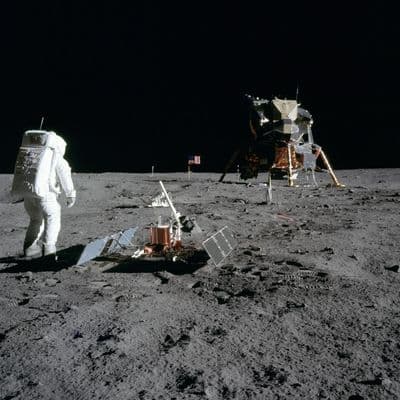
Surface Operations
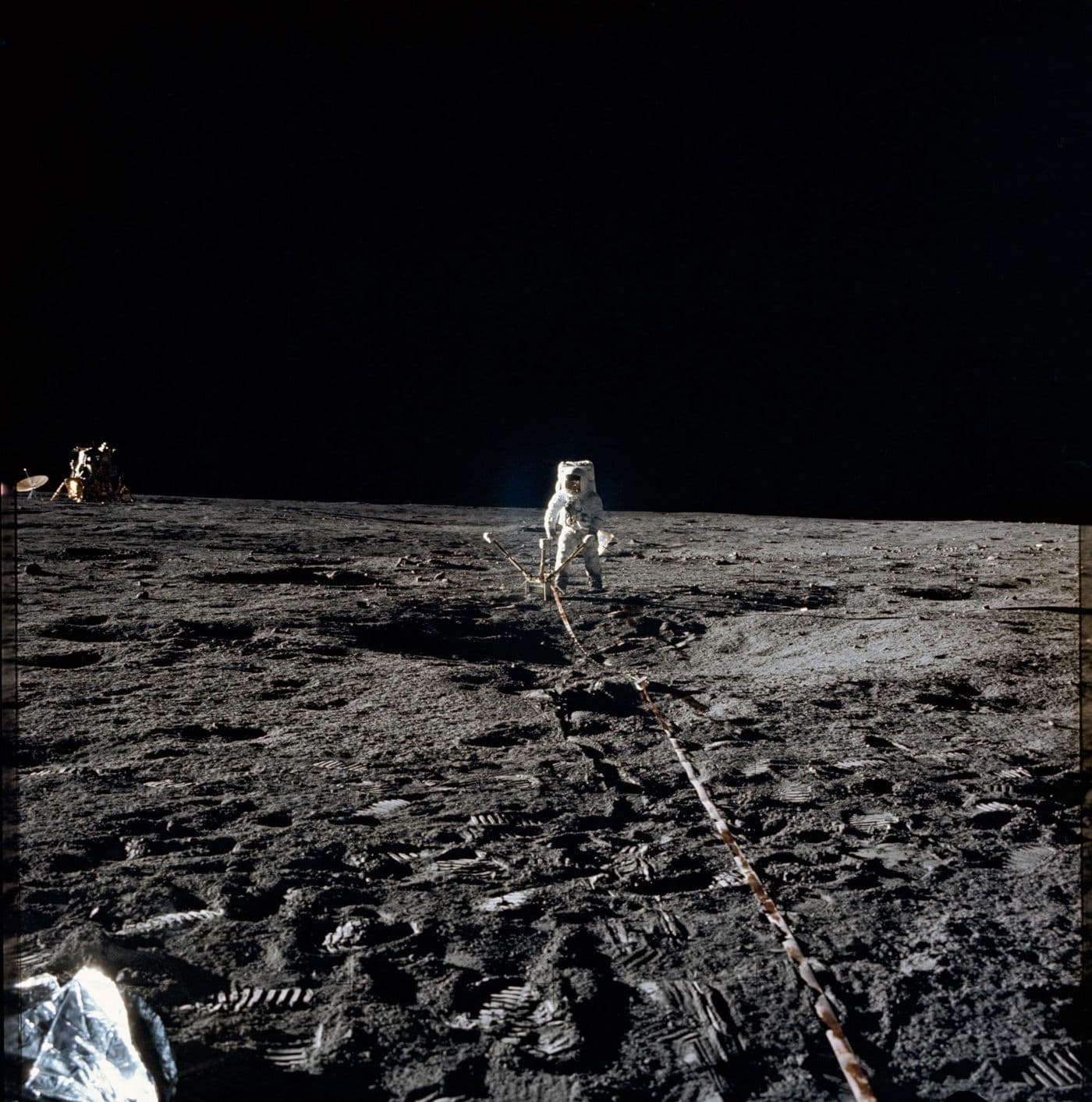
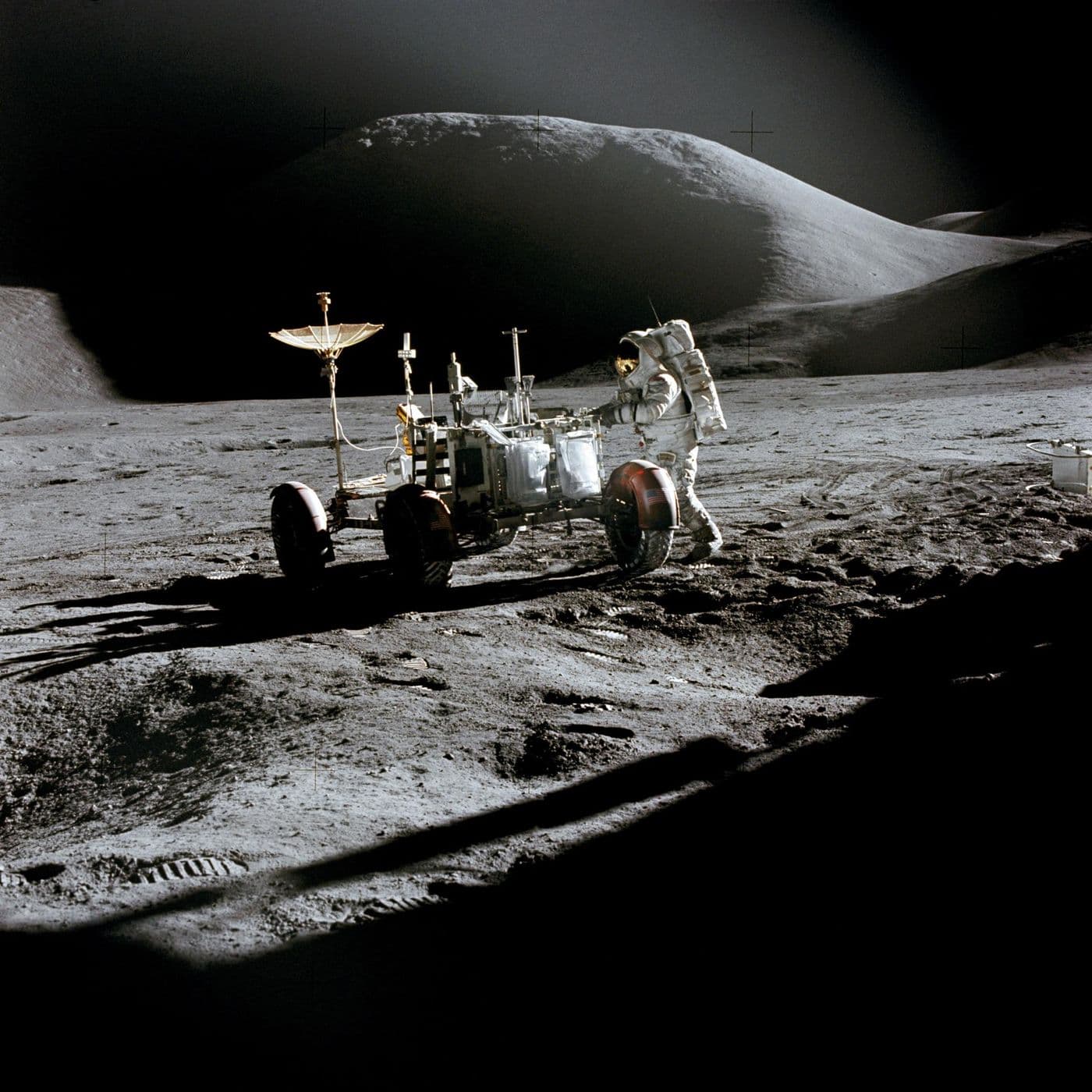
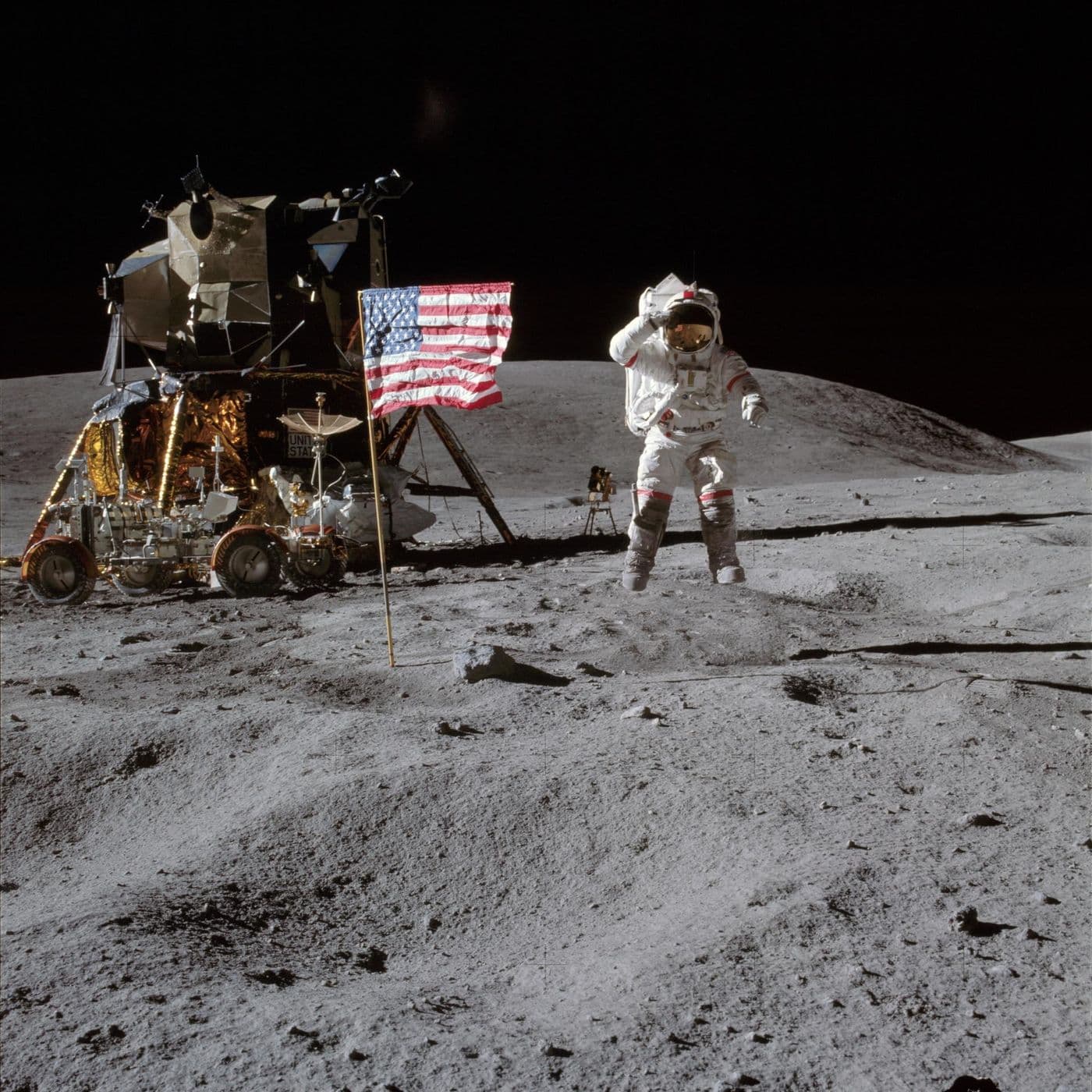
Two and a half hours on the surface were packed with work: raising the flag, unveiling the commemorative plaque, a phone call with the President, setting up experiments, and collecting 21.55 kg of samples.
Read the chapter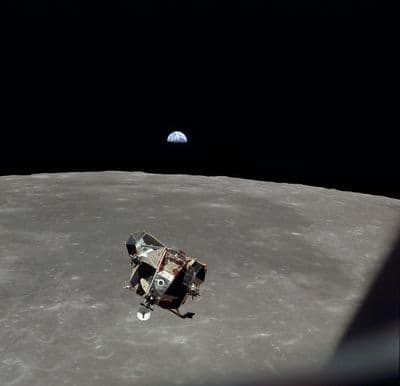
Departure from the Moon
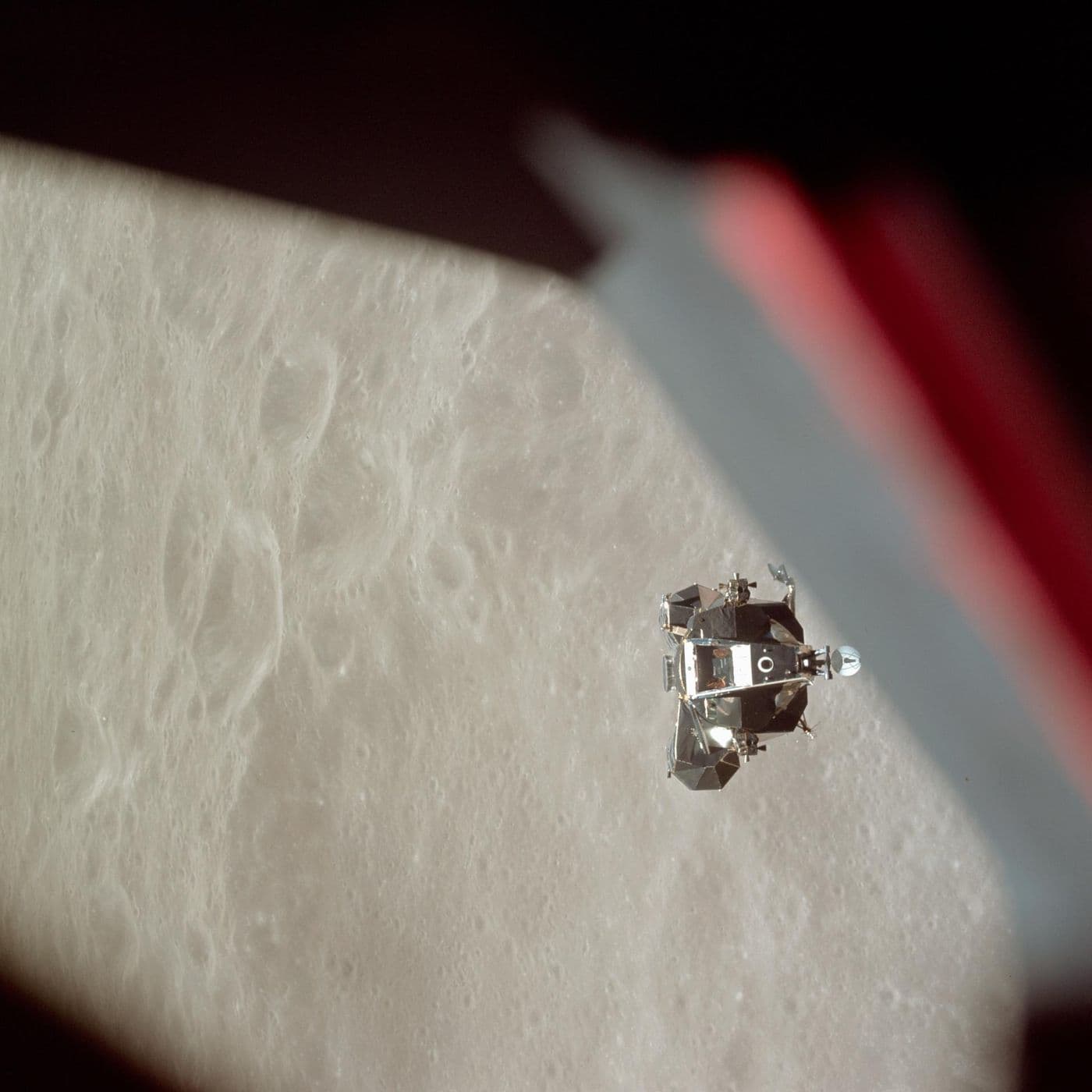
After 21.5 hours on the surface, the Eagle's ascent stage lifted off back into lunar orbit. The descent stage, with its commemorative plaque, remained in the Sea of Tranquility — where it still stands today.
Read the chapter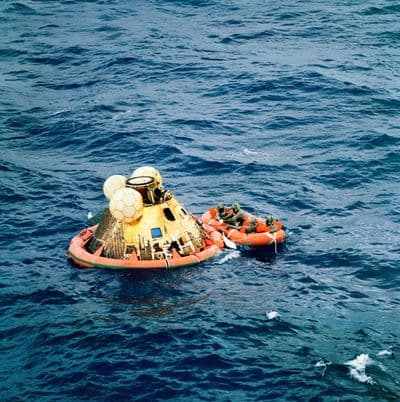
Return to Earth
The command module re-entered the atmosphere at approximately 11 km/s. After descending on three parachutes, it splashed down in the Pacific Ocean, about 1,500 km southwest of Hawaii.
Read the chapterMission by the numbers
- Mission duration
- 8 dní, 3 hodiny, 18 minut
- Distance from Earth
- ~ 384 400 km (průměrně)
- Time on the lunar surface
- 21 hodin, 36 minut
- Samples collected
- 21,55 kg hornin a půdy
- Photographs taken
- ~ 1 100
Notable facts
- Armstrong’s famous remark accompanied his first step on the lunar surface.
- Buzz Aldrin took communion inside the Lunar Module on the Moon, using bread and wine.
- Michael Collins remained in orbit during the landing and circled the Moon 30 times.
Mission hardware
Follow us
Follow us on social media
New plates, trivia and behind-the-scenes updates as soon as they are ready.
Eyewitness account
“That's one small step for man, one giant leap for mankind.”
Journey to the Moon
Gemini was approved as a bridge between Mercury and Apollo. It tested orbital rendezvous and docking, spacewalks, and long-duration flights needed for the journey to the Moon.
Gallery
Related articles
Article on the timeline
Gemini was approved as a bridge between Mercury and Apollo. It tested orbital rendezvous and docking, spacewalks, and long-duration flights needed for the journey to the Moon.
Check yourself
What could go wrong in the last minutes before touchdown?
Answer in your own words — everything you need is in the article above.
Sources & further reading
- NASA: Apollo 11 Mission Report, MSC-00171, 1969 — primární zdroj údajů mise.
- Apollo Lunar Surface Journal — přepisy komunikace a chronologie EVA.
- NASA Image and Video Library (images.nasa.gov) — fotografie a záznamy, public domain.
- Wikipedia: Apollo 11 — výchozí struktura hesla, CC-BY-SA 4.0.
- Hansen, J. R.: First Man — Život Neila Armstronga, 2005 — biografické detaily.
- NSSDCA Master Catalog (NASA) — technické parametry Saturnu V a modulů.
Spaceflightpedia. (n.d.). Apollo 11. Retrieved 9 October 2026, from https://spaceflightpedia.com/article/apollo-11
article text — CC-BY-SA · ◉ NASA photography — public domain · ✦ AI illustration — marked, generated from sources