- Date
- 1981–2011
#NASA#USA#Raketoplán#Space Shuttle#STS
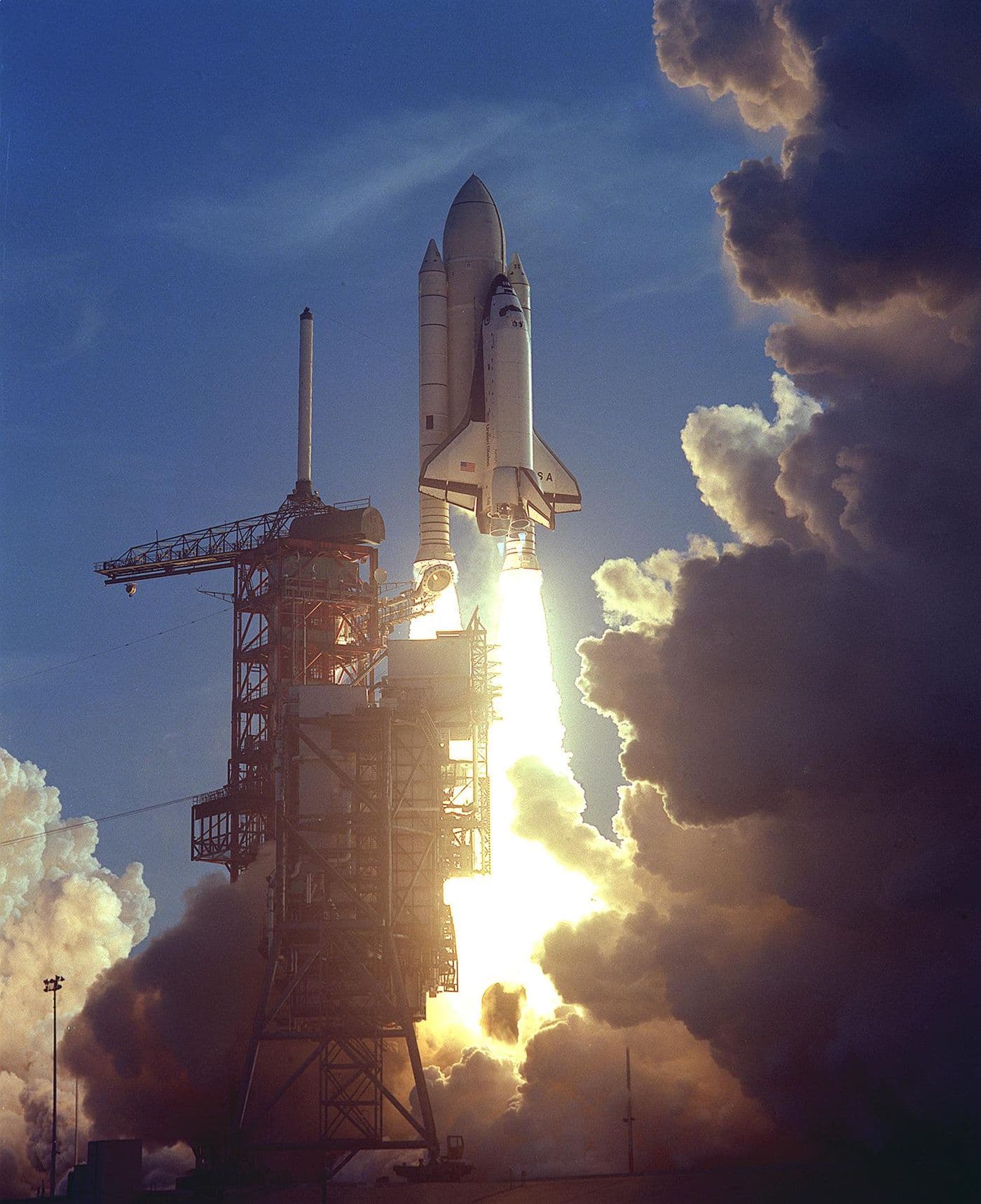
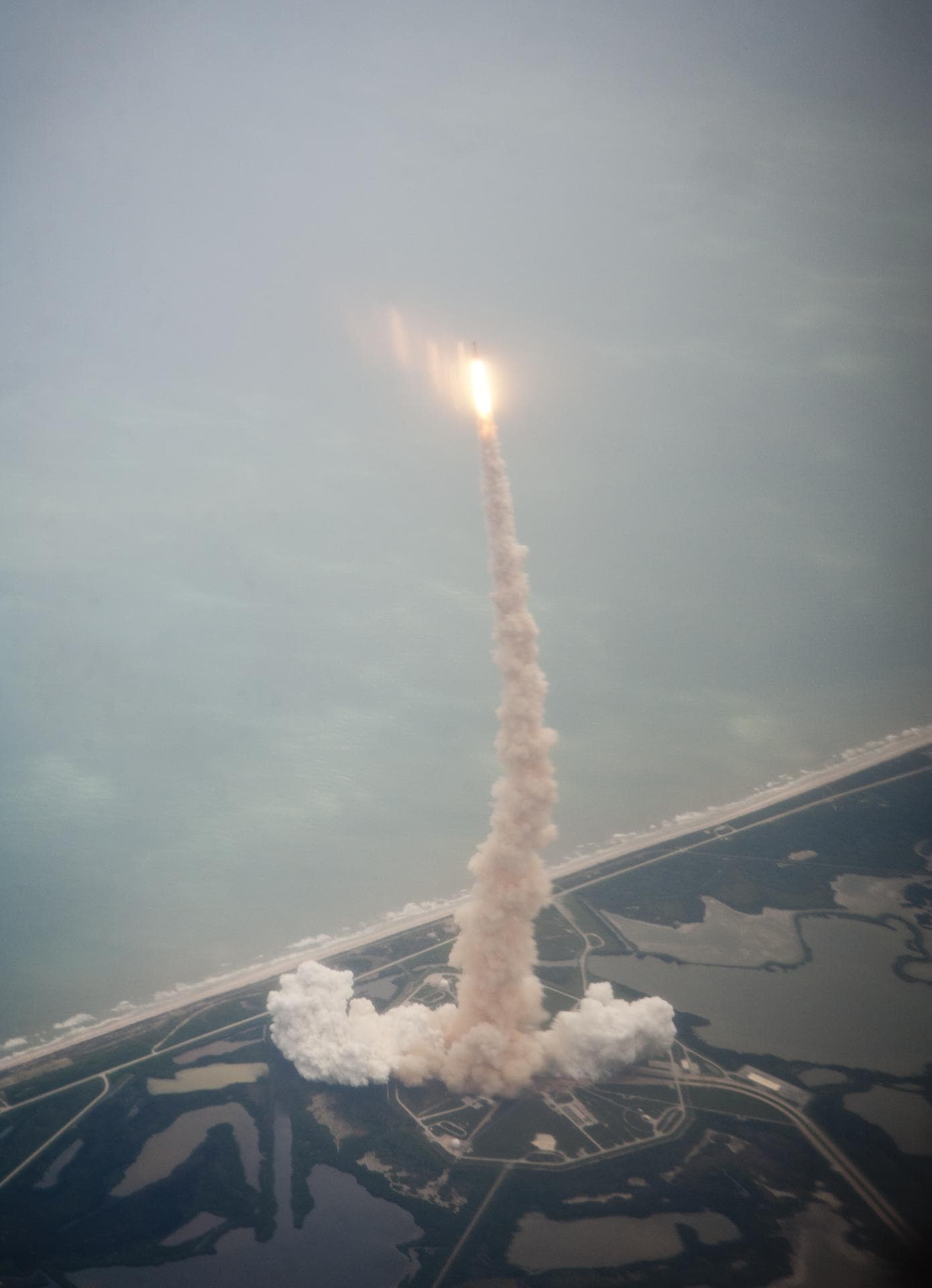
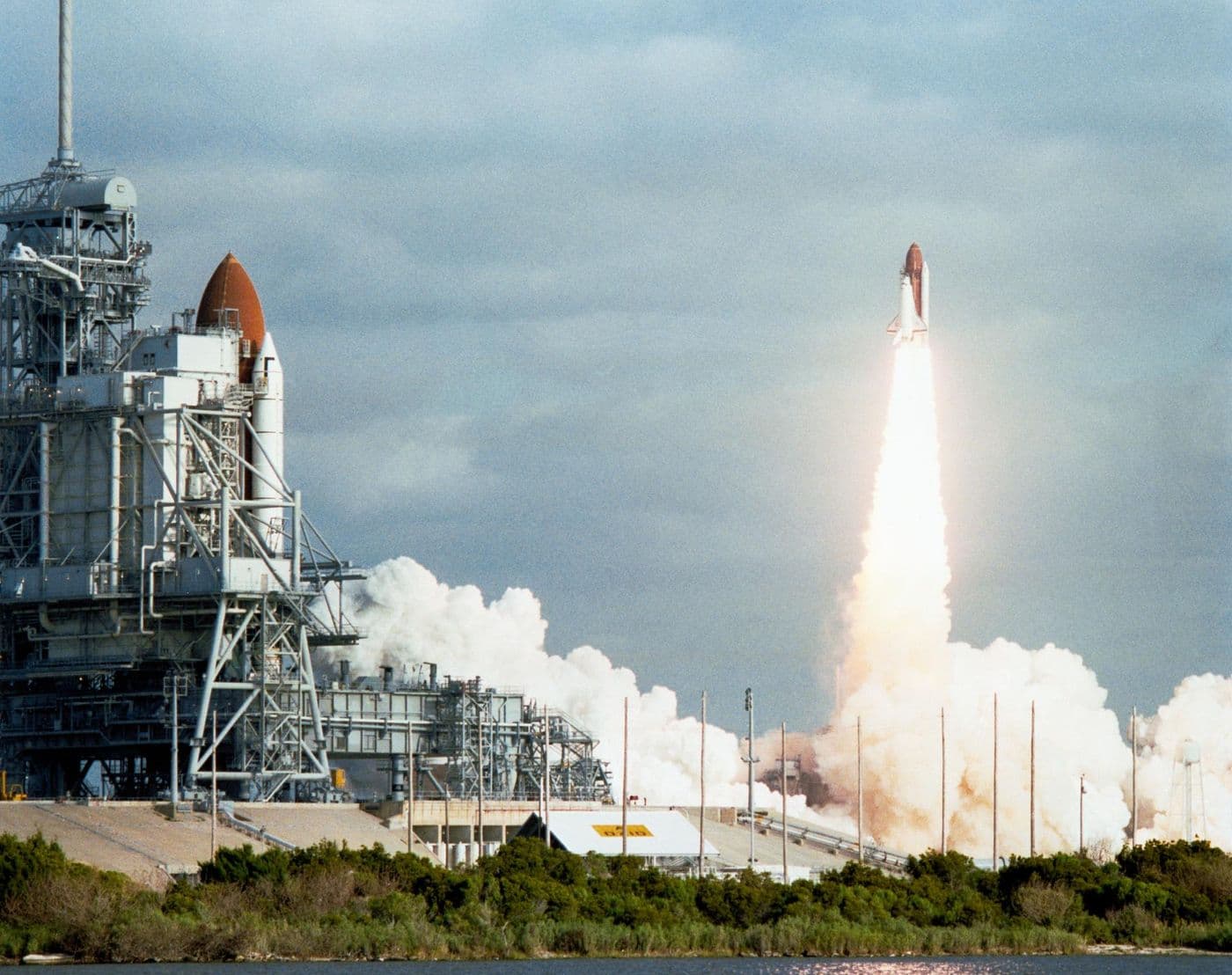
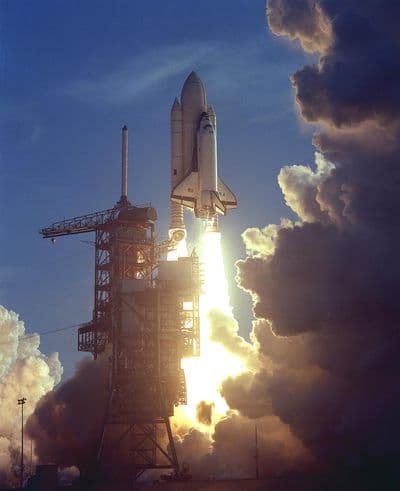
The Space Shuttle was the first partly reusable spacecraft in history — a winged orbiter that launched like a rocket and landed like a glider on a runway. For three decades (1981–2011) it was the backbone of the American crewed space program: it carried satellites and interplanetary probes, placed the Hubble telescope in orbit, and built the International Space Station piece by piece. Yet two of its five ships were lost with their crews, marking the program forever.
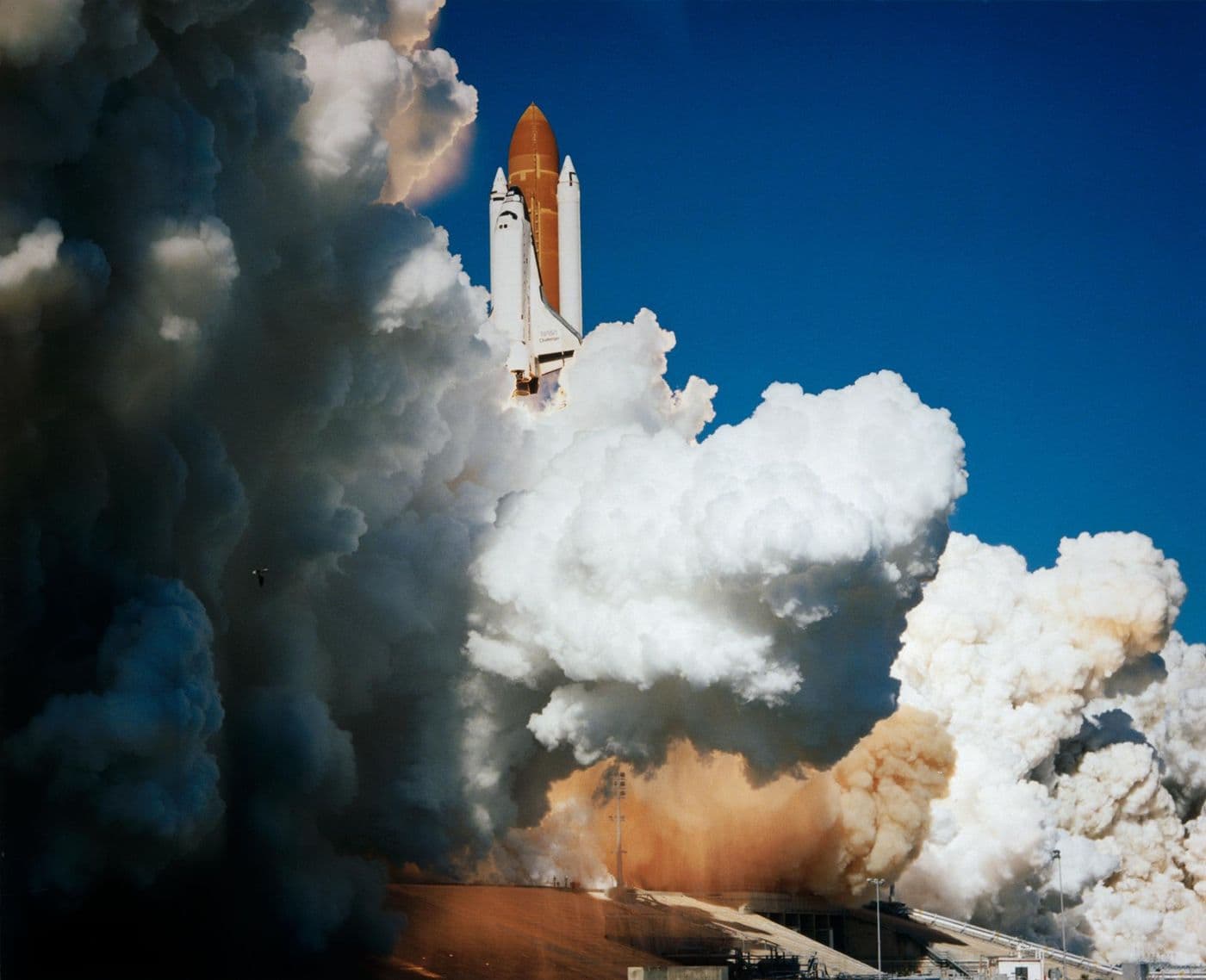
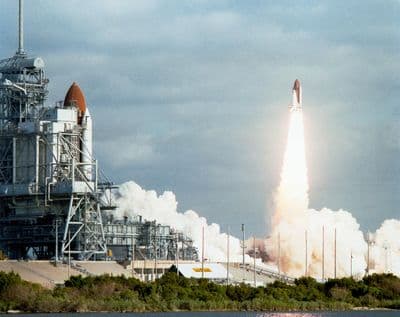
The program emerged in the early 1970s from a desire for cheap, reusable access to space — unlike the throwaway rockets of Apollo, the shuttle was meant to return and fly again. The stack launched vertically: a winged orbiter with three main engines, a huge rust-coloured external tank of propellant, and two solid rocket boosters (SRBs) on either side. The boosters and orbiter were reused; only the tank burned up in the atmosphere. The orbiter carried over 24 tonnes of payload in its cargo bay and usually up to seven crew members; STS-61-A flew with eight.
Program in numbers
- Operational
- 1981–2011
- Missions flown
- 135
- First flight
- STS-1 · 12. 4. 1981
- Final flight
- STS-135 · 8. 7. 2011
- Space-worthy orbiters
- 5
- Payload to LEO
- ~27,5t
- Crew
- až 7
- Ships lost
- 2 (Challenger, Columbia)
Five orbiters reached space: Columbia (the first, 1981), Challenger, Discovery, Atlantis and Endeavour (built in 1991 to replace the lost Challenger). A sixth vehicle, Enterprise, was used only for atmospheric landing tests and never flew to space. Discovery flew the most missions — 39.
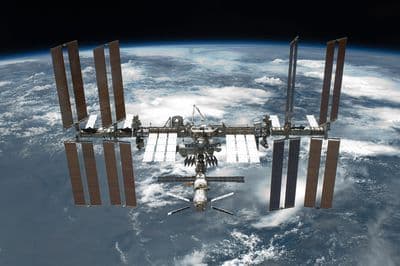
Across 135 flights the shuttle transformed what people could do in space. It launched the Hubble Space Telescope (1990), and its crews serviced and upgraded it five times in orbit. It sent off the deep-space probes Magellan, Galileo and Ulysses. Above all it was indispensable in building the International Space Station: only its large cargo bay could carry the bulky modules and truss segments that form the station's backbone. After the shuttle retired in 2011, Russia's Soyuz remained the only way for humans to reach the ISS for nine years.
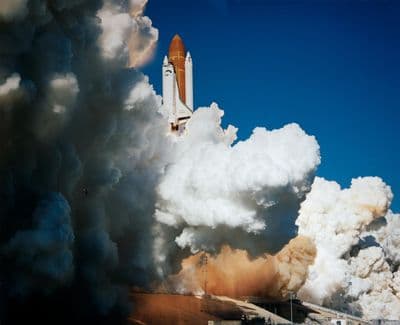
The shuttle's apparent routine ended in catastrophe twice. On 28 January 1986 the orbiter Challenger (mission STS-51-L) broke apart 73 seconds after launch; the cause was the failure of a sealing O-ring in the right solid rocket booster in freezing weather. The entire crew of seven died, including teacher Christa McAuliffe, selected for the "Teacher in Space" project. Seventeen years later, on 1 February 2003, the orbiter Columbia (mission STS-107) disintegrated during reentry over Texas. At launch a piece of thermal insulation had broken off the external tank and damaged the leading edge of the left wing; on reentry hot gases entered the structure through the breach. Again the entire crew of seven died. Together the two accidents claimed fourteen lives and led to a fundamental rethink of safety — and ultimately to the decision to end the program.
Follow us
Follow us on social media
New plates, trivia and behind-the-scenes updates as soon as they are ready.
Eyewitness account
“If we were looking for a solution with no risk, we would never leave the ground.”
Facts
- The shuttle was the first partly reusable spacecraft — it launched like a rocket and landed like an engineless glider.
- Five space-worthy orbiters: Columbia, Challenger, Discovery, Atlantis and Endeavour. Enterprise was used only for tests and never flew to space.
- The shuttle deployed the Hubble telescope and its crews serviced it five times in orbit.
- Without the shuttle's large cargo bay, most of the International Space Station could not have been built.
- After the shuttle retired in 2011, Russia's Soyuz alone carried astronauts to the ISS for nine years.
- Two accidents — Challenger (1986) and Columbia (2003) — claimed fourteen lives in total.
Gallery
Flights & related articles
Sources & further reading
- NASA: Space Shuttle Era — overview of the shuttle program (1981–2011), its flights and orbiters.
- NASA: STS-1 — the first orbital shuttle flight, Columbia, John Young and Robert Crippen, 12 April 1981.
- NASA History: The Challenger Accident — mission STS-51-L, 28 January 1986, O-ring failure.
- NASA History: The Columbia Accident — mission STS-107, 1 February 2003, wing thermal-protection breach.
Spaceflightpedia. (n.d.). Space Shuttle. Retrieved 9 October 2026, from https://spaceflightpedia.com/article/space-shuttle
article text — CC-BY-SA · ◉ NASA photography — public domain · ✦ AI illustration — marked, generated from sources