#explainer
A parachute needs an atmosphere and tolerable deployment conditions. It cannot brake in a vacuum, and an ordinary parachute would not survive initial re-entry loads or heating. The spacecraft first slows aerodynamically while protected by its heat shield.
Braking has several phases
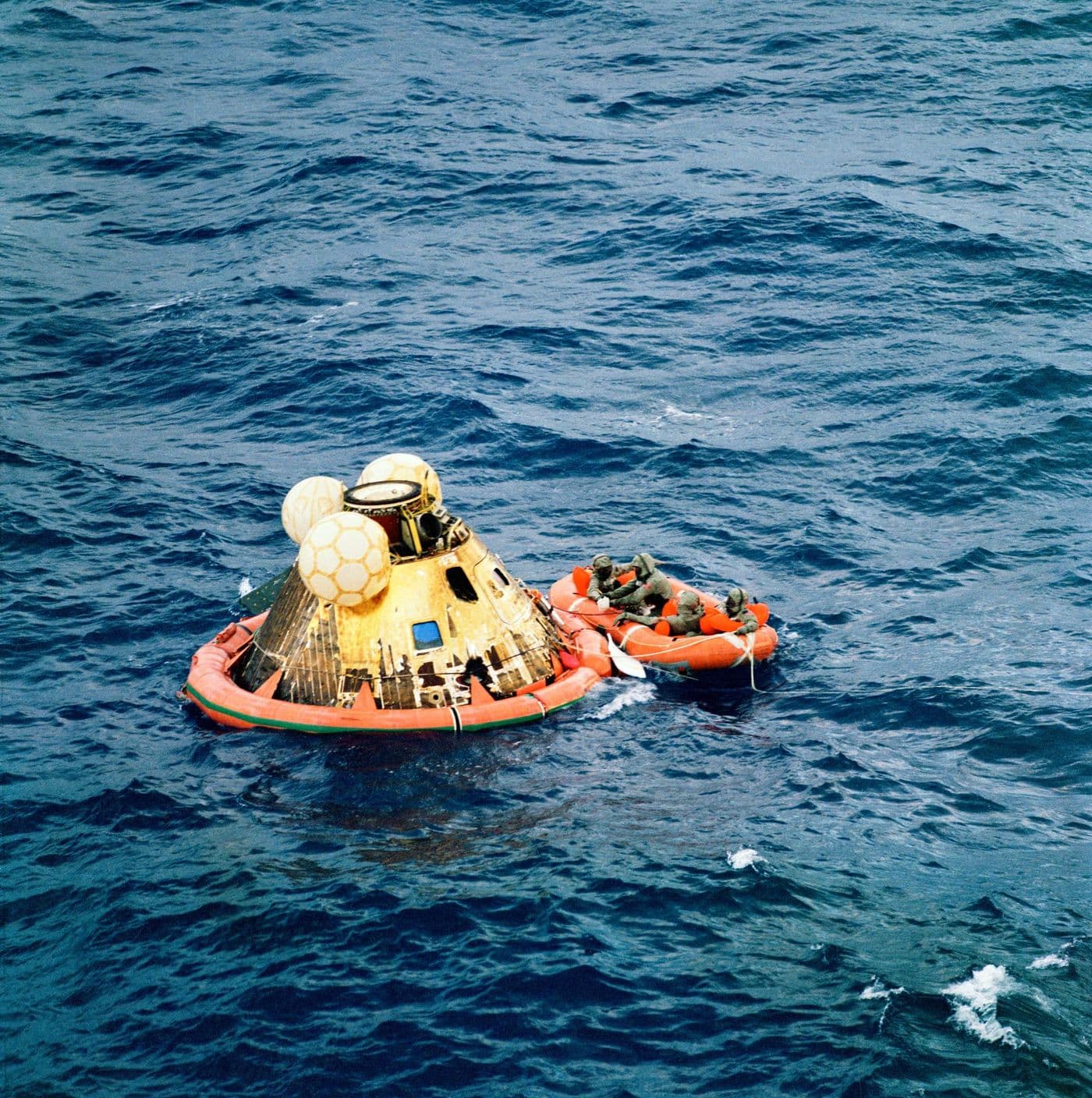
Capsule shape creates drag that reduces speed in the upper and middle atmosphere. Drogue and main parachutes then deploy according to the system design. Each stage has an allowable range of speeds, altitudes and loads. The sequence protects both the cabin and the parachutes.
Not every spacecraft uses parachutes
The shuttle landed as a glider, and some vehicles use powered braking. Those alternatives still have to manage entry energy. A parachute mainly handles the final descent of a suitable capsule; alone, it cannot turn orbital flight into a safe touchdown.
Why the main parachute does not open immediately
At a given air density, greater speed can mean greater deployment forces. Progressive braking allows each device to be used only when its structure can handle the conditions. A parachute system is therefore not a switch usable at any moment; it depends on the capsule's preceding entry trajectory.
Follow us
Follow us on social media
New plates, trivia and behind-the-scenes updates as soon as they are ready.
Key points
- Capsule shape creates drag that reduces speed in the upper and middle atmosphere.
- The shuttle landed as a glider, and some vehicles use powered braking.
- At a given air density, greater speed can mean greater deployment forces.
Sources & further reading
- Entry aerothermodynamics and thermal-protection design.
- Behaviour and analysis of ablative heat-shield materials.
- Relationship between entry angle, deceleration and safe return.
Spaceflightpedia. (n.d.). Why is a parachute not enough for returning from space?. Retrieved 17 October 2026, from https://spaceflightpedia.com/article/reentry-parachutes
article text — CC-BY-SA · ◉ NASA photography — public domain · ✦ AI illustration — marked, generated from sources
More questions on this topic
- Why does a spacecraft get so hot during re-entry?
- How does a heat shield work?
- Why does atmospheric entry angle matter?