#explainer
A satellite stays in orbit through the combination of velocity and Earth's gravity. Gravity continuously bends its motion, while sideways speed prevents a rapid fall to the surface. Orbiting itself generally does not require a continuously operating engine.
Altitude and speed are linked
Each orbit has its own energy and geometry. A circular orbit nearer Earth requires higher speed than a more distant circular orbit. A forward burn therefore does not simply mean permanently orbiting faster at the same altitude: it changes the orbit's shape and size.
Why corrections are made
Residual atmospheric drag, gravitational perturbations and other effects can alter an orbit. Propelled satellites adjust position, avoid hazardous encounters and prepare disposal as needed. Turning a satellite to point an antenna or camera is different from changing its centre-of-mass orbit.
Why some satellites appear stationary
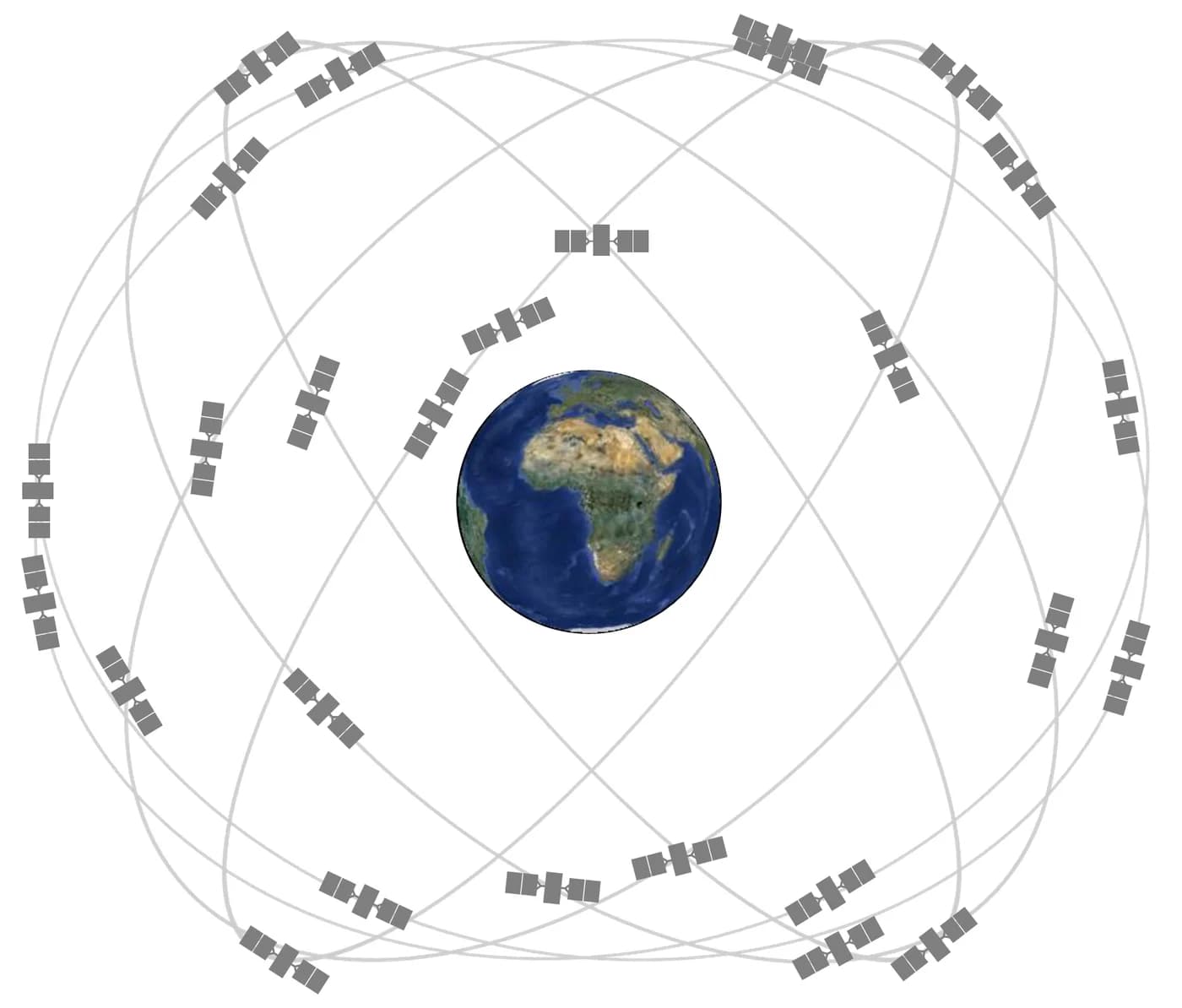
A geostationary satellite moves with Earth's rotation above the equator at the matching orbital period. To an observer on Earth, it can remain in the same direction. It is still moving around an orbit rather than hovering motionlessly. Other satellites have different altitudes and inclinations and trace different paths across the sky.
Follow us
Follow us on social media
New plates, trivia and behind-the-scenes updates as soon as they are ready.
Key points
- Each orbit has its own energy and geometry.
- Residual atmospheric drag, gravitational perturbations and other effects can alter an orbit.
- A geostationary satellite moves with Earth's rotation above the equator at the matching orbital period.
Sources & further reading
- Free fall, orbital gravity and weightlessness.
- The distinction between gaining altitude and reaching orbit.
- Thrust, propellants, staging and rocket flight fundamentals.
Spaceflightpedia. (n.d.). How does a satellite stay in orbit?. Retrieved 17 October 2026, from https://spaceflightpedia.com/article/satellites-stay-in-orbit
article text — CC-BY-SA · ◉ NASA photography — public domain · ✦ AI illustration — marked, generated from sources