- Body
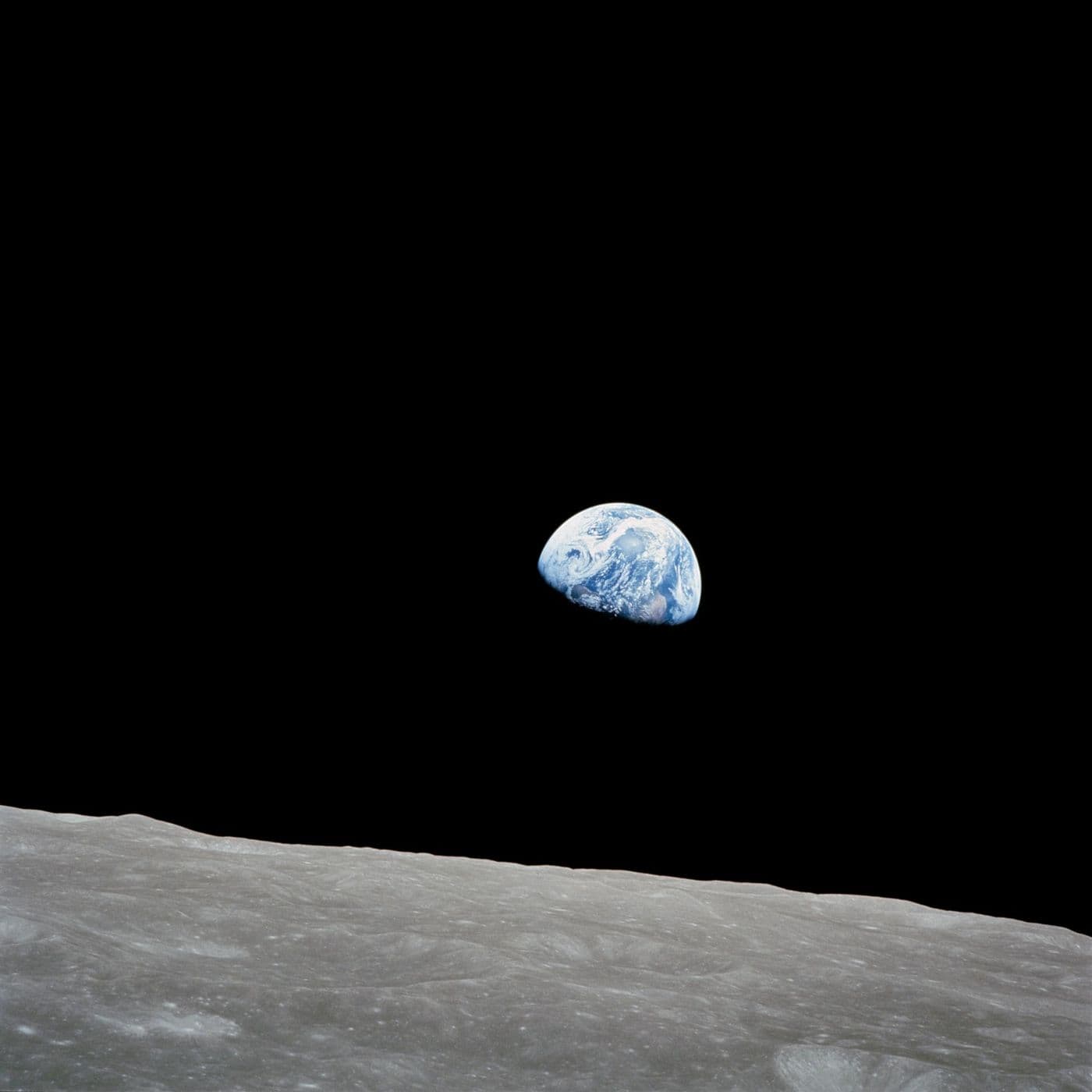
- The Moon
#Orbital mechanics#Gravity#Navigation
Falling around a planet
Orbital mechanics describes motion under gravity and the changes caused by propulsion or other forces. A spacecraft in Earth orbit continually falls toward the planet while its sideways velocity carries it around the curved surface. Gravity is still acting: it supplies the acceleration that bends the trajectory. [1, 2]
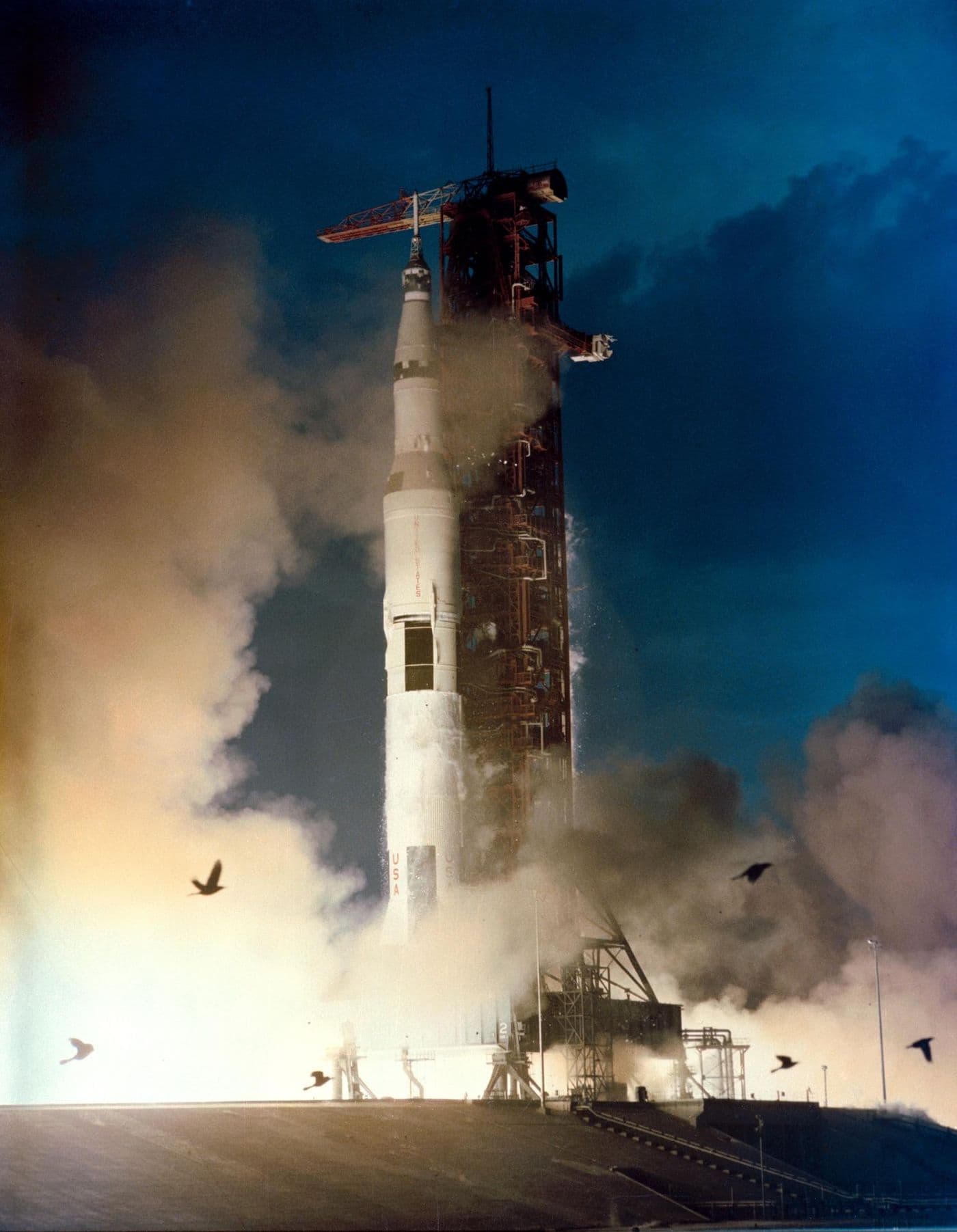
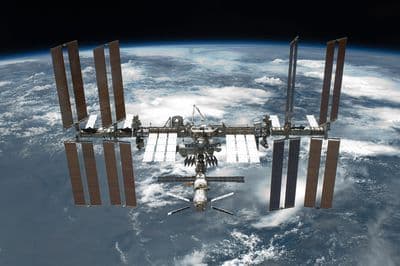
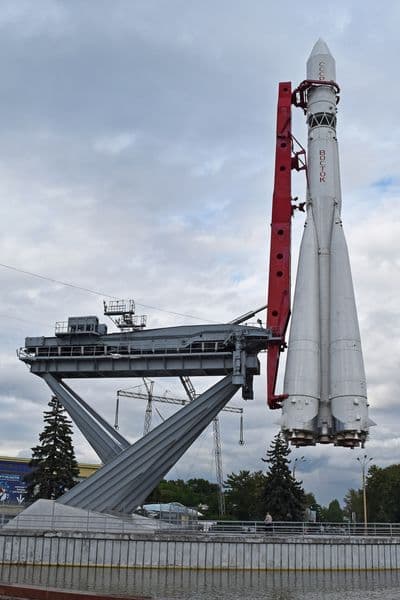
Astronauts inside the International Space Station float because they and the station fall together. Reaching a high altitude alone is insufficient for orbit. A launcher must also provide the appropriate velocity, particularly its horizontal component. This distinguishes an orbital mission such as Vostok 1 from a suborbital flight. [1, 2]
Ellipses and Kepler's laws
In the ideal two-body model, a bound orbit is an ellipse with the attracting body at a focus; a circle is a special case. The nearest point is periapsis and the farthest is apoapsis. Around Earth these points are called perigee and apogee. Eccentricity describes how far the shape departs from a circle. [3, 4]
Kepler's laws were developed from observations of planetary motion. They describe elliptical orbits, equal areas swept in equal times and the relationship between orbital size and period. A spacecraft on an eccentric orbit moves faster near periapsis and slower near apoapsis. For objects orbiting the same central body, the square of the period is proportional to the cube of the semi-major axis. [3, 4]
A circular orbit: a worked example
For a circular orbit, speed is v = √(μ/r), and period is T = 2π√(r³/μ). Here μ is the central body's gravitational parameter and r is the distance from its center. Altitude above the surface is therefore not the radius used in these equations. [2, 5]
Using Earth's mean radius of 6,371 km and a gravitational parameter of approximately 398,600 km³/s², a circular orbit 400 km high has a radius of 6,771 km. The model gives a speed of about 7.67 km/s and a period of about 92.4 minutes. These are calculated examples, not a live measurement of the ISS; the model neglects atmospheric drag and Earth's uneven gravity field. [2, 5, 6]
Changing an orbit
A short engine burn changes velocity and therefore the subsequent orbit. An ideal tangential acceleration at periapsis raises apoapsis; a tangential deceleration at apoapsis lowers periapsis. The spacecraft then coasts along its new trajectory between maneuvers. Delta-v, written Δv, measures the velocity change required or available. [1, 7]
An ideal Hohmann transfer connects two circular, coplanar orbits using an elliptical transfer path and two impulses. For a transfer upward, the first impulse enters the ellipse and the second, at its far end, circularizes the higher orbit. Other transfers may be preferable when timing, propulsion or mission constraints differ. [7, 8]
Meeting a moving target
Reaching another spacecraft's orbital altitude does not guarantee a rendezvous. The vehicles must arrive at the same place at the same time and reduce their relative velocity for a controlled approach. Planning therefore considers orbital phase and orientation as well as size and shape. [8]
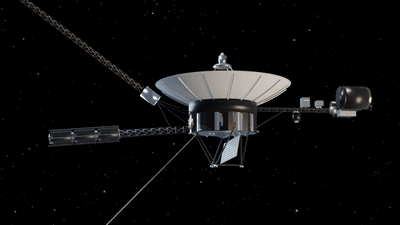
The same timing principle applies to travel between planets: a spacecraft must reach the destination's future position. Gravity-assist flybys can change a probe's heliocentric trajectory through an encounter with a moving planet. These methods connect orbital mechanics with missions such as Voyager and with the design of journeys to Mars. [7]
Follow us
Follow us on social media
New plates, trivia and behind-the-scenes updates as soon as they are ready.
Real orbits and navigation
The two-body model is a useful starting point rather than a complete description of flight. Earth's gravity varies with position, the Moon and Sun perturb trajectories, sunlight exerts pressure and residual atmosphere slows spacecraft in low Earth orbit. Tracking and navigation estimate the actual trajectory and plan corrections. [9, 10]
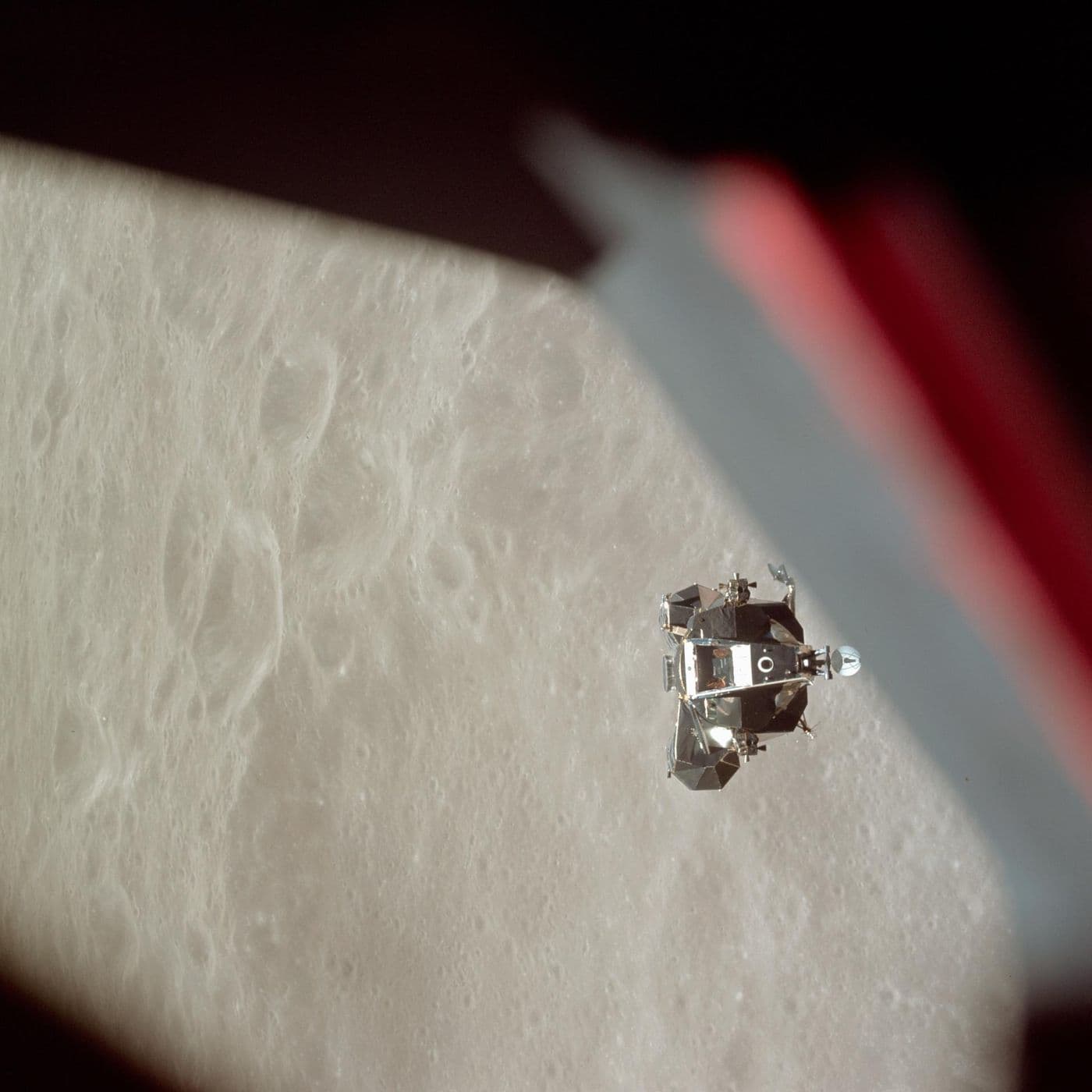
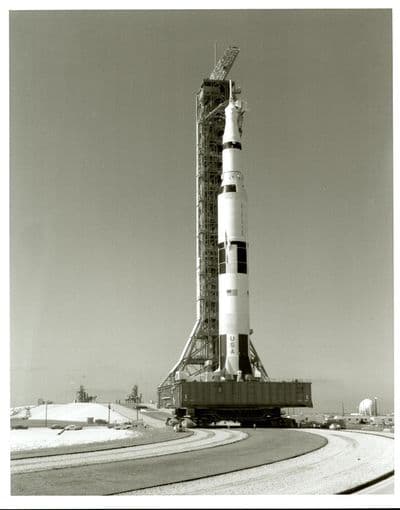
Orbital mechanics underpins supply flights to the ISS, rendezvous between Apollo spacecraft and the targeting of planetary probes. Its practical task is to turn a desired destination into a flight path that respects available propulsion, time, safety and measurement uncertainty. The equations are used alongside observations throughout a mission. [7, 8, 9]
Circular orbit example
- Example altitude
- 400km
- Calculated circular speed
- 7.67km/s
- Calculated orbital period
- 92.4min
Did you know?
- An orbit does not require the disappearance of gravity: gravitational acceleration continually bends the path. [1]
- A higher circular orbit around the same body has a lower speed but a longer orbital period. [2, 4]
- The worked 400 km example uses distance from Earth's center: 6,771 km, not 400 km. [2, 6]
Related articles

Sources & further reading
- NASA — Basics of Space Flight: Gravity & Mechanics. Accessed 12 October 2026.
- NASA Glenn — Flight to Orbit. Accessed 12 October 2026.
- NASA — Orbits and Kepler's Laws. Accessed 12 October 2026.
- NASA — Acceleration in Orbit and Kepler's Laws. Accessed 12 October 2026.
- NASA JPL — Astrodynamic Parameters. Accessed 12 October 2026.
- NASA NSSDC — Earth Fact Sheet. Accessed 12 October 2026.
- NASA — Basics of Space Flight: Trajectories. Accessed 12 October 2026.
- ESA — The journey from launch to docking. Accessed 12 October 2026.
- NASA — Basics of Space Flight: Navigation. Accessed 12 October 2026.
- NASA JPL — SMAPPING with Erika: Orbital Maneuvers. Accessed 12 October 2026.
Spaceflightpedia. (n.d.). Orbital mechanics. Retrieved 12 October 2026, from https://spaceflightpedia.com/article/orbitalni-mechanika
article text — CC-BY-SA · ◉ NASA photography — public domain · ✦ AI illustration — marked, generated from sources