- Body
- Mars
#Mars#planetární průzkum#rovery
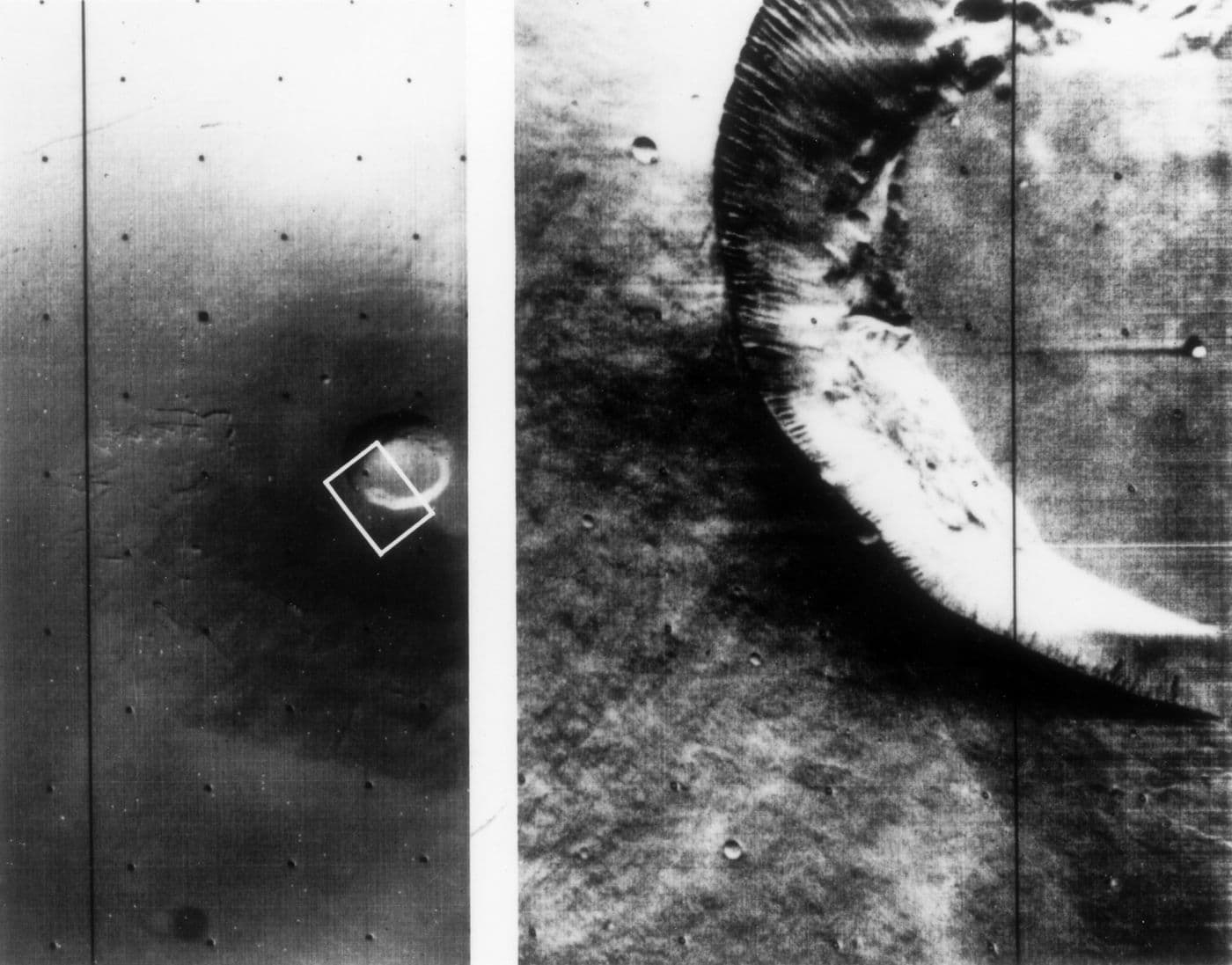
Mars is the fourth planet from the Sun and the best-studied world beyond Earth. Its thin atmosphere, polar caps, volcanoes, canyons, and signs of ancient flowing water make it central to the question of whether another planet once offered habitable conditions.
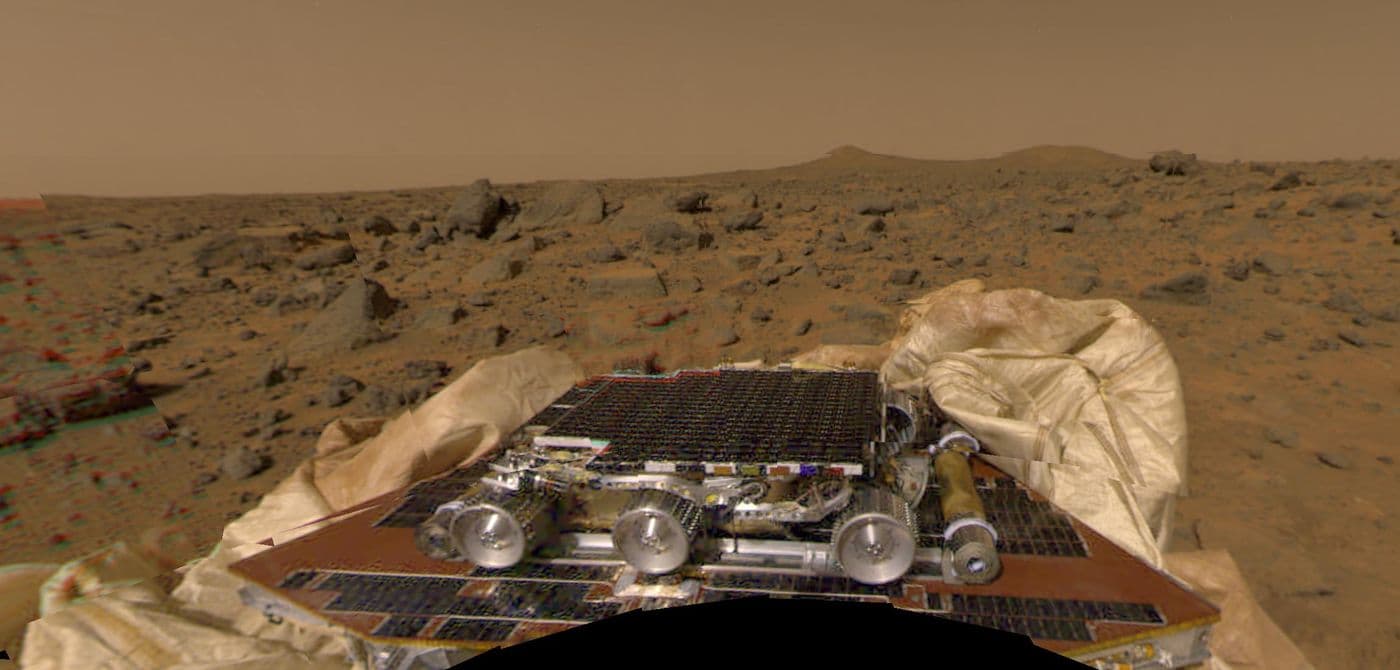
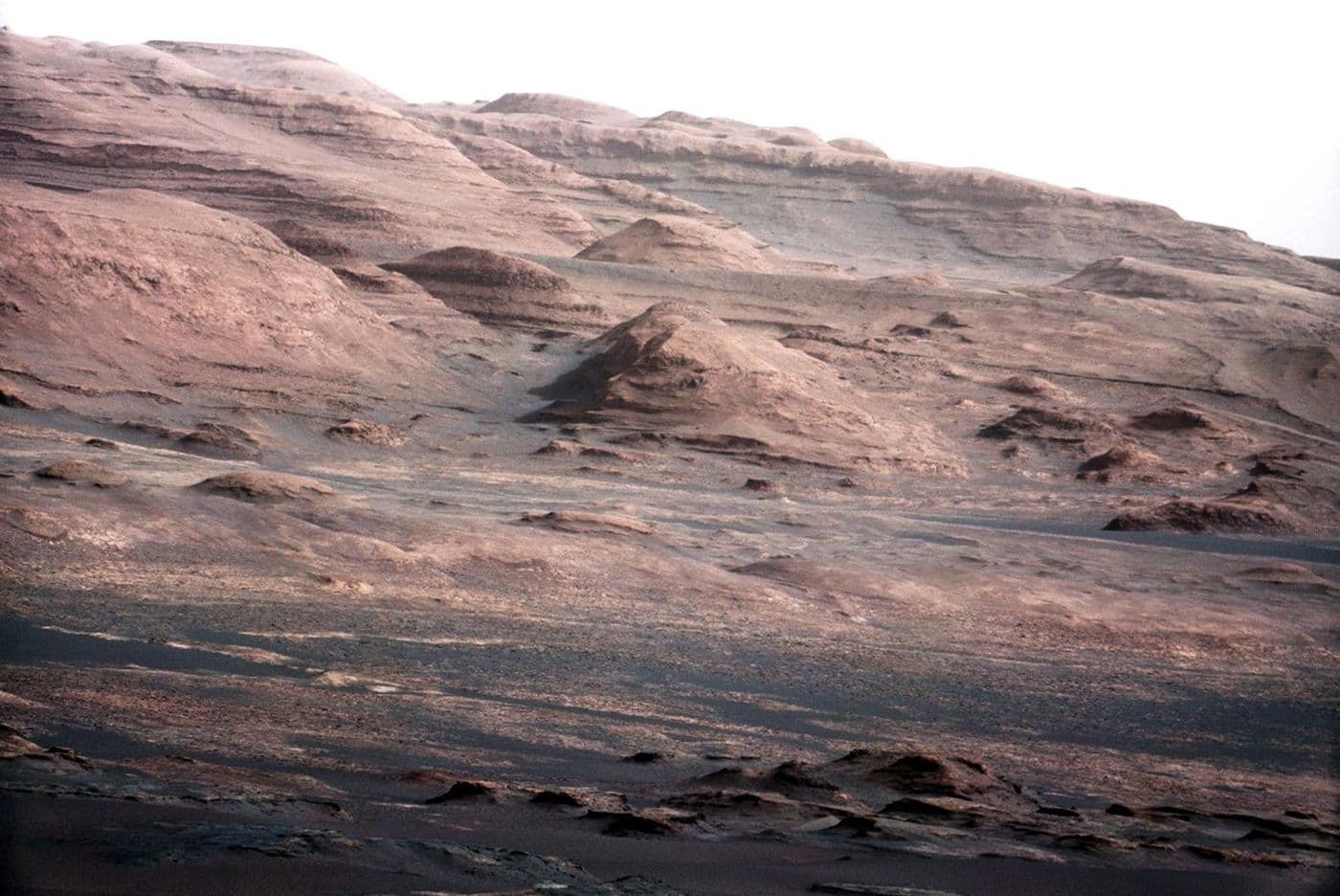
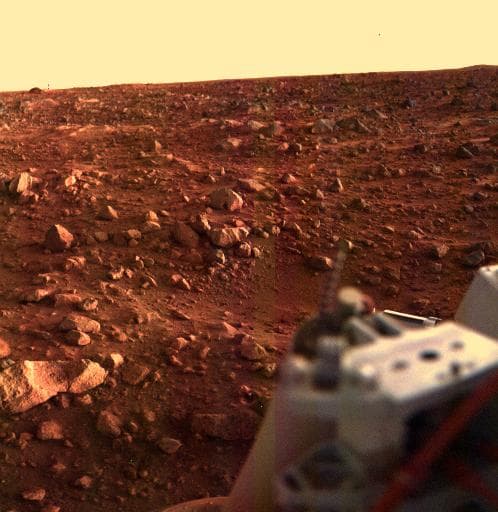
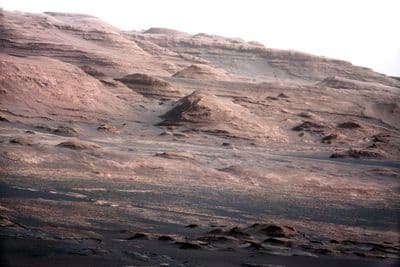
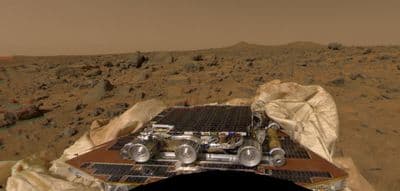
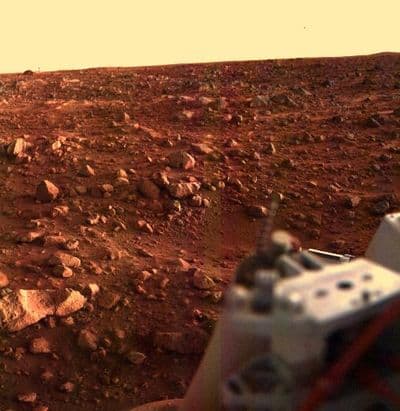
Dozens of spacecraft have studied Mars from orbit and on the surface. Viking 1 returned the first long-duration measurements from the ground, Mars Pathfinder demonstrated a mobile rover, and Curiosity has studied rocks in Gale crater since 2012 that point to ancient lakes. Alongside geology, current work examines conditions favourable to life and prepares future sample-return missions.
Key facts
- Mars has an average diameter of about 6,779 km, roughly half Earth’s diameter.
- A Martian day lasts 24 hours, 39 minutes and approximately 35 seconds.
- Olympus Mons is the largest known volcano in the Solar System.
Follow us
Follow us on social media
New plates, trivia and behind-the-scenes updates as soon as they are ready.
Mars exploration
Sources & further reading
- NASA Science: overview of Mars, its physical characteristics, and planetary research.
- NASA: Mars exploration by orbiters, landers, and rovers.
- NASA Science: the Curiosity rover mission and research into Gale crater’s ancient environment.
Spaceflightpedia. (n.d.). Mars. Retrieved 9 October 2026, from https://spaceflightpedia.com/article/mars
article text — CC-BY-SA · ◉ NASA photography — public domain · ✦ AI illustration — marked, generated from sources