#explainer
Efficient transfer trajectories require a suitable relative alignment of Earth and Mars. Favourable opportunities recur roughly every 26 months. Flying outside a conventional window is not generally physically impossible, but it may exceed propulsion, launcher or mission capabilities.
It is not just closest approach
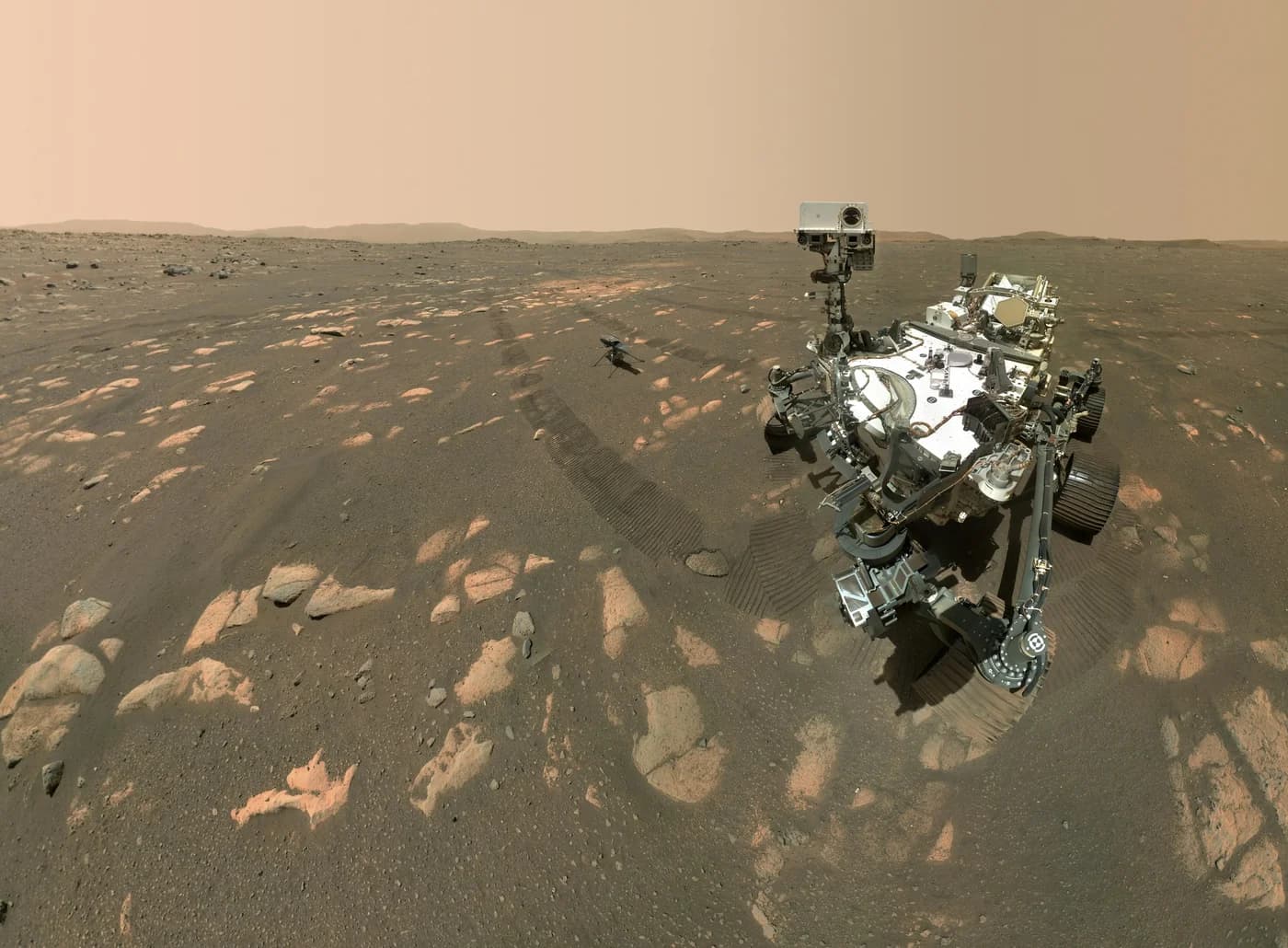
The spacecraft must meet a moving planet after months in flight. Planning therefore uses future geometry and velocities, not merely the instant of minimum separation. Departure energy, arrival speed and the intended landing site also affect the choice of date.
Windows exist at several scales
A launch period may span many days, while each day has limited opportunities determined by Earth's rotation and launch conditions. Missing the full opportunity can mean a long delay. Return travel has its own constraints, so arrival does not automatically permit immediate departure for home.
Why return may not immediately follow arrival
Conditions for an efficient Mars-to-Earth departure differ from those for arrival from Earth. A crewed mission must therefore coordinate two transfers and the stay between them. Shortening one phase can increase energy demands elsewhere. Missing a window can affect not just the launch date but the expedition architecture.
Follow us
Follow us on social media
New plates, trivia and behind-the-scenes updates as soon as they are ready.
Key points
- The spacecraft must meet a moving planet after months in flight.
- A launch period may span many days, while each day has limited opportunities determined by Earth's rotation and launch conditions.
- Conditions for an efficient Mars-to-Earth departure differ from those for arrival from Earth.
Sources & further reading
- Transit durations and recurring favourable Mars launch periods.
- Transfer geometry, launch opportunities and Mars mission challenges.
- Thrust, propellants, staging and rocket flight fundamentals.
Spaceflightpedia. (n.d.). Why are Mars launches limited to launch windows?. Retrieved 17 October 2026, from https://spaceflightpedia.com/article/mars-launch-windows
article text — CC-BY-SA · ◉ NASA photography — public domain · ✦ AI illustration — marked, generated from sources
More questions on this topic
- How long does it take to reach Mars?
- How would people return from Mars?
- Why is landing on Mars so difficult?