- Date
- 12 April 1961
- Launcher
- Vostok
- Mission
- Vostok 1
#první let#Gagarin#SSSR
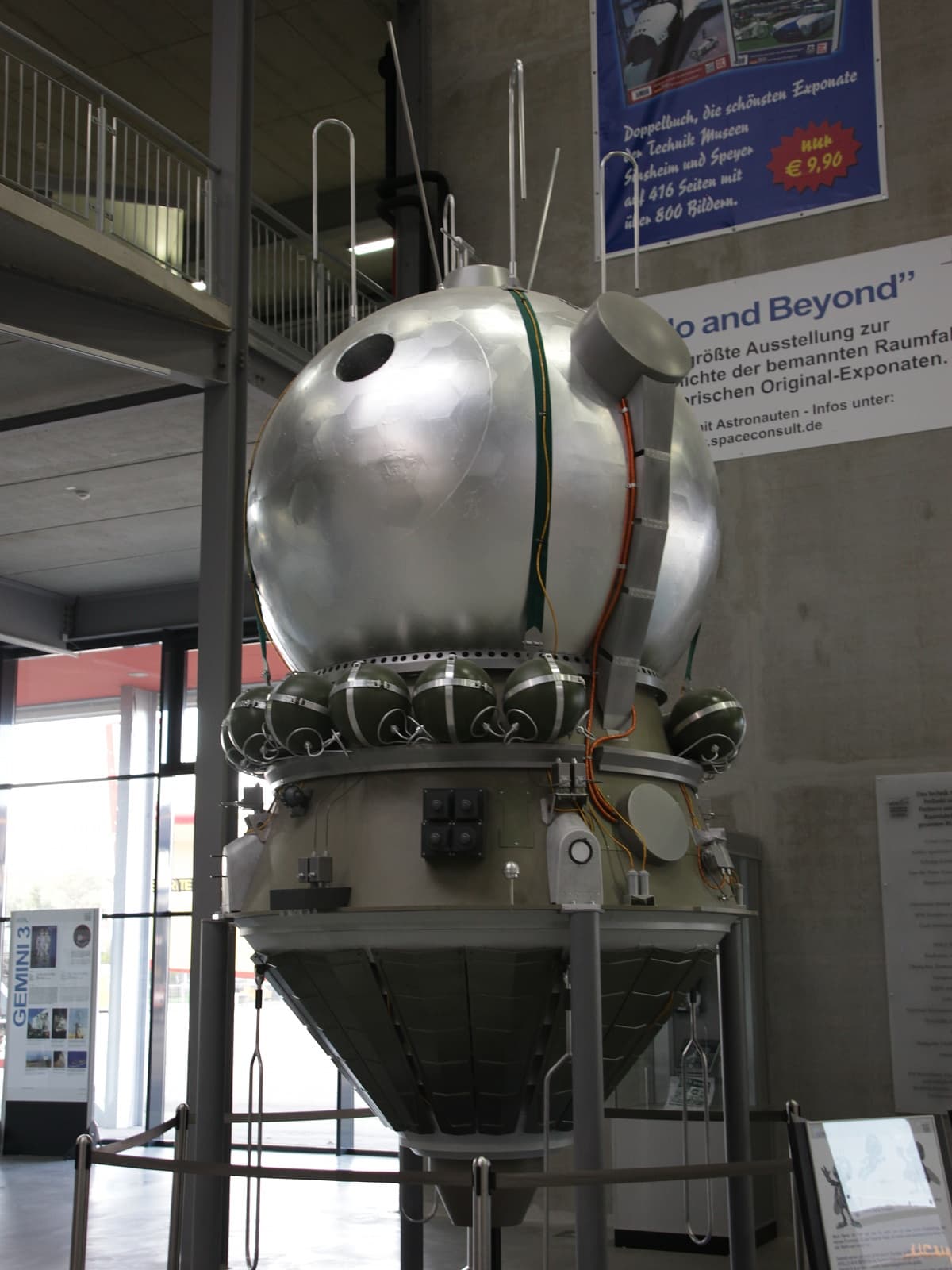
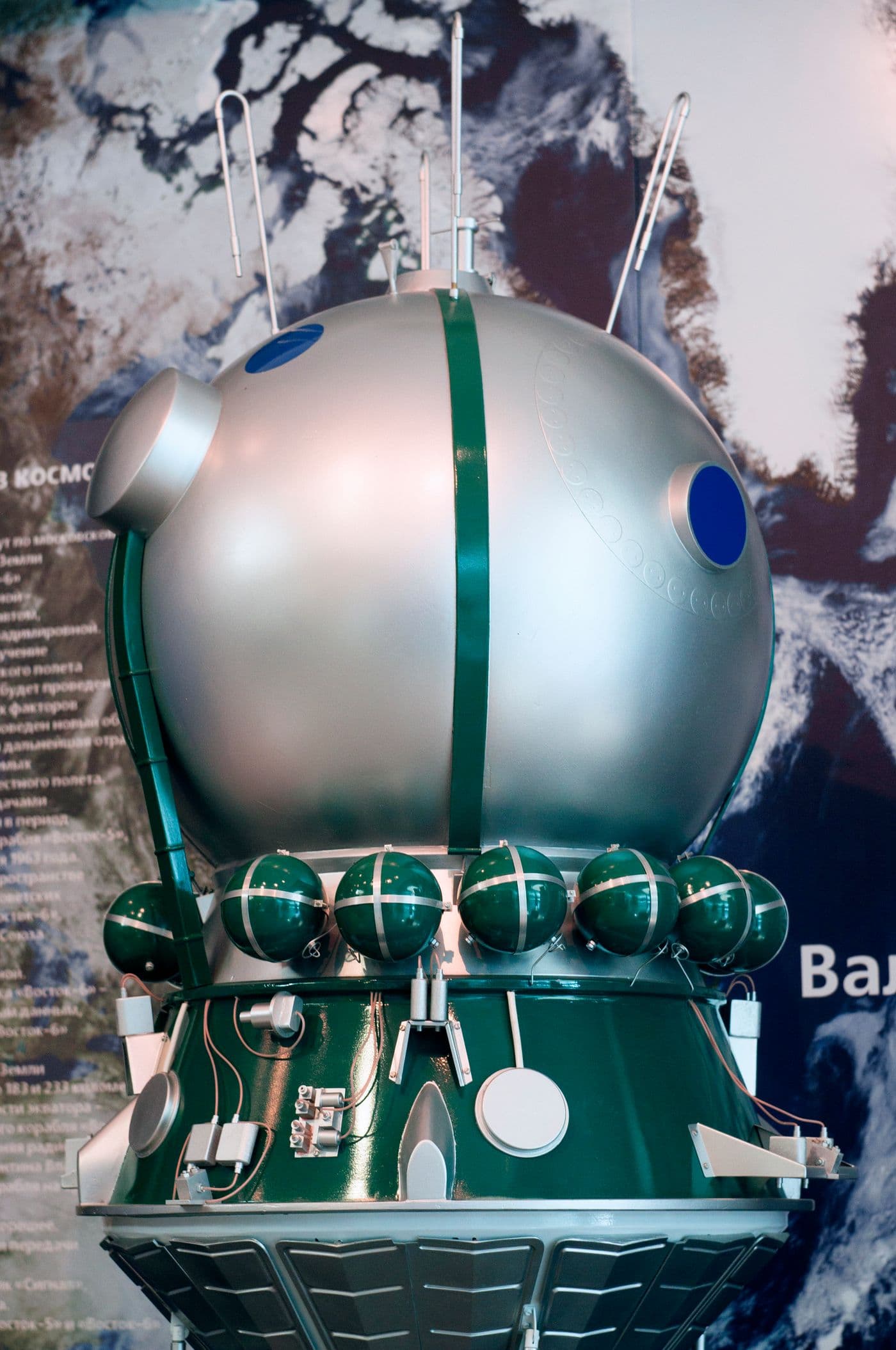
On the morning of 12 April 1961, an R-7 launch vehicle lifted off from the Baikonur Cosmodrome carrying the Vostok 1 spacecraft and its sole cosmonaut — Yuri Gagarin. In 108 minutes he completed a single orbit of the Earth and landed safely near the village of Smelovka.
The Vostok cabin was designed as an almost fully automated system: the cosmonaut's manual controls were locked behind a code, to be used only if the automatic landing system failed. This reflected a characteristic feature of the Soviet approach to the first crewed flights — an emphasis on redundancy and automation in areas where experience with the human factor in weightlessness was still lacking.
Cosmonaut
Course of the flight
Select a phase to read what happened. Every chapter has its own detailed page.
Launch from Baikonur
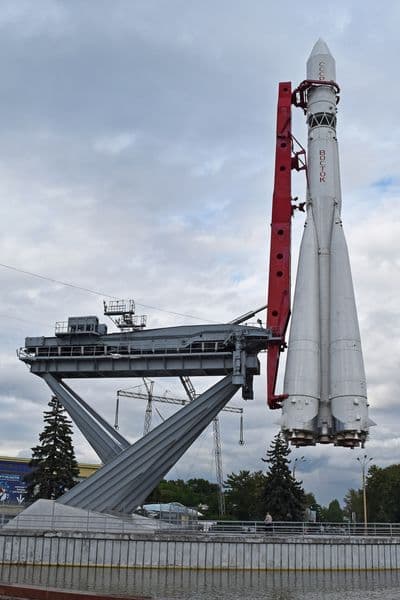
At 06:07 UTC (09:07 Moscow time), a Vostok-K rocket carrying the Vostok 1 spacecraft lifted off from the launch complex at the Baikonur Cosmodrome. On board sat 27-year-old Soviet pilot Yuri Gagarin — the first human ever to travel into space.
Read the chapterA Single Orbit of the Earth
Vostok 1 reached an orbit between 169 and 327 kilometers above the Earth and set out on a single circuit of the planet at a speed of over 27,000 km/h. Gagarin thus became the first human in history to experience weightlessness and to see the Earth from space.
Read the chapterReturn to the Atmosphere
The braking engine fired automatically over Africa and Vostok 1 began its descent back to Earth. Shortly afterwards, the instrument module failed to separate from the descent capsule as planned.
Read the chapterEjection and Landing
At an altitude of about 7 kilometers, Gagarin ejected from the capsule and completed the rest of the descent on his own parachute — as did the capsule itself, which landed under its own parachute separately, not far away.
Read the chapterThe flight in numbers
- Flight duration
- 108minutes
- Number of orbits of Earth
- 1
- Maximum altitude
- 327km
- Orbital speed
- ~27 400km/h
- Gagarin's age at the time of the flight
- 27years
Interesting facts
- Gagarin's height of 157 cm and weight of around 69 kg were among the selection criteria — the cramped Vostok cabin offered only limited space.
- The code to unlock the manual controls, sealed in an envelope for emergency use, was reportedly already known to Gagarin before launch — according to some accounts, colleagues had revealed it to him.
- The Soviet Union kept secret for almost ten years the fact that Gagarin had ejected and landed separately from the cabin — because of FAI rules governing the recognition of aviation records.
Follow us
Follow us on social media
New plates, trivia and behind-the-scenes updates as soon as they are ready.
Related entries
Eyewitness account
“Let's go! (Poyekhali!)”

The Flight of Vostok 1
- Flight duration
- 108min
- Number of orbits
- 1
- Max. orbital altitude
- 327km
- Orbital speed
- ~28 000km/h
Article on the timeline
Yuri Gagarin becomes the first human in space and in orbit around the Earth.
Open the entry →Sources & further reading
- NSSDCA Master Catalog (NASA) — technical parameters of the Vostok 1 spacecraft.
- Wikipedia: Vostok 1 — base structure of the article, CC-BY-SA 4.0.
- Siddiqi, Asif A.: Challenge to Apollo — The Soviet Union and the Space Race, 1945–1974, NASA SP-2000-4408.
Spaceflightpedia. (n.d.). Vostok 1 — The First Human in Space. Retrieved 9 October 2026, from https://spaceflightpedia.com/article/vostok-1
article text — CC-BY-SA · ◉ NASA photography — public domain · ✦ AI illustration — marked, generated from sources