- Date
- 16–19 June 1963
- Launcher
- Vostok
- Mission
- Vostok 6
#SSSR#Vostok#Space Race
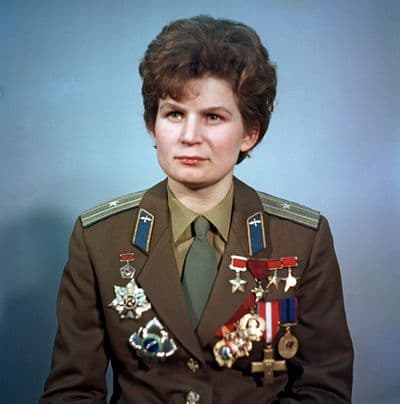
ostok 6 closed the Soviet Vostok program with one of its strongest propaganda triumphs: it put the very first woman, 26-year-old Valentina Tereshkova, into space. The flight was also a joint one — two days earlier Valery Bykovsky had launched in Vostok 5, and the two spacecraft circled the Earth at the same time.
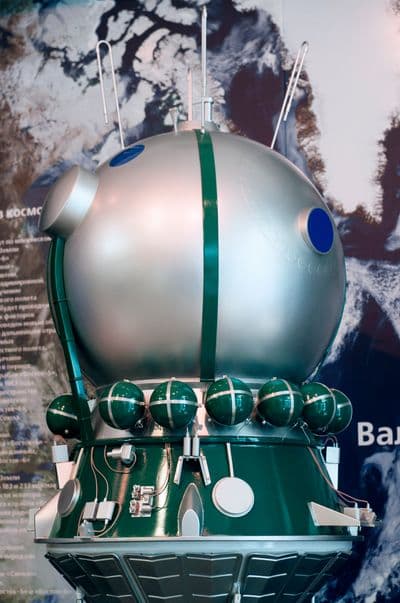
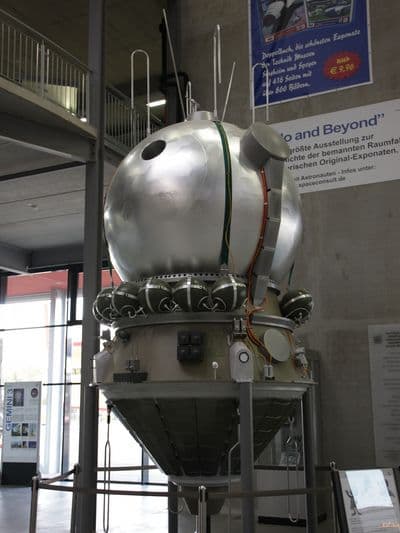
The Soviet leadership was looking for another "first" after Gagarin and Titov, and the idea of sending a woman into space suited the politics. Of five selected candidates the choice fell on Tereshkova — partly for her working-class background and parachuting experience, partly for the propaganda effect. The Vostok 3KA craft itself was identical to Gagarin's: a spherical descent capsule, automatic control and ejection on landing.
Cosmonaut
Mission timeline
Select a phase to read what happened. Every chapter has its own detailed page.
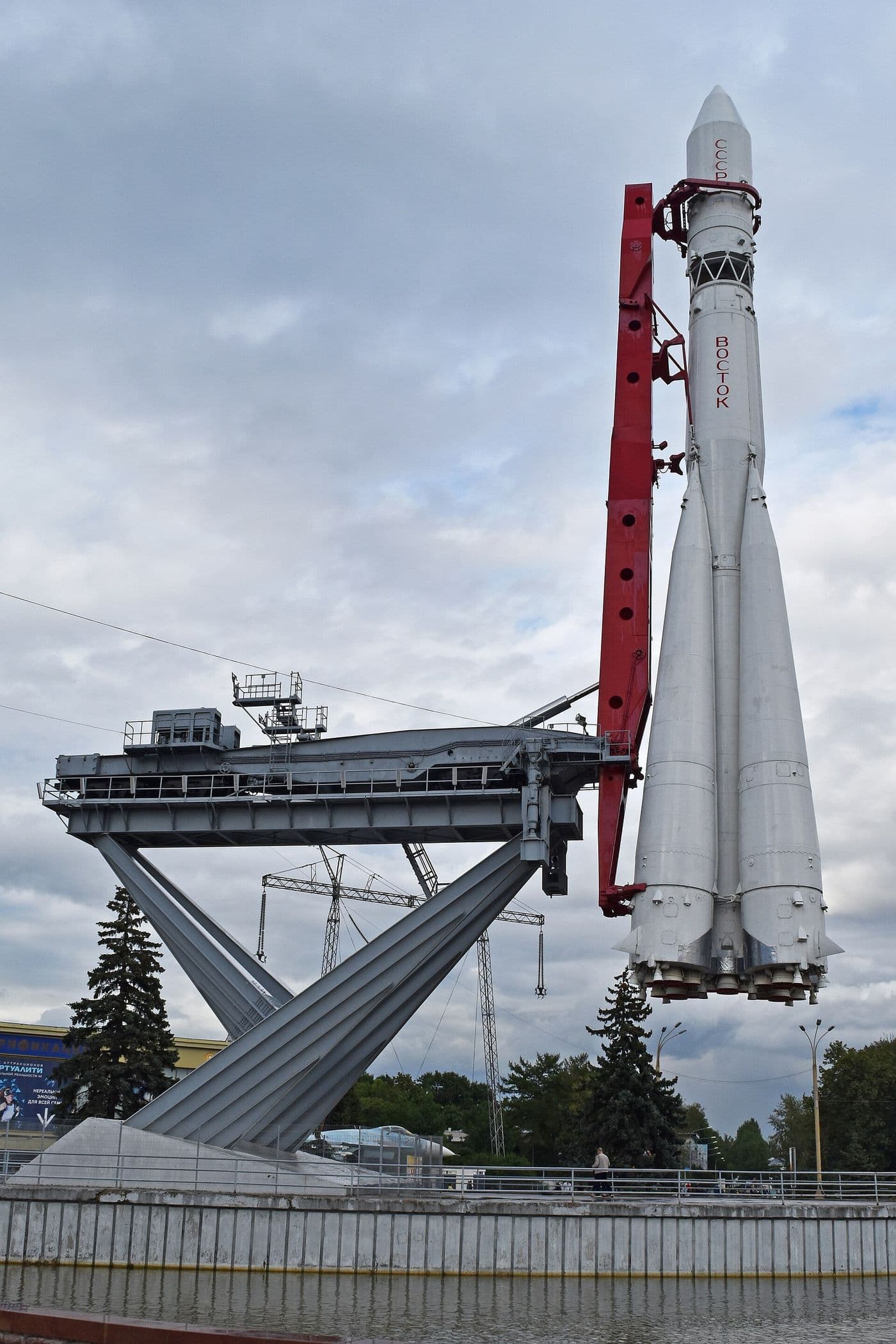
Launch from Baikonur
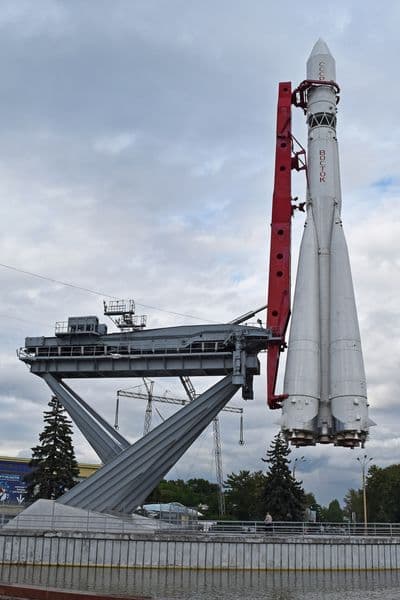
At 09:29 UTC an R-7 rocket carrying Vostok 6 lifted off from the Baikonur Cosmodrome. Aboard sat the 27-year-old Valentina Tereshkova — the first woman to venture into space. Many veteran engineers watched her launch with mixed feelings: it was a bold propaganda move.
Read the chapterA joint flight with Vostok 5
Vostok 6 was not alone in space. Valery Bykovsky had launched in Vostok 5 on 14 June, and now both craft circled the Earth at the same time — the Soviets were repeating the dual flight of Vostok 3 and 4 from the previous year.
Read the chapterA program error and 48 orbits
During the flight it emerged that Tereshkova did not feel well in weightlessness — she suffered from nausea and fatigue. Even so she stayed in space longer than all of America's Mercury astronauts combined, completing forty-eight orbits of the Earth.
Read the chapter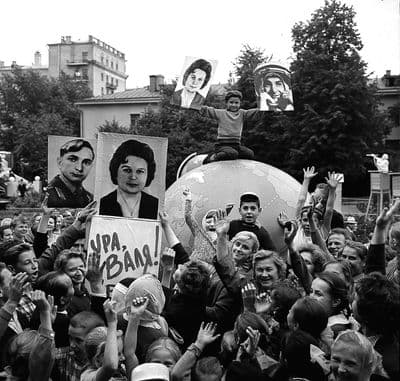
Return and a nation's welcome
After nearly three days the braking engine fired and Vostok 6 headed for Earth. Like all Vostok cosmonauts, Tereshkova ejected from the capsule at a height of several kilometres and landed under her own parachute — on 19 June near Barnaul in southern Siberia.
Read the chapterMission in numbers
- Cosmonaut
- V. Těreškovová
- Launch
- 16. 6. 1963
- Landing
- 19. 6. 1963
- Duration
- 2 d 22 h 50 min
- Orbits
- 48
- Spacecraft
- Vostok 3KA
- Call sign
- Čajka (Racek)
- Launch vehicle
- R-7 (Vostok)
Eyewitness account
“Hey sky, take off your hat!”
Follow us
Follow us on social media
New plates, trivia and behind-the-scenes updates as soon as they are ready.
Tereshkova became world-famous and, at home, a symbol of the equality of Soviet women. Even so, it took another nineteen years before a second woman flew (Svetlana Savitskaya, 1982). Vostok 6 remains the final flight of the Vostok program, which was succeeded by the Voskhod and then the Soyuz spacecraft.
Facts
- Tereshkova remains the only woman ever to have flown a solo space mission.
- She spent longer in space than all of America's Mercury astronauts combined.
- A guidance-program error would have made the ship drift away from Earth instead of descending — it was fixed with uploaded data on the first day.
- It was the last mission of the Vostok program; it was replaced by the Voskhod and then the Soyuz spacecraft.
- Within six months of the flight she married cosmonaut Nikolayev — their daughter was the first child of two people who had both flown in space.
Gallery
Related articles
Article on the timeline
Sources & further reading
- NSSDCA Master Catalog (NASA): Vostok 6, 1963-023A — technical parameters and flight chronology.
- Wikipedia: Vostok 6 — the starting structure of the article, CC-BY-SA.
- NASA history: 60 Years Ago — Valentina Tereshkova, First Woman in Space.
Spaceflightpedia. (n.d.). Vostok 6. Retrieved 9 October 2026, from https://spaceflightpedia.com/article/vostok-6
article text — CC-BY-SA · ◉ NASA photography — public domain · ✦ AI illustration — marked, generated from sources