#explainer
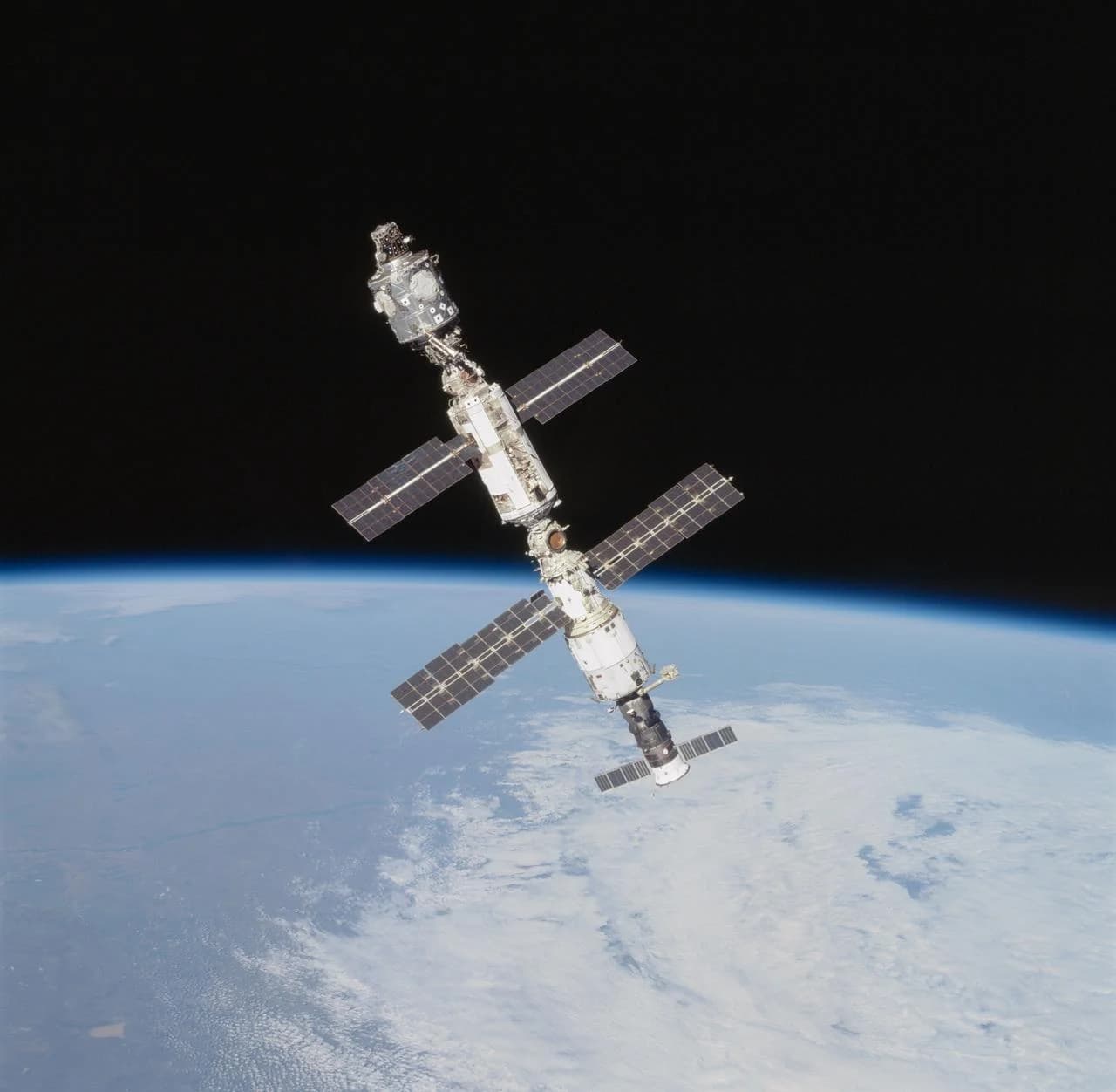
The ISS is constantly falling toward Earth, but it also moves sideways fast enough to keep missing the surface. This motion is an orbit. Continuous engine thrust and an absence of gravity are not what keep the station up.
Falling around a curved Earth
Gravity bends the station's path. Without it, the station would continue approximately straight; without sufficient sideways speed, it would descend into the atmosphere. In orbital flight, both the trajectory and Earth's surface below curve away. Satellites and spacecraft follow the same principle.
Why the orbit still needs boosting
Thin traces of atmosphere slow the station and gradually lower its orbit. Engines on visiting spacecraft or suitable station equipment therefore make corrections. A burn restores orbital energy rather than continuously holding the station up. Without corrections, its orbit would eventually decay.
Why altitude does not guarantee an orbit
An object lifted to station altitude without the required sideways velocity would not stay on a similar orbit. It would descend toward Earth. A brief trip above the atmosphere therefore differs from orbital flight by more than altitude alone. The full motion state matters: where the object is and how fast and in which direction it moves.
Follow us
Follow us on social media
New plates, trivia and behind-the-scenes updates as soon as they are ready.
Key points
- Gravity bends the station's path.
- Thin traces of atmosphere slow the station and gradually lower its orbit.
- An object lifted to station altitude without the required sideways velocity would not stay on a similar orbit.
Sources & further reading
- Free fall, orbital gravity and weightlessness.
- The distinction between gaining altitude and reaching orbit.
- Thrust, propellants, staging and rocket flight fundamentals.
Spaceflightpedia. (n.d.). Why does the ISS not fall to Earth?. Retrieved 17 October 2026, from https://spaceflightpedia.com/article/why-iss-does-not-fall
article text — CC-BY-SA · ◉ NASA photography — public domain · ✦ AI illustration — marked, generated from sources