#explainer
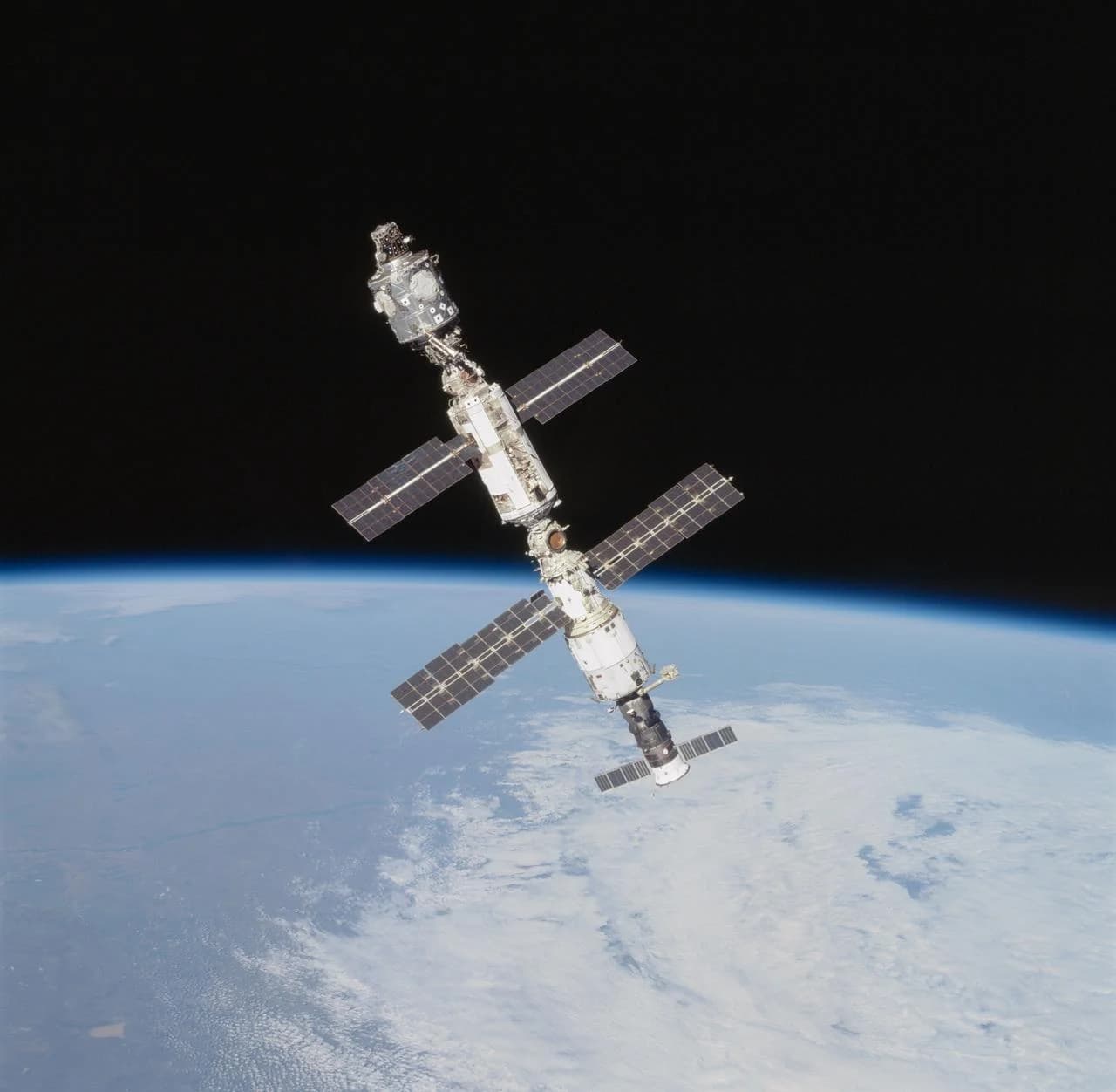
Astronauts in orbit float because they and their spacecraft fall freely together. The floor therefore does not support them as it does on Earth. Gravity remains strong at ISS altitude; its disappearance is not the cause of weightlessness.
What a person actually feels
Standing on Earth, the body senses support as the floor prevents free fall. Inside an orbiting cabin, the body, loose objects and walls move almost identically under gravity. A released object therefore does not fall toward the floor in the usual way. Parabolic aircraft flights can briefly create a similar condition.
Why it is called microgravity
A real station is not perfectly undisturbed: atmospheric drag, vibrations, manoeuvres and small gravity differences affect it. This motivates the term microgravity. Objects retain mass and inertia; massive equipment remains difficult to start and stop even while floating.
Why mass does not disappear
An object floats readily in the cabin, but starting and stopping it still requires force. Colliding with massive moving equipment can therefore be dangerous. Weightlessness changes support forces, not the amount of matter. An astronaut may slowly push equipment that could not be lifted on Earth but cannot ignore its inertia.
Follow us
Follow us on social media
New plates, trivia and behind-the-scenes updates as soon as they are ready.
Key points
- Standing on Earth, the body senses support as the floor prevents free fall.
- A real station is not perfectly undisturbed: atmospheric drag, vibrations, manoeuvres and small gravity differences affect it.
- An object floats readily in the cabin, but starting and stopping it still requires force.
Sources & further reading
- Free fall, orbital gravity and weightlessness.
- The distinction between gaining altitude and reaching orbit.
- Thrust, propellants, staging and rocket flight fundamentals.
Spaceflightpedia. (n.d.). Why do astronauts float if gravity still acts on them?. Retrieved 17 October 2026, from https://spaceflightpedia.com/article/astronauts-floating
article text — CC-BY-SA · ◉ NASA photography — public domain · ✦ AI illustration — marked, generated from sources