#explainer
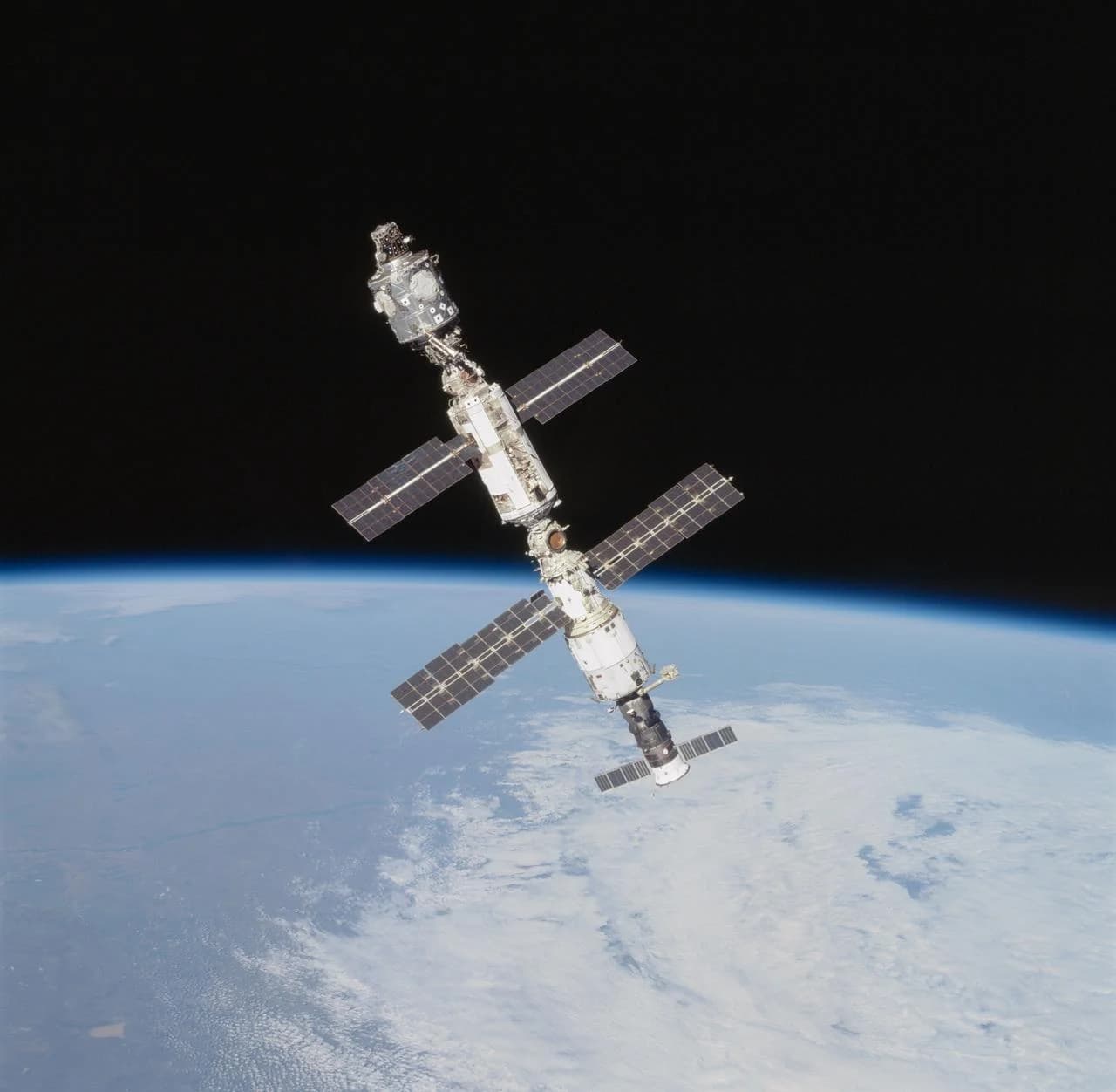
The ISS is a set of connected living and laboratory modules orbiting Earth. Solar arrays supply power, life-support systems maintain a habitable cabin, and cooling removes excess heat. The crew works inside a station that is in continuous free fall together with its occupants.
An interconnected system
Electrical power runs instruments, pumps, ventilation and communications. Batteries support operation while the station passes through Earth's shadow. Radiators release heat into space; habitable modules alone cannot maintain a suitable temperature. Sensors and computers help control orientation and monitor equipment.
Why deliveries are needed
Cargo spacecraft bring food, experiments, spare parts and other supplies. Water recycling reduces cargo needs but does not create a completely closed ecosystem. The station needs maintenance and periodic orbit boosts because a small amount of atmospheric drag remains at its altitude.
Where heat from computers and people goes
Electrical equipment and the crew produce heat. Cooling loops carry it to external radiators that release it into space. Solar arrays and radiators have different functions despite both appearing as large flat structures in photographs. Electricity alone is insufficient: without heat rejection, much equipment could not operate safely.
Follow us
Follow us on social media
New plates, trivia and behind-the-scenes updates as soon as they are ready.
Why airflow matters
Fans must mix the cabin air. In microgravity, warm air does not rise in the ordinary way, and exhaled gases must not accumulate around a person. Ventilation connects comfort with safety by carrying air past the crew and through equipment that removes carbon dioxide and contaminants. A habitable station is an actively controlled environment, not just a sealed room.
Key points
- Electrical power runs instruments, pumps, ventilation and communications.
- Cargo spacecraft bring food, experiments, spare parts and other supplies.
- Electrical equipment and the crew produce heat.
- Fans must mix the cabin air.
Sources & further reading
- Oxygen generation, water treatment and ISS atmosphere control.
- Station operations, logistics and crew exercise.
- Daily life, hygiene and work aboard the station.
- Sleeping bags and sleeping conditions in microgravity.
- Hygiene systems, ventilation and spacecraft habitability.
Spaceflightpedia. (n.d.). How does the ISS work?. Retrieved 17 October 2026, from https://spaceflightpedia.com/article/how-iss-works
article text — CC-BY-SA · ◉ NASA photography — public domain · ✦ AI illustration — marked, generated from sources
More questions on this topic
- Where do ISS astronauts get oxygen and water?
- How do astronauts use the toilet in space?
- How do astronauts sleep in space?
- What happens if the ISS loses pressure?