- Date
- 12–14 November 1981
- Launcher
- Space Shuttle
- Mission
- STS-2
#Space Shuttle#Columbia#STS-2
Crew
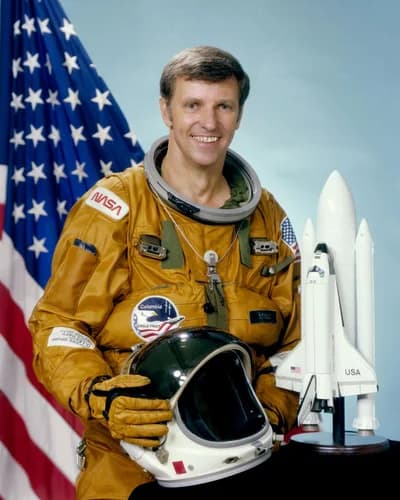 CommanderJoe H. EngleAmerican test pilot and NASA astronaut; commander of Columbia on STS-2. He shared the orbital test programme with pilot Richard Truly and commanded the return to Edwards Air Force Base.
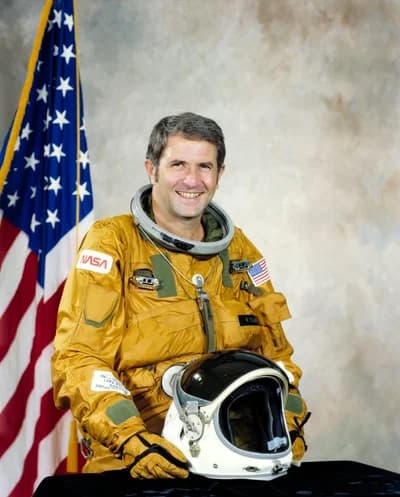 PilotRichard H. TrulyAmerican naval aviator and NASA astronaut; pilot of STS-2. Together with Joe Engle he tested Columbia’s systems and operated its new Canadian-built robotic arm.
Mission timeline
Select a phase to read what happened. Every chapter has its own detailed page.
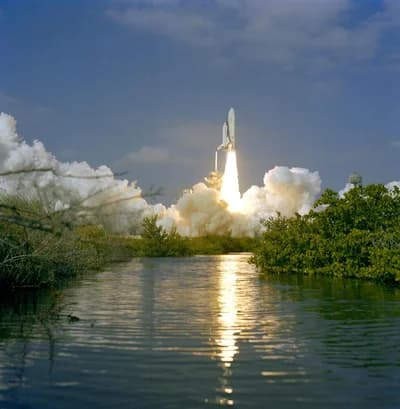
Launch of a reused orbiter
Columbia began its second journey into orbit from Florida.
Read the chapter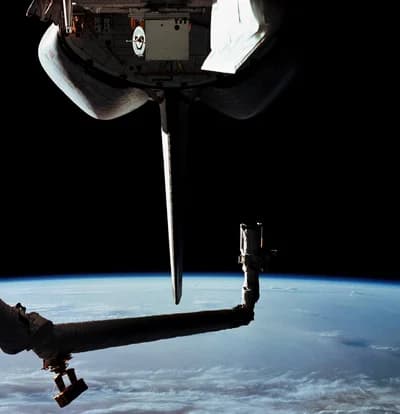
Robotics and science on a compressed schedule
A failed fuel cell forced the crew to fit key tasks into a shorter mission.
Read the chapter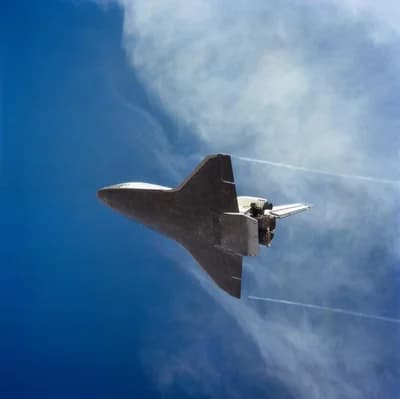
Landing at Edwards
Columbia returned to California after 37 circuits of Earth.
Read the chapterA spacecraft flies again
STS-2 was the second orbital test of the Space Shuttle and the second flight of Columbia. After STS-1 had demonstrated launch, orbital operation and a runway landing, this mission examined whether the same orbiter could be prepared for another flight. The crew consisted of commander Joe H. Engle and pilot Richard H. Truly. [1, 2]
Launch and a shorter test programme
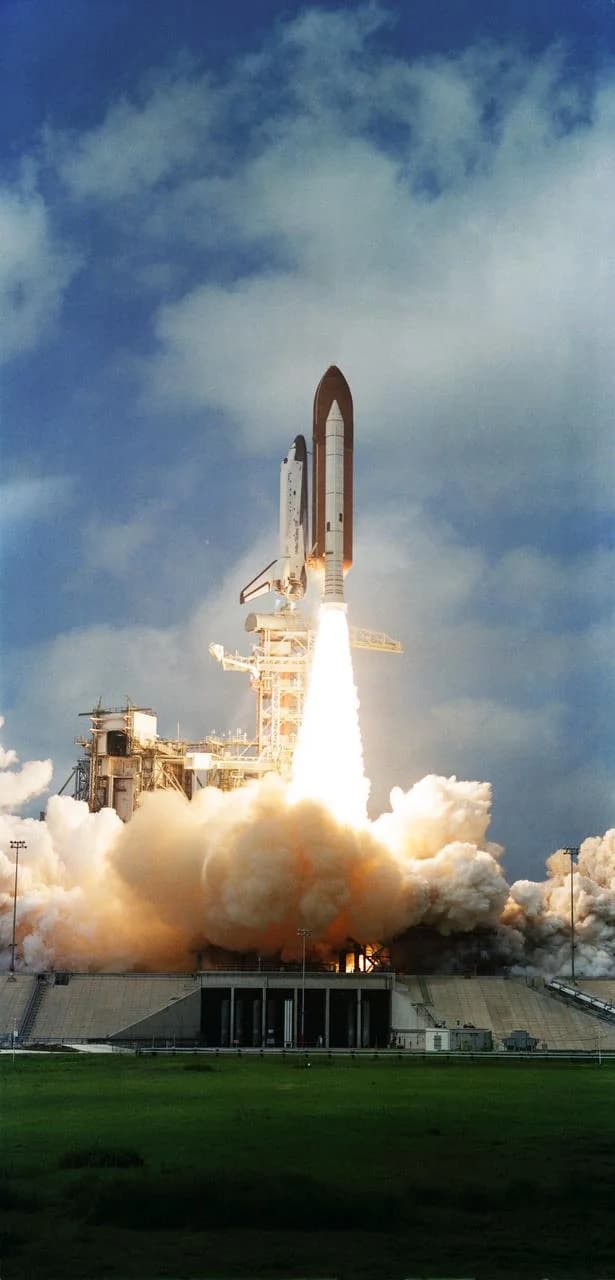
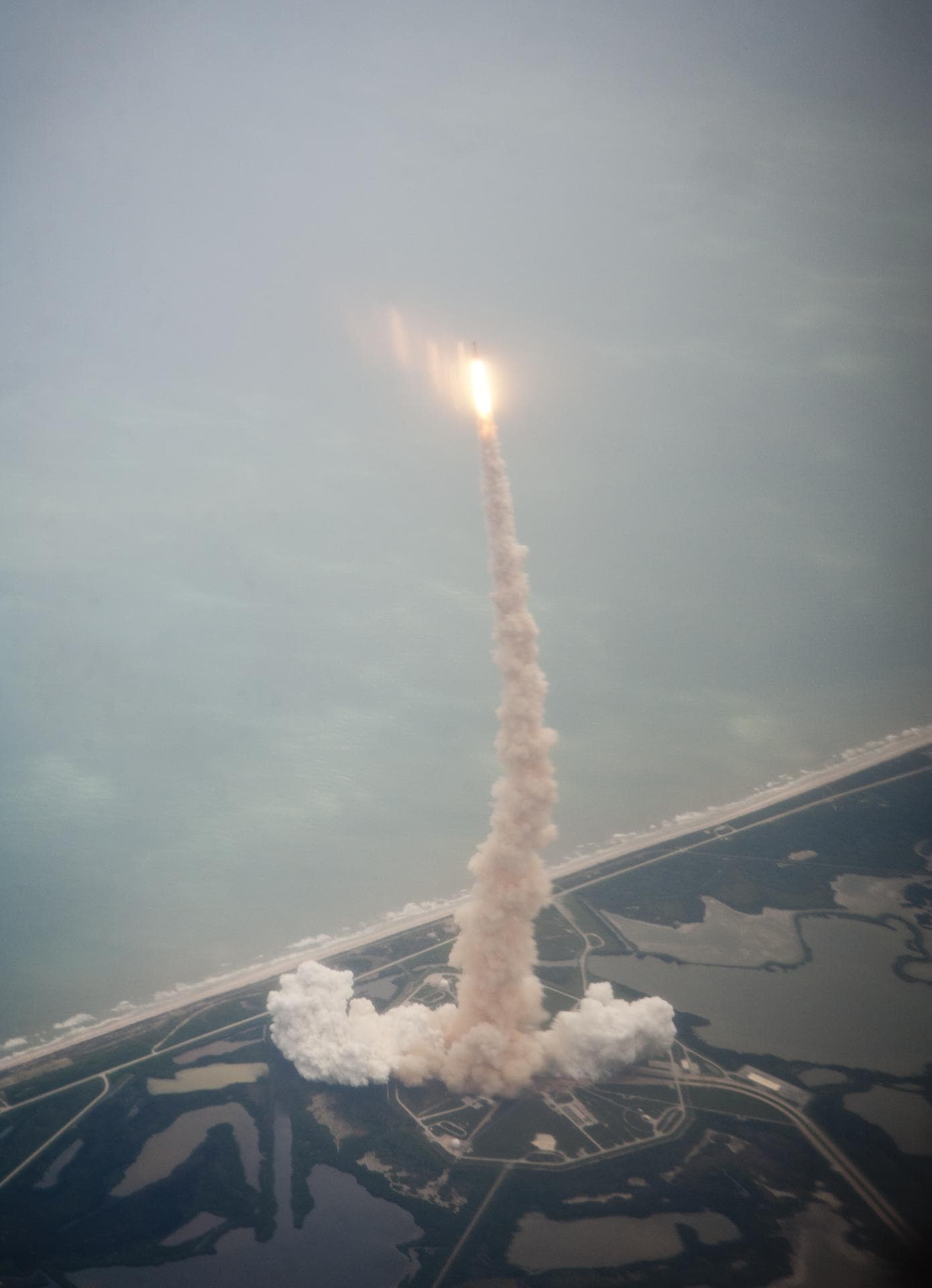
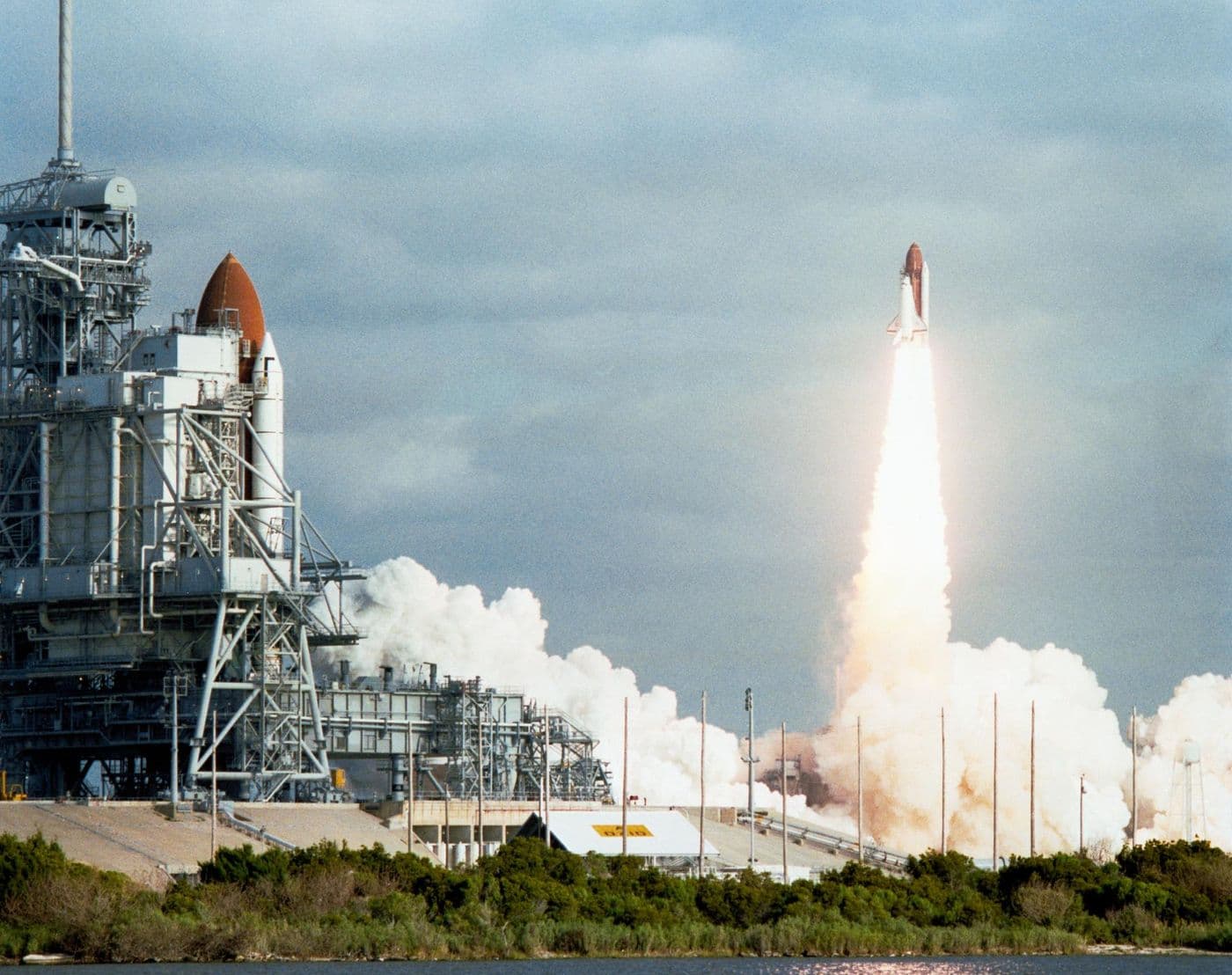
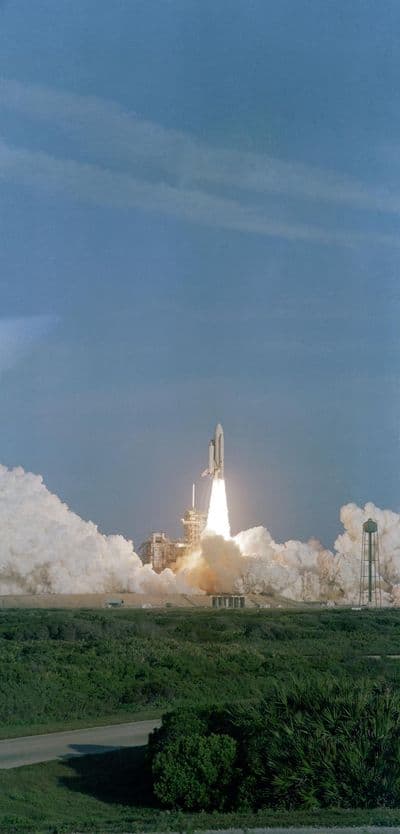
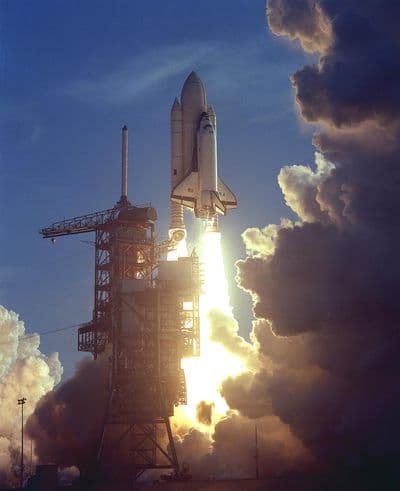
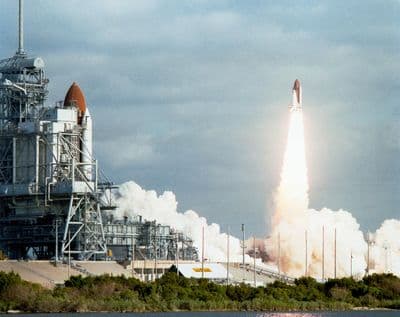
Columbia left Launch Pad 39A at Kennedy Space Center on 12 November 1981. The flight had been planned to last five days, but one of its three fuel cells failed. These units generated electricity for the spacecraft; operating with two remaining cells required an earlier return under the flight rules. The crew and ground controllers reorganised the work around the shortened schedule. [1, 2]
Canadarm enters service
The Canadian-built Remote Manipulator System, widely known as Canadarm, flew on STS-2 for its first tests in space. Engle and Truly checked the arm’s movement and controls in weightlessness. This flight tested the machinery itself rather than deploying an operational satellite. The arm would become an important tool for handling payloads on later shuttle missions. [1, 2]
Looking down at Earth
The OSTA-1 payload brought instruments for observing Earth and its atmosphere into the open cargo bay. Its experiments included Shuttle Imaging Radar-A (SIR-A), a radar that gathered information about the surface, and instruments studying atmospheric carbon monoxide and other features. Radar observations complemented optical sensing because they measured reflected radio signals rather than visible sunlight. [1, 3, 4]
Follow us
Follow us on social media
New plates, trivia and behind-the-scenes updates as soon as they are ready.
Return and results
Columbia landed at Edwards Air Force Base in California on 14 November after 37 orbits. The elapsed flight time was 2 days, 6 hours, 13 minutes and 12 seconds. NASA reported completion of about 90 percent of the mission objectives despite the early return. STS-2 therefore combined a successful demonstration of orbiter reuse with an incomplete five-day test programme; its fuel-cell failure remained an important operational lesson. [1, 2]
Flight in numbers
- Flight duration
- 2 d 6 h 13 min 12 s
- Earth orbits
- 37
- Crew members
- 2
Did you know?
- The crew had only two members: a commander and a pilot. [1]
- Canadarm was tested in space on this flight, but STS-2 did not deploy a satellite. [2]
- The cargo-bay science package was designated OSTA-1. [1, 3]
- The planned five-day flight ended after a little more than two days because of a fuel-cell failure. [1]
Gallery
Related articles
Sources & further reading
- NASA: STS-2. Accessed 13 October 2026.
- NASA: Columbia returns to space on STS-2. Accessed 13 October 2026.
- NASA: STS-2 to fly the first Space Shuttle payloads. Accessed 13 October 2026.
- NASA JPL: Shuttle Imaging Radar-A. Accessed 13 October 2026.
Spaceflightpedia. (n.d.). STS-2. Retrieved 12 October 2026, from https://spaceflightpedia.com/article/sts-2
article text — CC-BY-SA · ◉ NASA photography — public domain · ✦ AI illustration — marked, generated from sources