Organization · USA · Founded 1958
National Aeronautics and Space Administration (NASA)
- Country
- USA
- Founded
- 1958
- Missions
- 39
- Hardware
- 5
- Programmes
- 7
- People
- 19
Programmes
Programmes
Flights
Missions
Nancy Grace Roman Space Telescope
NASA’s flagship infrared observatory, launched on Falcon Heavy on Aug. 30, 2026 toward the Sun–Earth L2 region. Its wide surveys will investigate dark energy, exoplanets, and galaxy evolution.
Artemis I
Artemis I was the first integrated test of the SLS rocket, Orion spacecraft and ground systems for returning humans to the Moon. Uncrewed, it looped around the Moon and safely returned to Earth.
Crew Dragon Demo-2
První pilotovaný let Crew Dragonu k ISS a závěrečná end-to-end zkouška před certifikací systému.
Curiosity
NASA’s Curiosity rover has been studying Gale Crater on Mars since 2012, reconstructing the planet’s ancient environments and habitability.

STS-135
The final Space Shuttle mission. In July 2011 Atlantis delivered supplies and spare parts to the ISS, closing the shuttle’s thirty-year era.
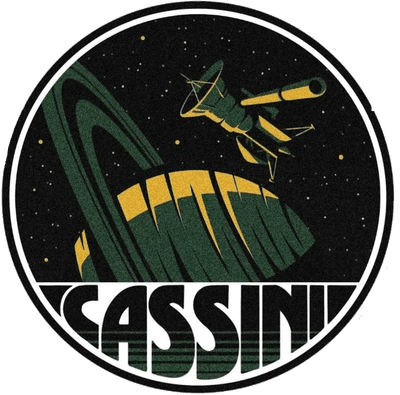
Cassini–Huygens
The Cassini–Huygens mission spent thirteen years at Saturn, revealing a dynamic ring system, methane lakes on Titan and active plumes from Enceladus.
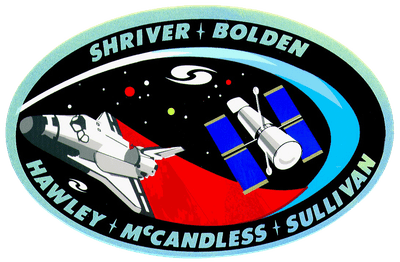
STS-31
The Space Shuttle Discovery mission that deployed the Hubble Space Telescope in April 1990.
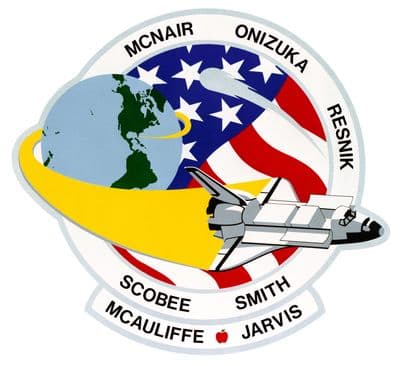
STS-51-L
STS-51-L was the twenty-fifth mission of the Space Shuttle program. On 28 January 1986, 73 seconds after launch, the orbiter Challenger broke apart when a frost-embrittled O-ring in its right solid rocket booster failed — the entire seven-member crew died, including teacher Christa McAuliffe.
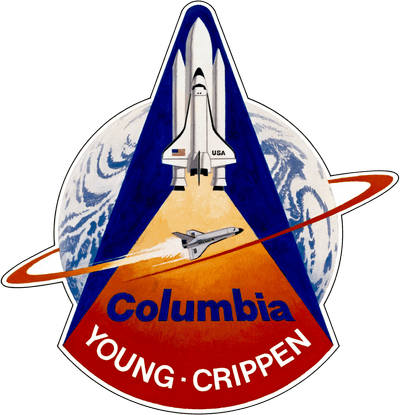
STS-1
The first orbital flight of the Space Shuttle system. In April 1981 Columbia, crewed by John Young and Robert Crippen, tested shuttle launch, orbital operations and runway landing for the first time.
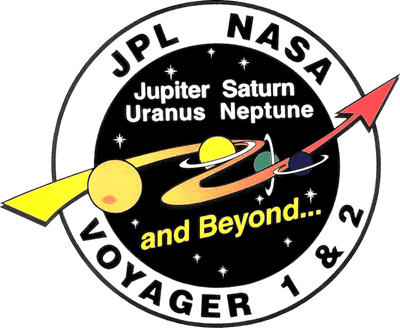
Voyager 1
Voyager 1 is the farthest human-made spacecraft, a long-lived NASA probe that transformed our view of the outer planets and continues exploring interstellar space.
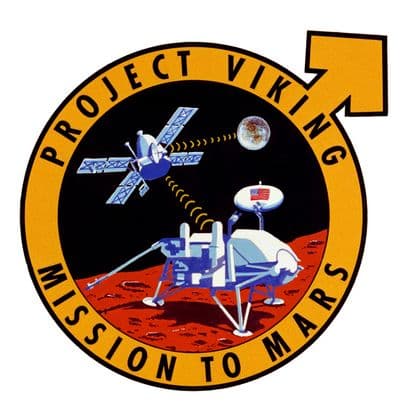
Viking 1
Viking 1 was the first successful U.S. mission to land and operate on Mars, combining a long-lived orbiter with a pioneering surface laboratory.
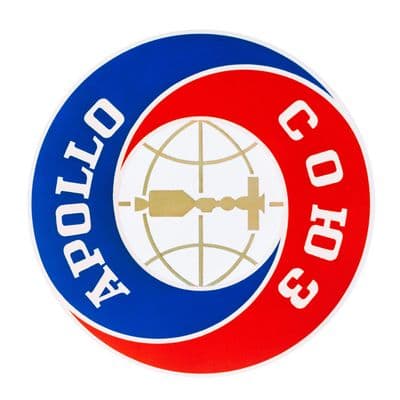
Apollo–Soyuz
Apollo–Soyuz (ASTP) was the first joint Soviet–American crewed flight, on 15–24 July 1975. The American Apollo docked with the Soviet Soyuz 19 and Tom Stafford shook hands with Alexei Leonov — the first international docking and a symbolic end to the space race.
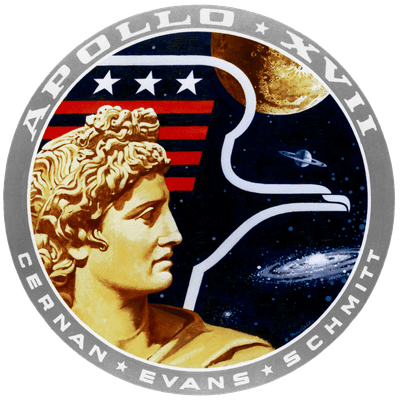
Apollo 17
NASA's final Apollo Moon landing. Cernan and Schmitt explored Taurus-Littrow for three days while Evans orbited alone; the mission returned the largest sample haul of the program.
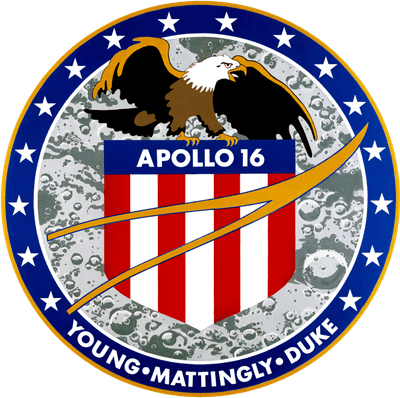
Apollo 16
Apollo 16 landed in the lunar highlands in the Descartes region in April 1972. Young and Duke explored the plateau by rover, while Mattingly worked in lunar orbit.
Hardware
Rockets and spacecraft
People
Notable people
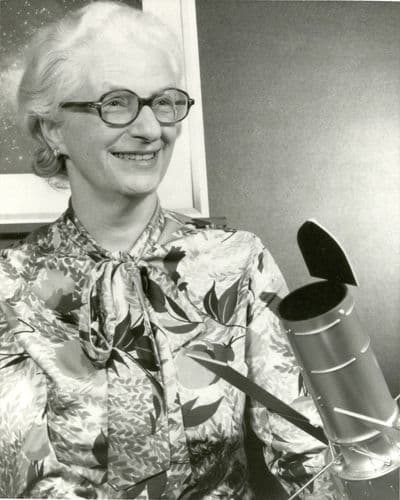 Nancy Grace RomanNancy Grace Roman (1925–2018) joined NASA in 1959 and, as the agency’s first Chief of Astronomy, connected scientists, NASA leadership, and policy decisions. She championed a program of major space observatories and played a key role in moving Hubble from concept to reality. The Roman Space Telescope bears her name in recognition of that work and her advocacy for women in science.
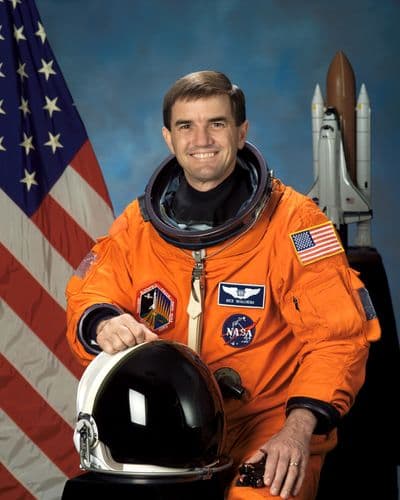 Rex WalheimMission specialist and veteran of several shuttle flights.
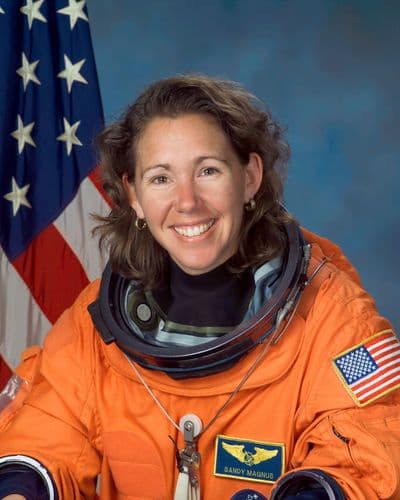 Sandra MagnusMission specialist responsible for payload and station operations.
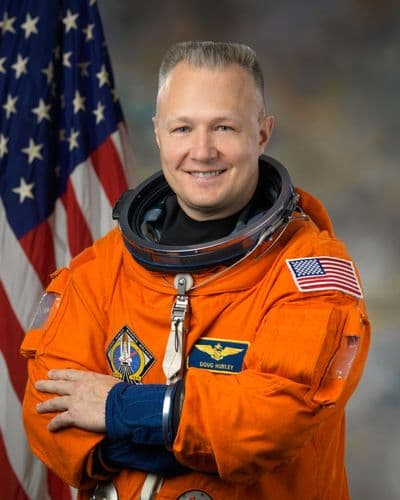 Douglas HurleyPilot of Atlantis on the program’s final flight.
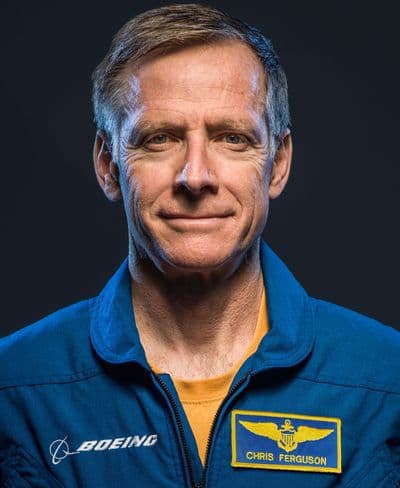 Christopher FergusonCommander of the final shuttle mission, STS-135.
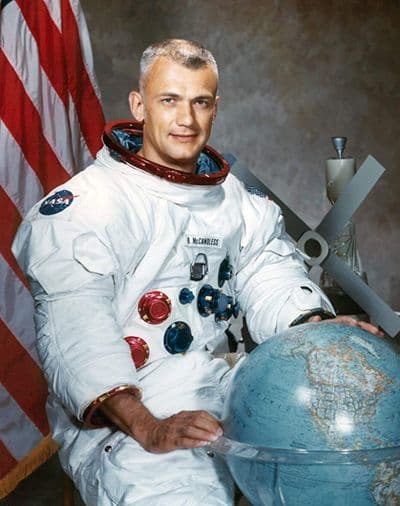 Bruce McCandless IIMission specialist and veteran of earlier shuttle flights.
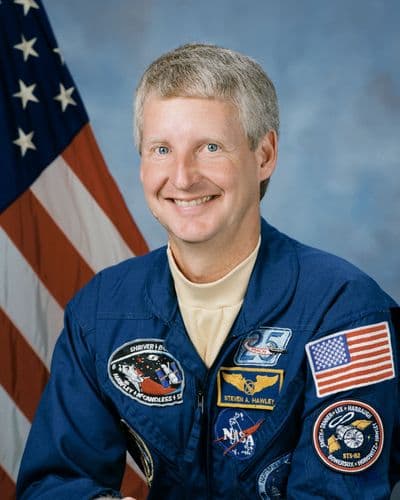 Steven A. HawleyMission specialist involved in payload operations.
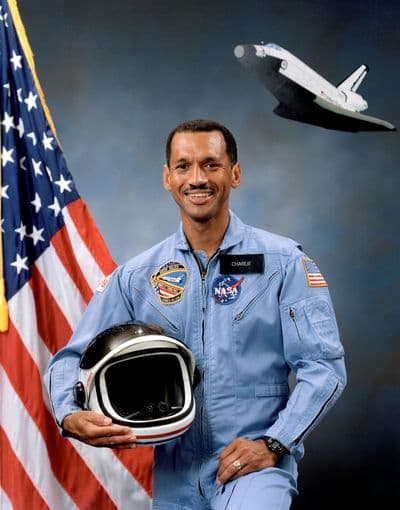 Charles F. BoldenDiscovery pilot who later became NASA administrator.
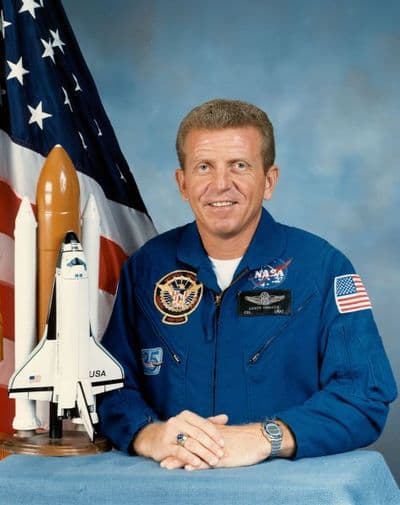 Loren ShriverMission commander and experienced shuttle pilot.
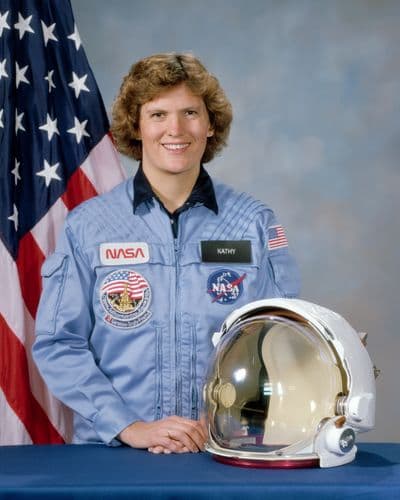 Kathryn D. SullivanNASA astronaut and the first American woman to perform a spacewalk, in 1984. She served as a mission specialist on STS-31 in 1990.
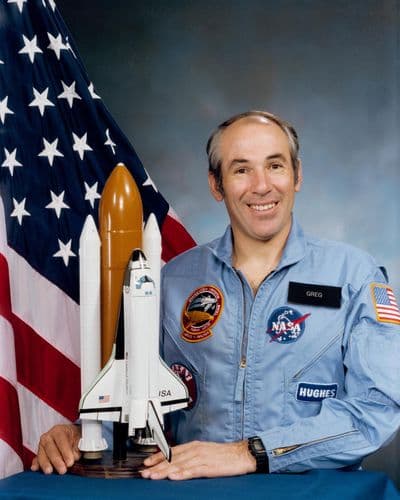 Gregory JarvisBorn 24 August 1944 in Detroit, Michigan. He worked as an engineer at Hughes Aircraft, which nominated him as a payload specialist for an experiment on fluid behaviour in microgravity. His flight was repeatedly bumped in favour of other missions and scheduling changes before it finally took place on STS-51-L.
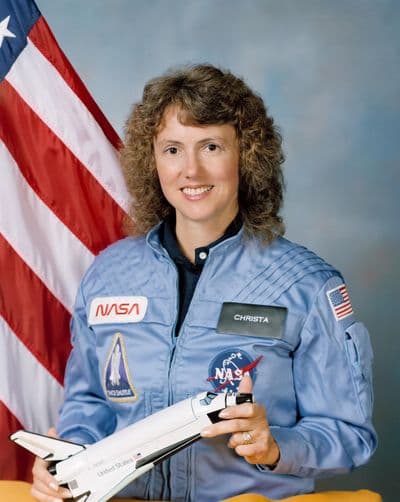 Christa McAuliffeBorn 2 September 1948 in Boston, Massachusetts. She taught social studies at a high school in Concord, New Hampshire. In July 1985 NASA selected her from over 11,000 applicants as the first participant in the "Teacher in Space" project, under which she was to teach two lessons live from orbit to schoolchildren on Earth. STS-51-L was her only spaceflight.
History
Key events
- Founding of NASAPresident Eisenhower signed the act establishing the National Aeronautics and Space Administration (NASA) as a civilian response to the Soviet Sputnik.
- Gemini programGemini was approved as a bridge between Mercury and Apollo. It tested orbital rendezvous and docking, spacewalks, and long-duration flights needed for the journey to the Moon.
- Launch Escape SystemThe Launch Escape System tower atop the Apollo spacecraft was designed to pull the crew capsule away to safety in the event of a Saturn V launch failure. The concept was proven by the Pad Abort Test-1 (7 November 1963) using a boilerplate Apollo capsule.
- Gemini 4
- Gemini 8
- Apollo 11Neil Armstrong and Buzz Aldrin landed in the Sea of Tranquility on 20 July. Armstrong’s first step followed at 02:56 UTC on 21 July (20 July in the United States).
- Apollo 13An oxygen tank explosion en route to the Moon forced the landing to be aborted; the crew used the lunar module as a lifeboat and returned safely to Earth.
- Apollo 17Cernan and Schmitt landed in the Taurus-Littrow valley — still the most recent crewed Moon landing.