- Mission
- Neil Gehrels Swift Observatory
#Swift#NASA#gamma-ray bursts#astrophysics#reentry
The Neil Gehrels Swift Observatory, launched on 20 November 2004, was built to catch gamma-ray bursts, the brightest explosions known in the universe, within moments of their discovery. On 20 October 2026 it carried out its final science observation. Atmospheric drag had pulled its orbit so low that the spacecraft could no longer hold its telescopes steady on a target, and NASA ended operations to prepare it for reentry. Swift has no propulsion able to reverse the decline, and an attempt to lift it with a commercial servicing spacecraft ended in August without a boost. The observatory is expected to reenter the atmosphere in an uncontrolled way within the next few weeks.
Mission timeline
Select a phase to read what happened. Every chapter has its own detailed page.
Launch and design
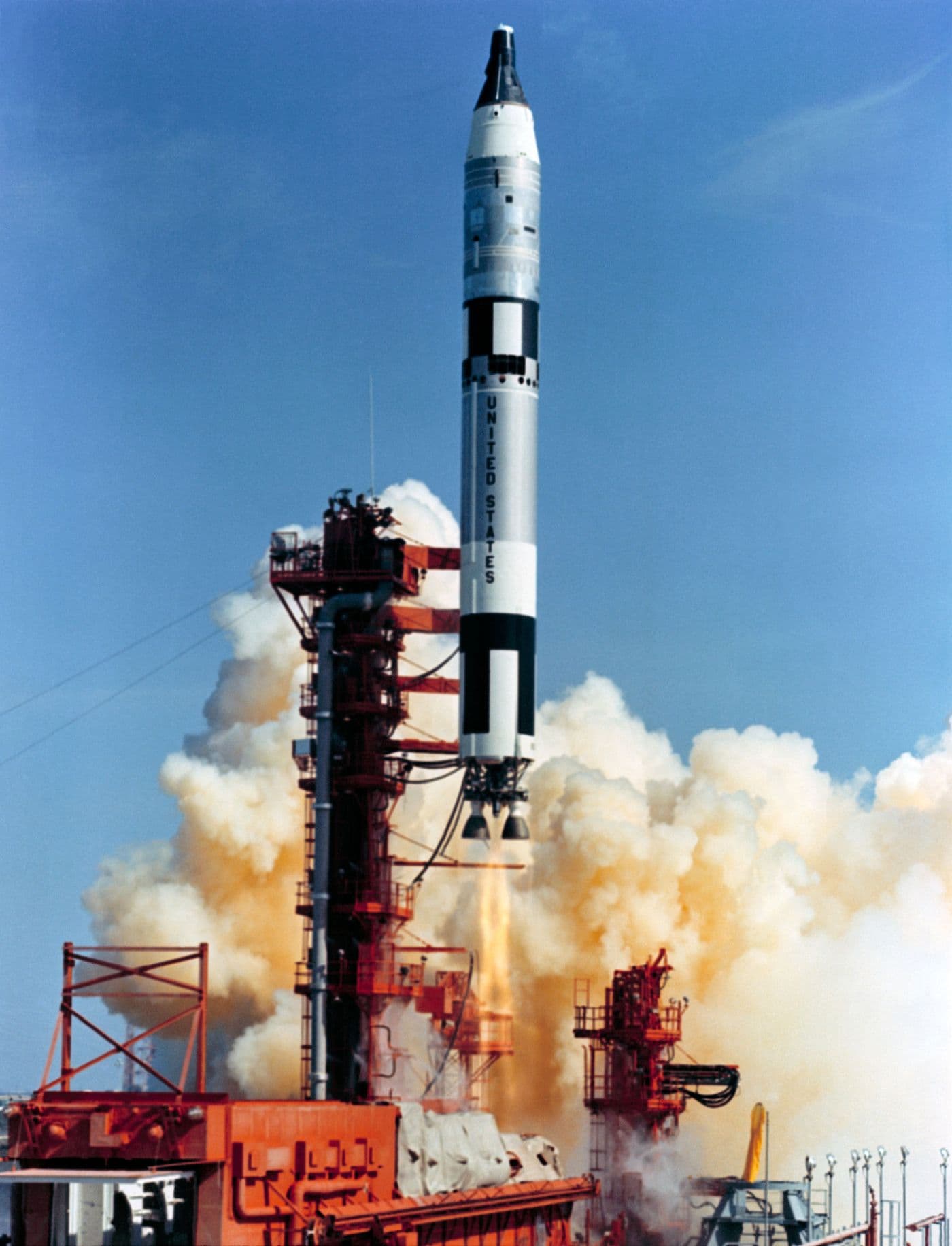
Swift was launched on 20 November 2004 and began science work the following month, as a two-year mission.
Read the chapterRapid response to bursts
The satellite could turn toward a new burst in about a minute.
Read the chapterOrbital decay and the rescue attempt
Solar activity increased drag and Swift sank faster than expected.
Read the chapterEnd of science operations
At less than 275 km Swift made its last observation and entered safe mode.
Read the chapterCurrent status
Status checked on 28 October 2026. On 20 October Swift made its last science observation. NASA reports that its orbit had fallen below 275 km (171 miles), where the denser upper atmosphere produces enough drag to prevent the observatory from keeping its instruments pointed at a target. The spacecraft entered safe mode, and the operations team at Penn State then sent a command that effectively ended Swift operations.
The public orbital elements for Swift (NORAD 28485, international designator 2004-047A), published by CelesTrak with an epoch of 28 October 2026, 11:27 UTC, correspond to a perigee of about 246.42 km, an apogee of about 251.98 km and an inclination of 20.55°. The values were derived from the mean motion and eccentricity of that element set and change daily. NASA gives no reentry date, saying only that the observatory will reenter in the next few weeks; this article will be updated after reentry.
What Swift was built to do
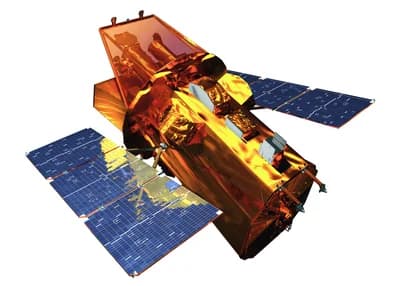
Swift was designed as a satellite dedicated to gamma-ray bursts, short flashes of high-energy radiation produced by the most violent known explosions, such as the collapse of massive stars and the mergers of compact objects. Bursts fade quickly, so the observatory combines a wide-field detector with narrow-field telescopes that turn toward the source automatically. NASA says the repointing typically took about a minute.
Three instruments carried out this work. The Burst Alert Telescope surveys a wide patch of sky in hard X-rays and locates new bursts. The X-ray Telescope and the Ultraviolet/Optical Telescope then observe the afterglow. The spacecraft could schedule up to 75 independent targets a day, which also made it a general-purpose facility for supernovae, black holes, comets and other transient events. In May 2005 it detected the afterglow of a short burst, GRB 050509B, for the first time.
Results and legacy
NASA states that Swift observed more than 2,000 gamma-ray bursts and studied more than 1,400 supernova explosions, and that its data contributed to about 7,000 published scientific papers. The archive holds nearly 22 years of brightness measurements, more than 1.5 million Ultraviolet/Optical Telescope images and about 12 terabytes of data. The mission was designed for two years and operated for more than ten times as long, roughly eleven times its planned lifetime.
In 2018 NASA renamed the mission after Neil Gehrels, its first principal investigator, who had died earlier that year. Looking beyond Swift, the head of NASA's Astrophysics Division said the agency is exploring how to use and augment its existing space telescopes to keep rapid response to cosmic events available.
Follow us
Follow us on social media
New plates, trivia and behind-the-scenes updates as soon as they are ready.
Why the orbit decayed
Even at several hundred kilometres the atmosphere is not a perfect vacuum, and a satellite without engines loses energy to drag and sinks. Solar activity heats and expands the upper atmosphere, which increases drag. NASA attributes the rapid decline of Swift's orbit to recent solar activity. Controllers paused science observations to reduce drag, resumed them later, and observed hundreds of science targets in the meantime. Returning to observations increased the drag again and Swift began to sink rapidly once more.
Swift was not designed to be serviced or refuelled, which is why rescuing it required a dedicated spacecraft.
The LINK rescue attempt
NASA commissioned a commercial servicing spacecraft, called LINK and built by Katalyst Space Technologies, to rendezvous with Swift and raise its orbit. The high-risk, fast-turnaround mission ended in August 2026 without an attempt to boost the observatory, so the plan to prevent reentry did not succeed. NASA has since said that both the agency and the contractor gained practical experience in preparing and flying a commercial mission to a satellite never designed for servicing, which it expects to apply to future refuelling, repair and relocation of satellites.
Sources & further reading
- Mission statistics, final observation on 20 October 2026, orbit below 275 km.
- Safe mode, end of operations, drag history and the August servicing mission.
- Outcome of the commercial servicing attempt and lessons for future servicing.
- Element set of 28 October 2026 used for perigee, apogee and inclination.
- Instruments, science objectives and mission history.
Spaceflightpedia. (n.d.). Neil Gehrels Swift Observatory. Retrieved 29 October 2026, from https://spaceflightpedia.com/article/neil-gehrels-swift-observatory
article text — CC-BY-SA · ◉ NASA photography — public domain · ✦ AI illustration — marked, generated from sources