- Date
- since 2016
- Agency
- SpaceX
- Launcher
- Starship
#SpaceX#Starship#Super Heavy#Raptor#Starbase#reusability
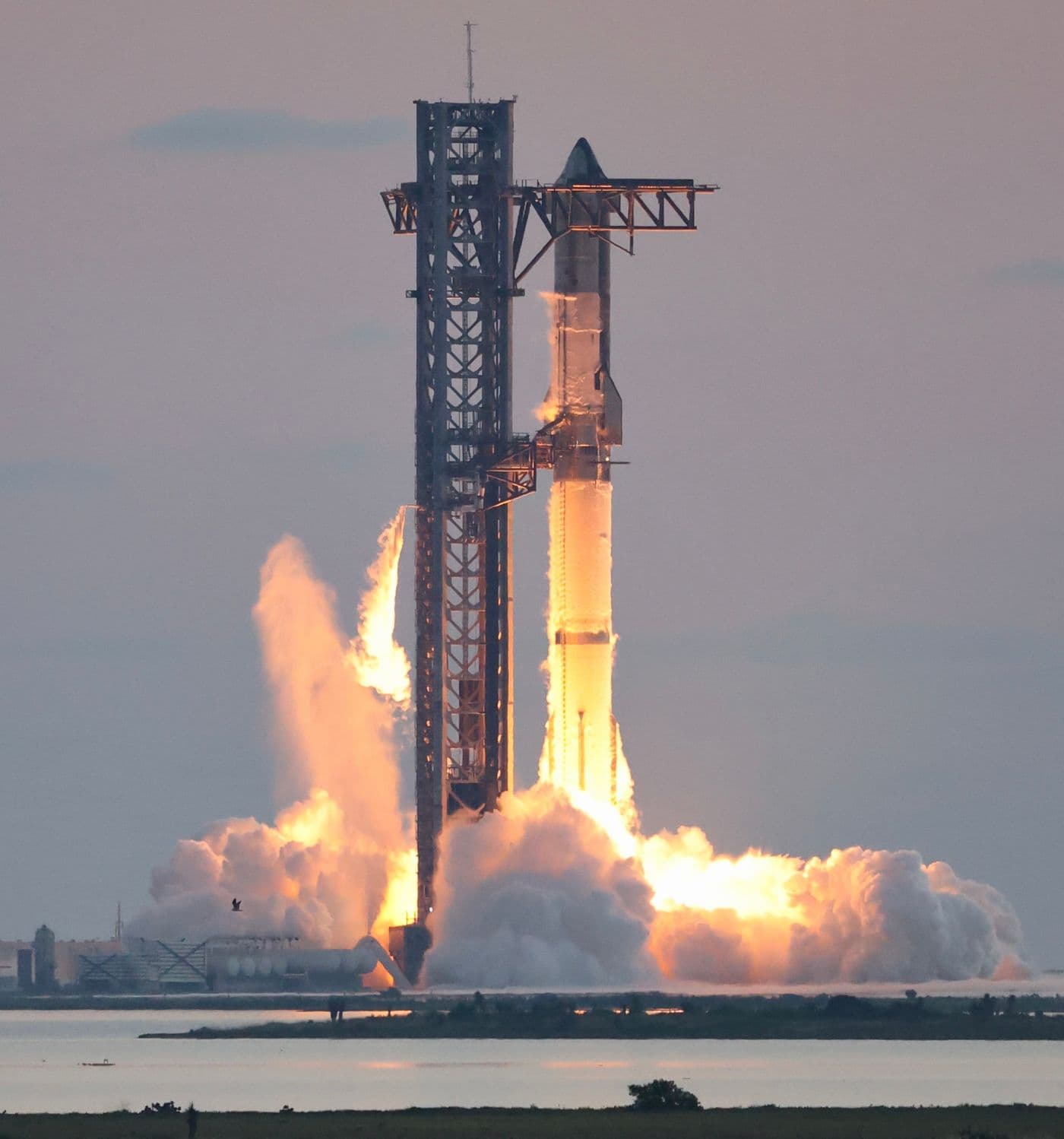
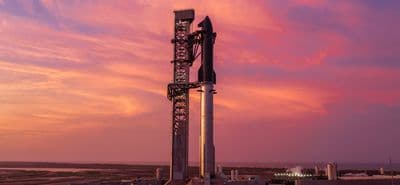
Starship is SpaceX’s development programme for a fully and rapidly reusable transportation system to low Earth orbit, the Moon, and eventually Mars. The stack consists of the Super Heavy first stage and the Starship upper stage, which is also the spacecraft. Both are designed to return and fly again. That goal distinguishes Starship from a conventional rocket: it is not only an attempt to build the most powerful launcher, but to make launches scalable operations. The programme remains in flight test; every success and every lost prototype is part of validating the system.
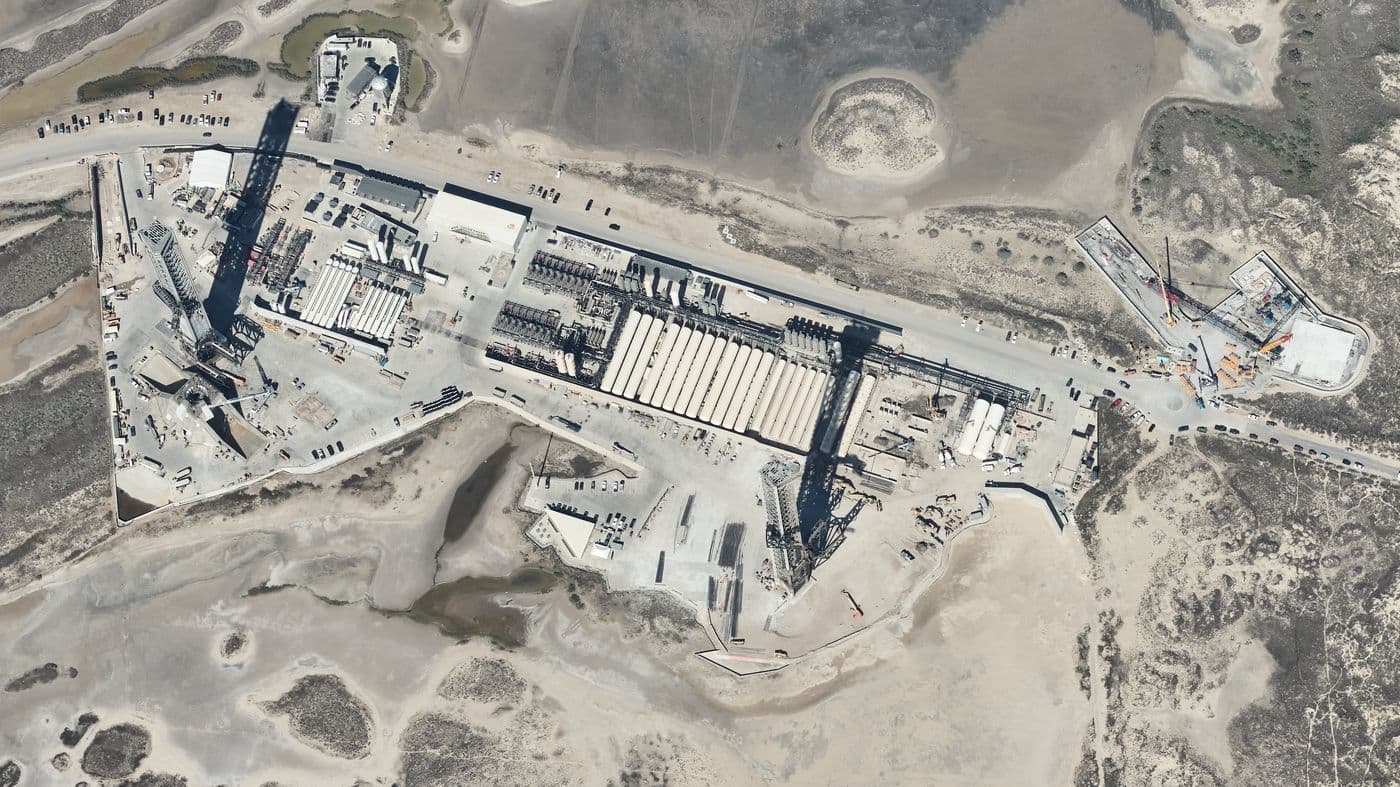
The programme’s roots lie in interplanetary-transport designs SpaceX began presenting in the mid-2010s. It introduced ITS in 2016, the smaller BFR a year later, and the architecture under the Starship name in 2018. The core idea did not change: a large steel upper stage would act in orbit as cargo ship, tanker, habitable volume, and lunar lander, while Super Heavy would repeatedly accelerate it from Earth. Dimensions, engines, materials, engine count, and return methods did change. The switch from carbon composites to stainless steel enabled cheaper, faster prototypes at Starbase.
Gallery
The first tangible test article was Starhopper — a squat, rough-looking demonstrator with one Raptor engine. In 2019 it performed short static-fire and altitude flights, validating basic methane-and-liquid-oxygen engine control. More complete ships SN8 through SN15 followed. Their high-altitude flights tested ascent, transfer into landing tanks, the aerodynamic belly-flop, flip maneuver, and powered landing. SN8 and SN9 hit hard, SN10 exploded after landing, and SN11 was lost in cloud; in May 2021 SN15 first completed the profile and landed softly. The series showed why SpaceX builds many prototypes: each exposed a specific weakness before the move to an orbital stack.
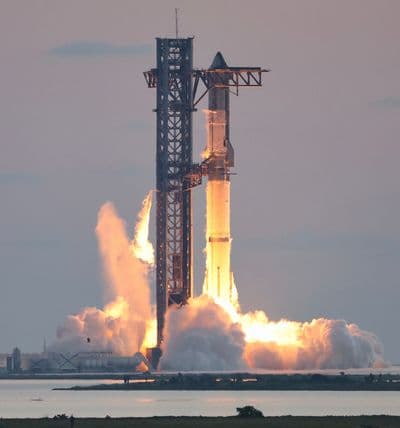
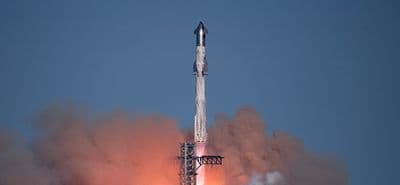
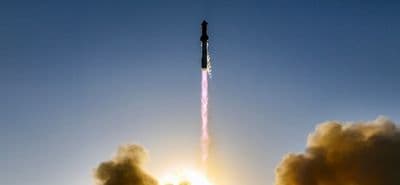
On April 20, 2023, the full Starship and Super Heavy stack flew for the first time. The first integrated flight ended after multiple engine losses and activation of the flight-termination system, but it tested the pad, control of a 33-engine booster, and the behavior of the huge stack in real flight. The second flight introduced hot staging: upper-stage Starship lights its engines while Super Heavy is still firing, saving the mass of a conventional interstage. Later flights progressively pushed capabilities from speed and return through payload-door tests, in-space engine relights, and atmospheric entry to more accurate landing maneuvers.
Official video: first integrated flight
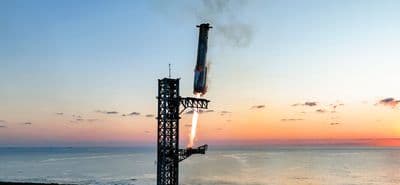
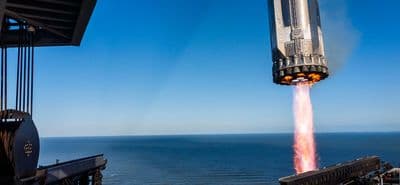
A turning point came on Flight 5 on October 13, 2024. On return to the pad, Super Heavy performed a landing burn and the tower caught it with mechanical arms. This is not merely a spectacular substitute for landing legs: catching is intended to return the booster directly to its servicing position and reduce dead mass. The upper stage on the same flight completed a controlled return to the Indian Ocean. Later tests also showed that reusability is not one maneuver. Routine operation requires repeatable reliability of engines, thermal protection, flaps, tanks, communications, pad, and the catch itself.
Gallery
Official video: booster catch
Starship uses methalox propellant — liquid methane and liquid oxygen — and Raptor engines using a full-flow staged-combustion cycle. Super Heavy V3 has 33 Raptor 3 engines; upper-stage Starship has six, combining atmospheric and vacuum engines. Stainless steel handles cryogenic temperatures and high thermal loads well, but return is chiefly protected by thousands of ceramic tiles on the ship’s belly. Four flaps steer the vehicle during hypersonic descent. Starship is therefore not a conventional multistage rocket with a separate capsule: its upper stage must be a fast stage, spacecraft, payload bay, and return vehicle at the same time.
Follow us
Follow us on social media
New plates, trivia and behind-the-scenes updates as soon as they are ready.
Starship by the numbers
- Stack
- ~121m
- Diameter
- 9m
- Super Heavy V3
- 33Raptor 3
- Starship V3
- 6Raptor
- Propellant
- CH₄ + LOX
- V3 target
- ~100t to LEO
V3, which debuted on Flight 12 in May 2026, carries lessons from previous flights into a new design. SpaceX cites stronger, simplified Raptor 3 engines, redesigned grid fins, an integrated hot stage, the new Pad 2, and systems for long stays in space. These include improved handling of cryogenic propellants, docking fittings, and connections for ship-to-ship transfer. On 28 September 2026 Flight 14 first entered Earth orbit and deployed 26 Starlink V3 satellites. An early vacuum Raptor shutdown led to a shorter orbital stay; the ship performed a deorbit burn and controlled northern Pacific splashdown. Orbital payload delivery is demonstrated, while full and rapid reuse of both stages remains a development objective.
Official video: return maneuvers
The long-term plan has several linked layers. The nearest practical use is deploying large batches of Starlink satellites to low Earth orbit. For the Moon, SpaceX envisages tanker Starships, a depot, and the lunar Starship HLS; several tankers would first fuel a ship that then departs for the Moon. NASA selected HLS for Artemis, but this chain still requires demonstrating orbital transfer, long-duration storage of cryogenic propellant, and safe operations. Mars is a more distant target: it would require hundreds of tonnes of cargo, repeated orbital refueling, entry into the Martian atmosphere, and producing return propellant on site. These are plans, not finished capabilities — which is exactly why today’s flight tests matter.
What still has to be proven
- Repeated orbit insertion and reliable deployment of real payload.
- Safe return and rapid reuse of both booster and upper stage.
- Transfer of cryogenic propellant between ships on orbit.
- Long space stays without excessive propellant boil-off.
- Crewed operations, life support, and certification for lunar missions.
Linked articles
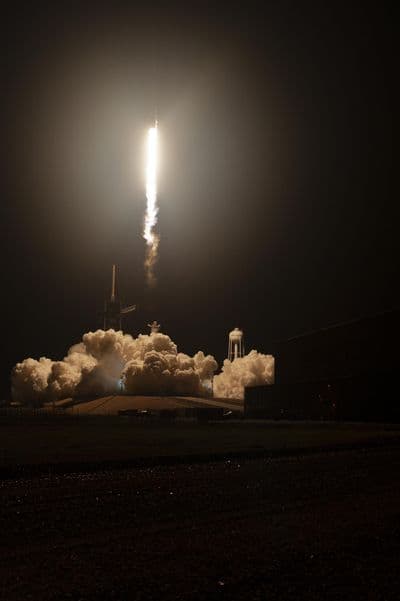
All Starship missions
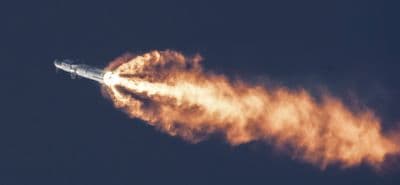
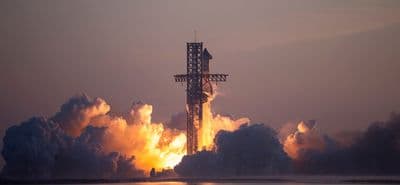





First presentation
The public story of today’s Starship began at the 2016 International Astronautical Congress. SpaceX presented the Interplanetary Transport System (ITS): an enormous reusable booster, spacecraft, and orbital refilling scheme for Mars. It was a proposal, not completed hardware. In 2017 SpaceX presented the smaller BFR as one system for Earth orbit, the Moon, and Mars. The Starship name and stainless-steel design arrived in 2018; dimensions and details continued to evolve.
Prototypes
Before the complete rocket flew, test articles of the upper stage alone validated Raptor engines, high-altitude flight, the belly-first aerodynamic descent, and the final landing flip.
Short hops validated Raptor and basic flight control.
First roughly 150-metre hop of a full-scale tank.
A second 150-metre hop repeated the maneuver.
First high-altitude flight with aerodynamic descent; hard landing.
Another high-altitude flight; lost during landing.
The ship touched down but exploded shortly afterward.
The high-altitude flight ended with loss of the ship before landing.
First high-altitude prototype to complete the profile and land softly.
All integrated flights
Every completed integrated flight of the full stack through 6 October 2026 appears below. Success refers to individual test objectives. The first thirteen flights followed suborbital profiles; Flight 14 first reached orbit and deployed 26 satellites.
Flight 1
First full-stack launch; engine and control losses ended the flight.
Flight 2
First successful hot staging; both stages were later lost.
Flight 3
The ship completed ascent; payload-door and internal propellant-transfer tests followed.
Flight 4
Both stages completed controlled returns and soft splashdowns for the first time.
Flight 5
First Super Heavy tower catch; the ship made a controlled Indian Ocean splashdown.
Flight 6
First in-space Raptor relight; the booster splashed down instead of being caught.
Flight 7
V2 ship debut and another booster catch; the upper stage was lost during ascent.
Flight 8
The booster returned to the tower; the ship was lost after engine trouble.
Flight 9
First booster reflight; ship and booster were lost during return.
Flight 10
Return to a successful flight profile: dummy Starlink deployment and controlled ship descent.
Flight 11
Final V2 flight; more dummy deployments, an engine relight, and controlled return.
Flight 12
V3 and Pad 2 debut; the ship flew and splashed down softly, while booster return failed.
Flight 13
Twenty Starlink V3 satellites released on a suborbital path; the ship survived splashdown and was recovered, while the booster hit hard.
Flight 14
First Earth orbit and 26 Starlink V3 satellites; an engine issue shortened the mission before Pacific return.
What comes next
This diagram shows the dependency of planned capabilities, not a confirmed schedule. Lunar and Martian missions first require reliable orbital delivery and then cryogenic propellant transfer between ships.
Payload to orbit
Routine delivery of Starlink and other cargo.
Return and reflight
Repeatable recovery and reflight of both stages.
Orbital refilling
Rendezvous, docking, and transfer between two ships.
Moon
Uncrewed demonstration, then Starship HLS for Artemis.
Mars
Long-term goal requiring landing, infrastructure, and return propellant.
Based on SpaceX and NASA architecture; the sequence shows dependencies, not launch dates.
Mission cards
Starship Flight 1
First full-stack launch; engine and control losses ended the flight.
Completed · 18. 11. 2023Starship Flight 2
First successful hot staging; both stages were later lost.
Completed · 14. 3. 2024Starship Flight 3
The ship completed ascent; payload-door and internal propellant-transfer tests followed.
Completed · 6. 6. 2024Starship Flight 4
Both stages completed controlled returns and soft splashdowns for the first time.
Completed · 13. 10. 2024Starship Flight 5
First Super Heavy tower catch; the ship made a controlled Indian Ocean splashdown.
Completed · 19. 11. 2024Starship Flight 6
First in-space Raptor relight; the booster splashed down instead of being caught.
Completed · 16. 1. 2025Starship Flight 7
V2 ship debut and another booster catch; the upper stage was lost during ascent.
Completed · 6. 3. 2025Starship Flight 8
The booster returned to the tower; the ship was lost after engine trouble.
Completed · 27. 5. 2025Starship Flight 9
First booster reflight; ship and booster were lost during return.
Completed · 26. 8. 2025Starship Flight 10
Return to a successful flight profile: dummy Starlink deployment and controlled ship descent.
Completed · 13. 10. 2025Starship Flight 11
Final V2 flight; more dummy deployments, an engine relight, and controlled return.
Completed · 22. 5. 2026Starship Flight 12
V3 and Pad 2 debut; the ship flew and splashed down softly, while booster return failed.
Completed · 24. 7. 2026Starship Flight 13
Twenty Starlink V3 satellites released on a suborbital path; the ship survived splashdown and was recovered, while the booster hit hard.
Completed · 28. 9. 2026Starship Flight 14
First Earth orbit and 26 Starlink V3 satellites; an engine issue shortened the mission before Pacific return.
SpaceX
The company developing Starship, Falcon and Dragon.
Sources & further reading
- Post-flight report on the first orbital mission and deployment of 26 Starlink V3 satellites.
- Original public presentation of the ITS interplanetary system.
- Presentation of the smaller BFR architecture at IAC 2017.
- Official overview of development flights from Starhopper through integrated tests.
- Official account of the thirteenth integrated flight.
- Official Flight 12 account, the first V3 and Pad 2 flight.
- Description of V3 structural, engine, and operational changes.
- V3 planned payload, Starlink V3, propellant transfer, and outlook for later generations.
- Regulatory framework for Starship/Super Heavy licenses and permits.
- Starship HLS role in Artemis.
Spaceflightpedia. (n.d.). Starship. Retrieved 9 October 2026, from https://spaceflightpedia.com/article/starship
article text — CC-BY-SA · ◉ NASA photography — public domain · ✦ AI illustration — marked, generated from sources