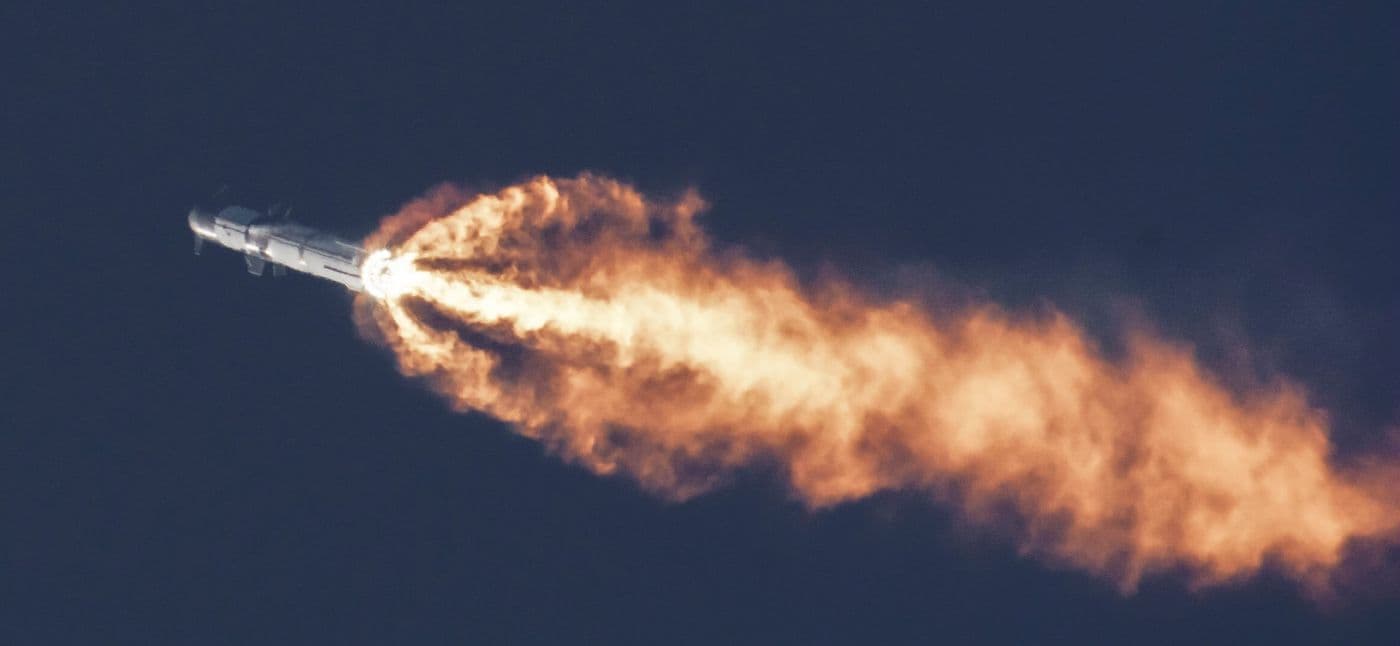
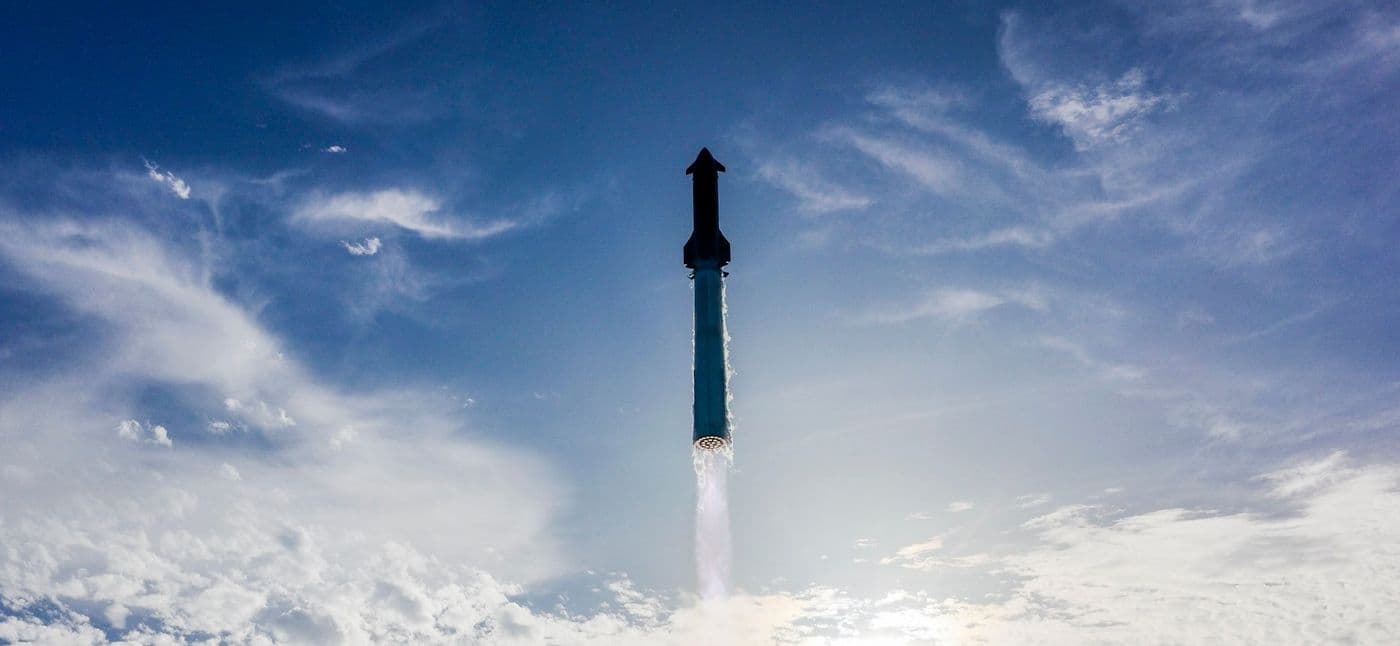
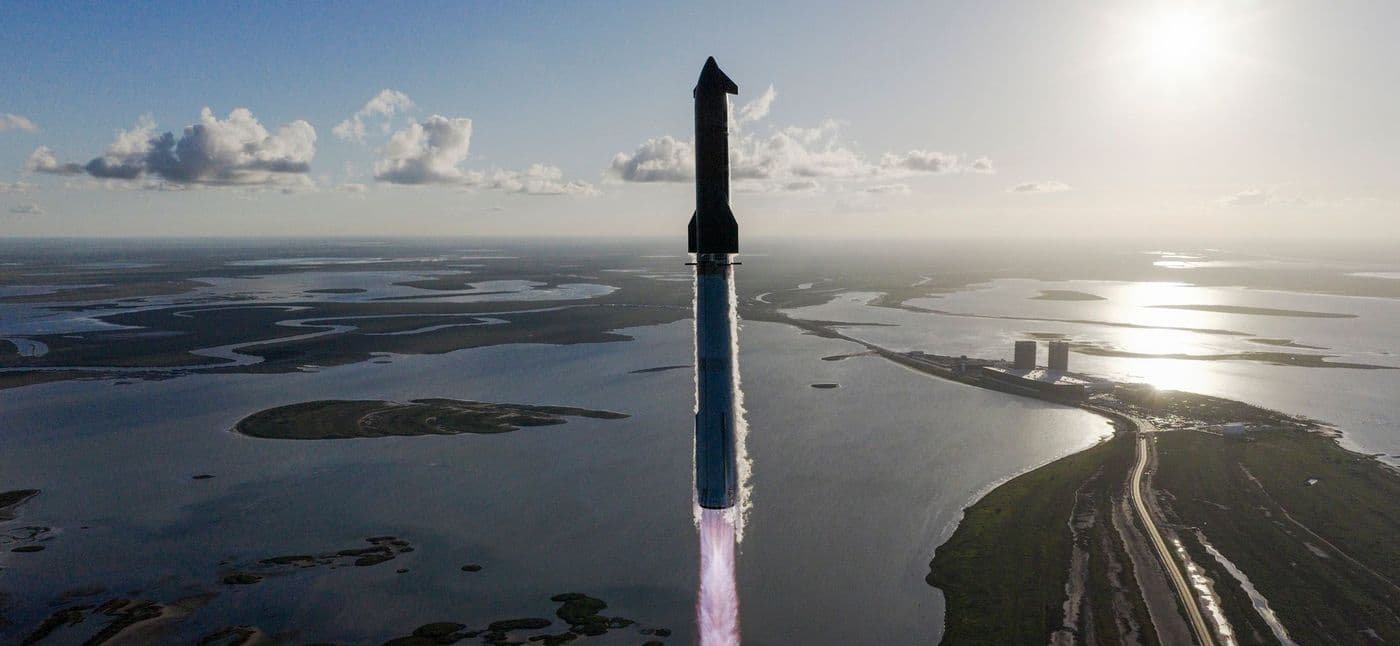
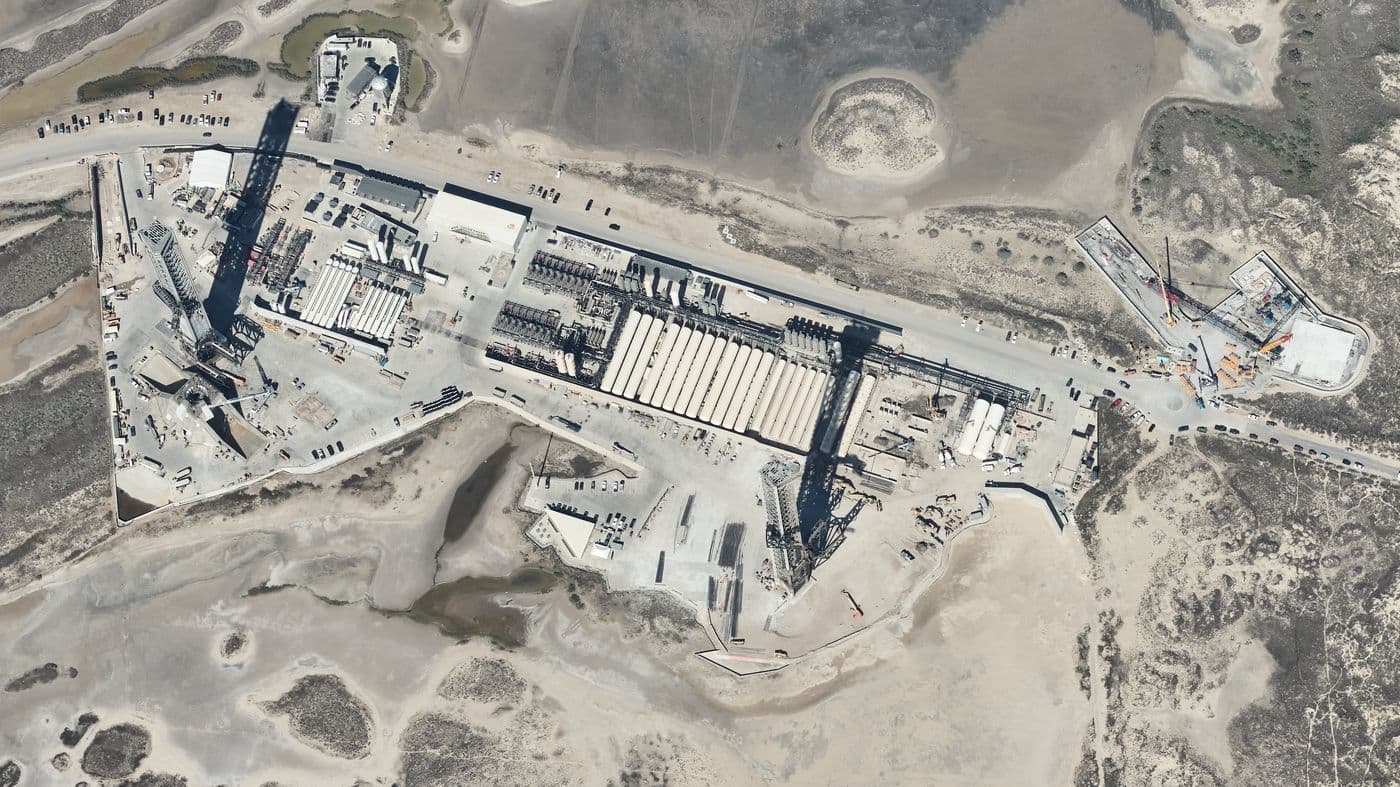
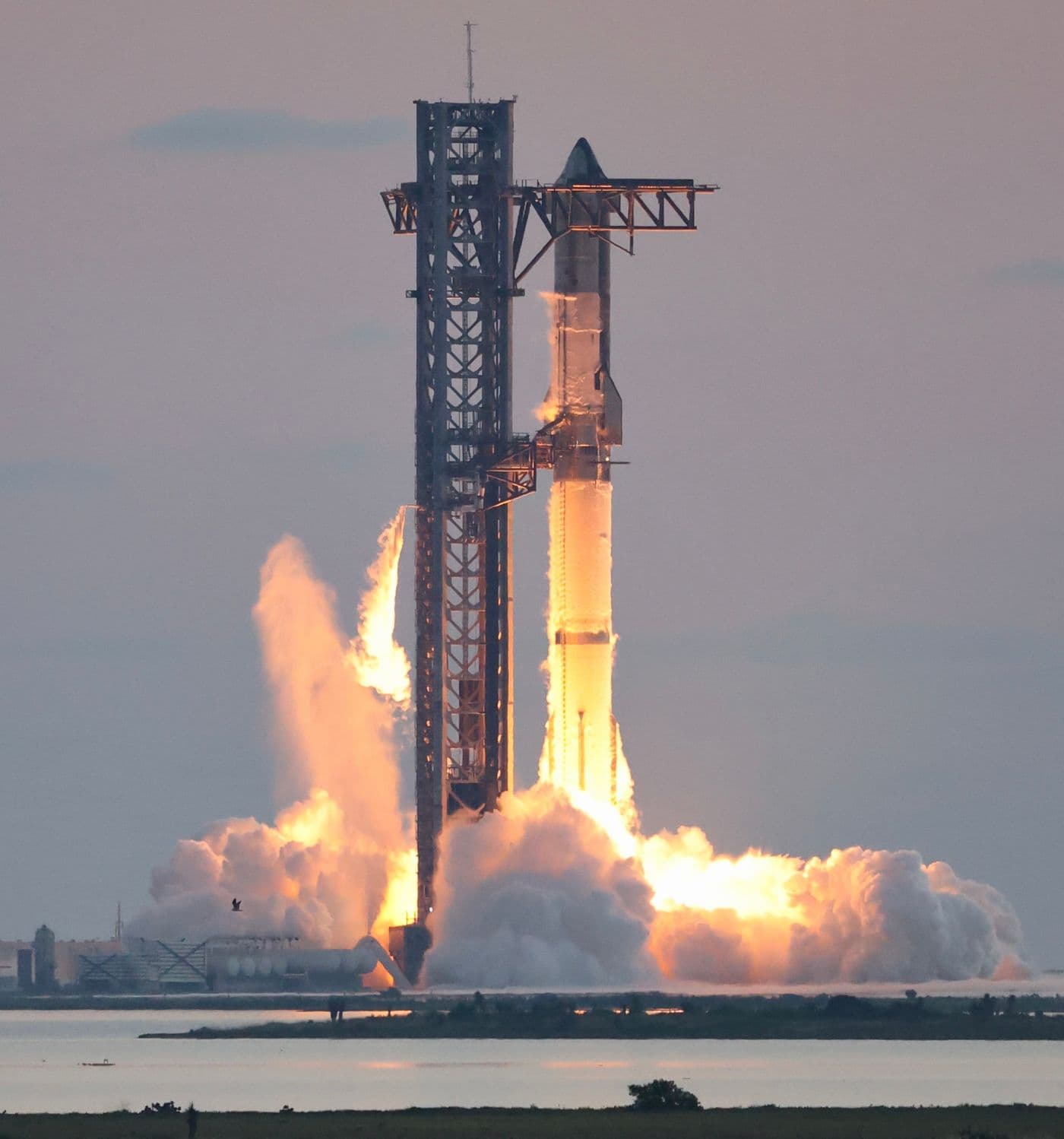
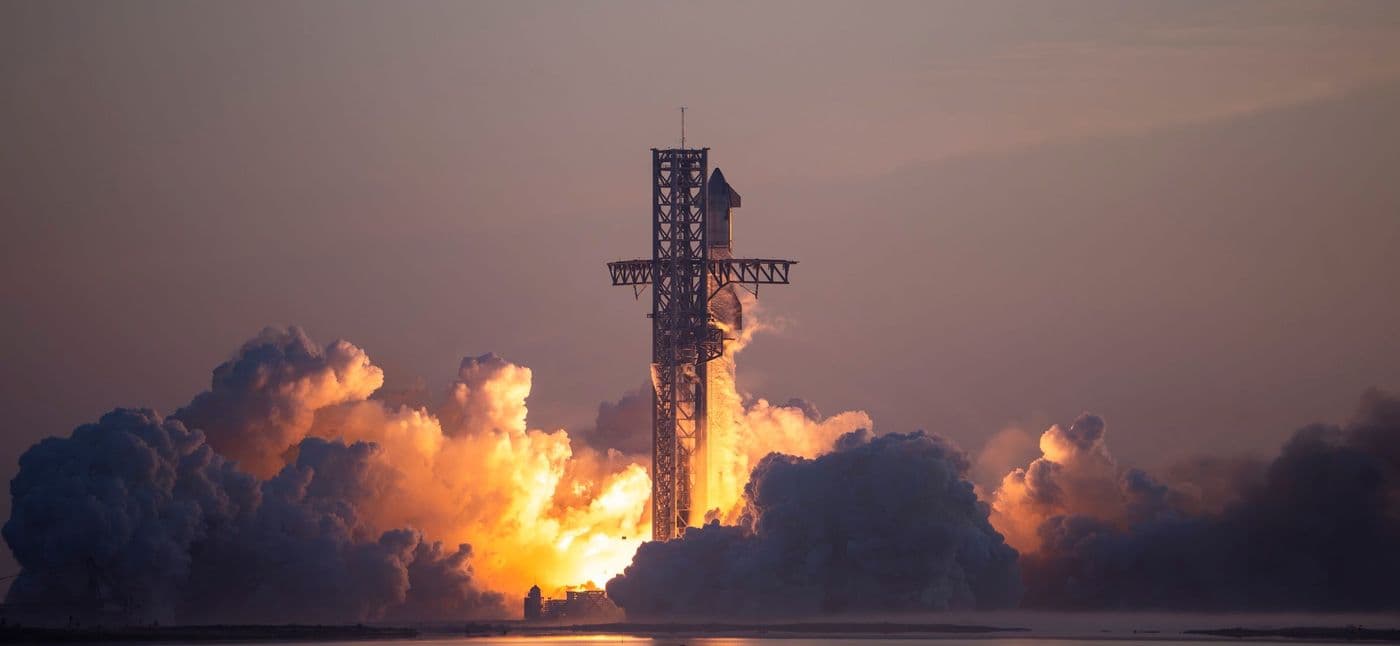
Starship Flight 13 launched on 24. 7. 2026 from Starbase, Texas, as an uncrewed integrated test of SpaceX’s Starship and Super Heavy system. Twenty Starlink V3 satellites released on a suborbital path; the ship survived splashdown and was recovered, while the booster hit hard.
Mission facts
- Launch date: 24. 7. 2026
- SpaceX · Starbase · Starship / Super Heavy
- Uncrewed developmental flight test.
- Twenty Starlink V3 satellites released on a suborbital path; the ship survived splashdown and was recovered, while the booster hit hard.
- Suborbital profile, without delivery to stable Earth orbit.
On 24 July 2026 Flight 13 followed the V3 debut. Ship 40 deployed twenty Starlink V3 satellites on a suborbital trajectory, rather than into an operational orbit. It completed reentry and softly splashed down in the Indian Ocean, remained afloat and was later recovered. Examination of returned hardware provided heat-shield evidence beyond telemetry. Super Heavy B20 instead hit the ocean hard: ice clogging affected its three central engines near the end of boostback, and eight of thirteen planned engines relit for landing. SpaceX modified filtering and relight software for Flight 14. Ocean recovery did not demonstrate rapid reuse or a tower catch; it was a further development milestone.
Follow us
Follow us on social media
New plates, trivia and behind-the-scenes updates as soon as they are ready.
Programme development and SpaceX

Starship — programme and adjacent flights
Article on the timeline
Sources & further reading
Spaceflightpedia. (n.d.). Starship Flight 13. Retrieved 9 October 2026, from https://spaceflightpedia.com/article/starship-flight-13
article text — CC-BY-SA · ◉ NASA photography — public domain · ✦ AI illustration — marked, generated from sources