Search
Results for “A7L Spacesuit”
- Entries
- 9
Entries 9
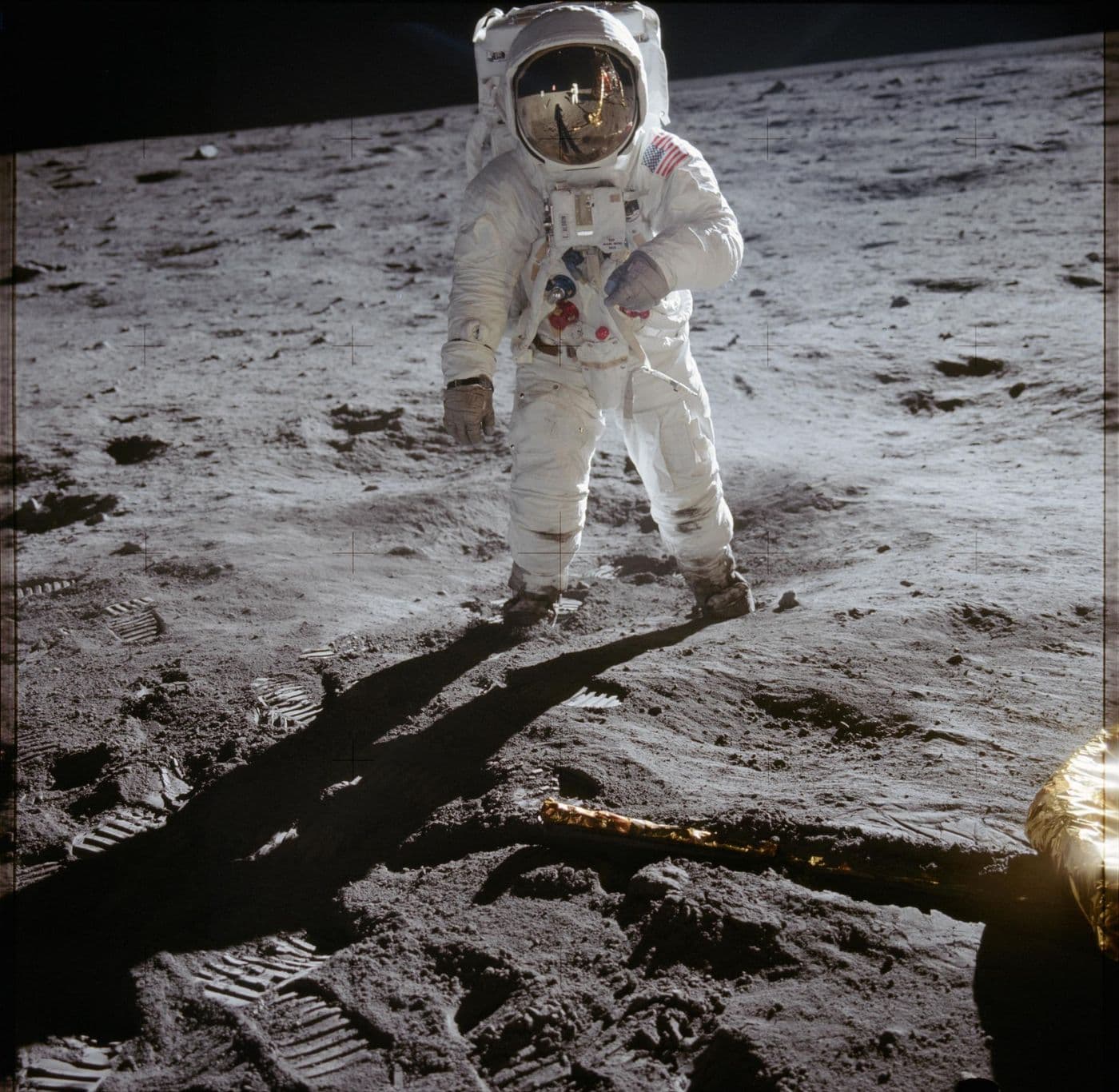
A7L Spacesuit
Twenty-one layers of fabric, rubber, and film, hand-sewn by seamstresses at ILC Dover — a manufacturer of Playtex undergarments. The A7L Spacesuit was a miniature spacecraft in its own right: it protected against vacuum, temperatures from −156 to +121 °C, and micrometeoroids.
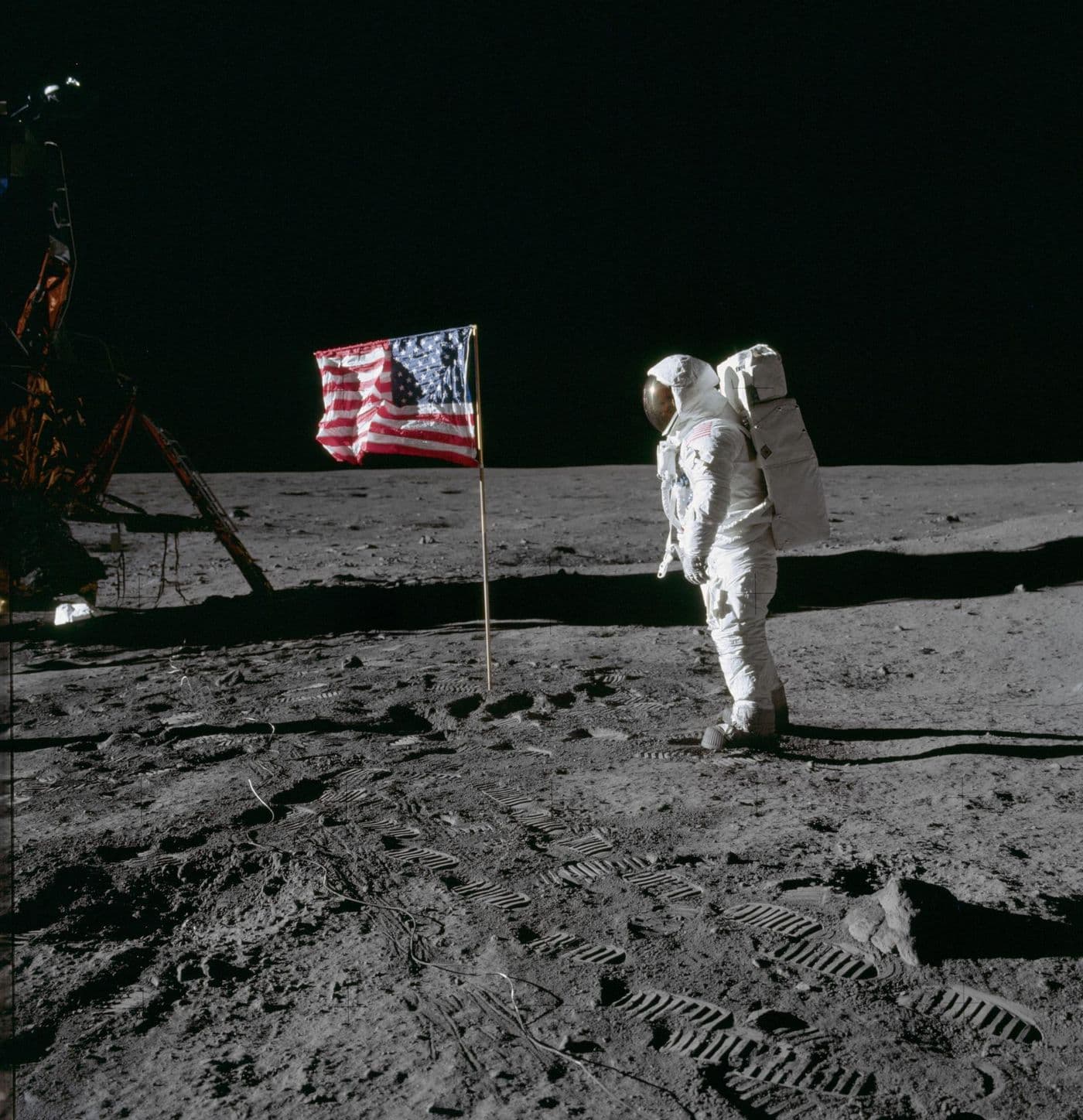
Apollo 11
Apollo 11 fulfilled President Kennedy’s commitment to land a human on the Moon before the end of the 1960s. Eagle landed on 20 July 1969; Armstrong’s first step followed at 02:56 UTC on 21 July, still 20 July in the United States.
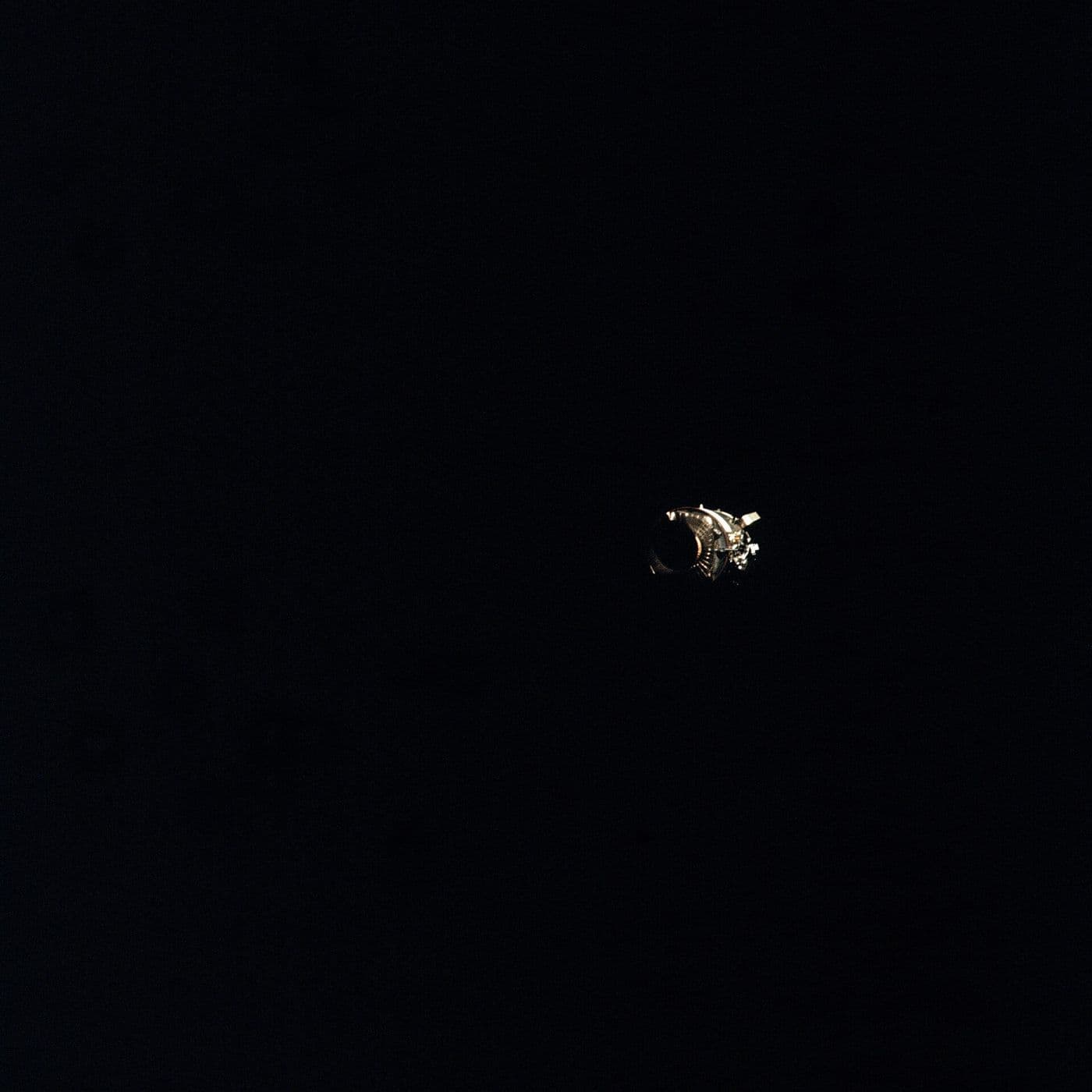
Apollo 13
Apollo 13, launched in April 1970, was NASA's third crewed Moon-landing attempt. An oxygen tank explosion crippled the spacecraft en route to the Moon, and the crew survived by turning the lunar module into a lifeboat for the journey back to Earth.
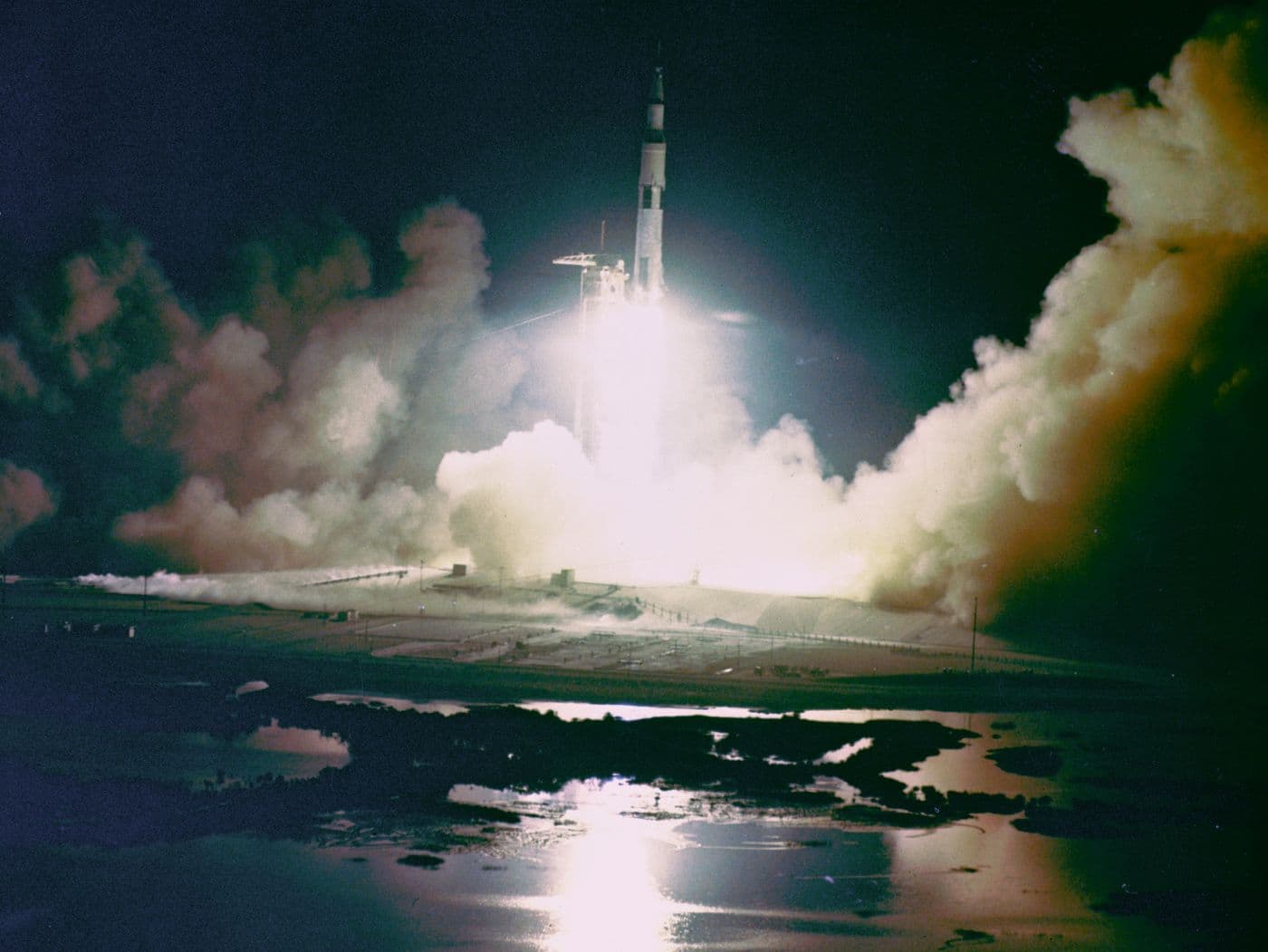
Apollo 17
Apollo 17 (December 1972) was NASA's final crewed Moon landing and remains, to date, humanity's most recent visit to the lunar surface. Commander Eugene Cernan and geologist Harrison Schmitt spent three days at Taurus-Littrow, while Ronald Evans orbited above.
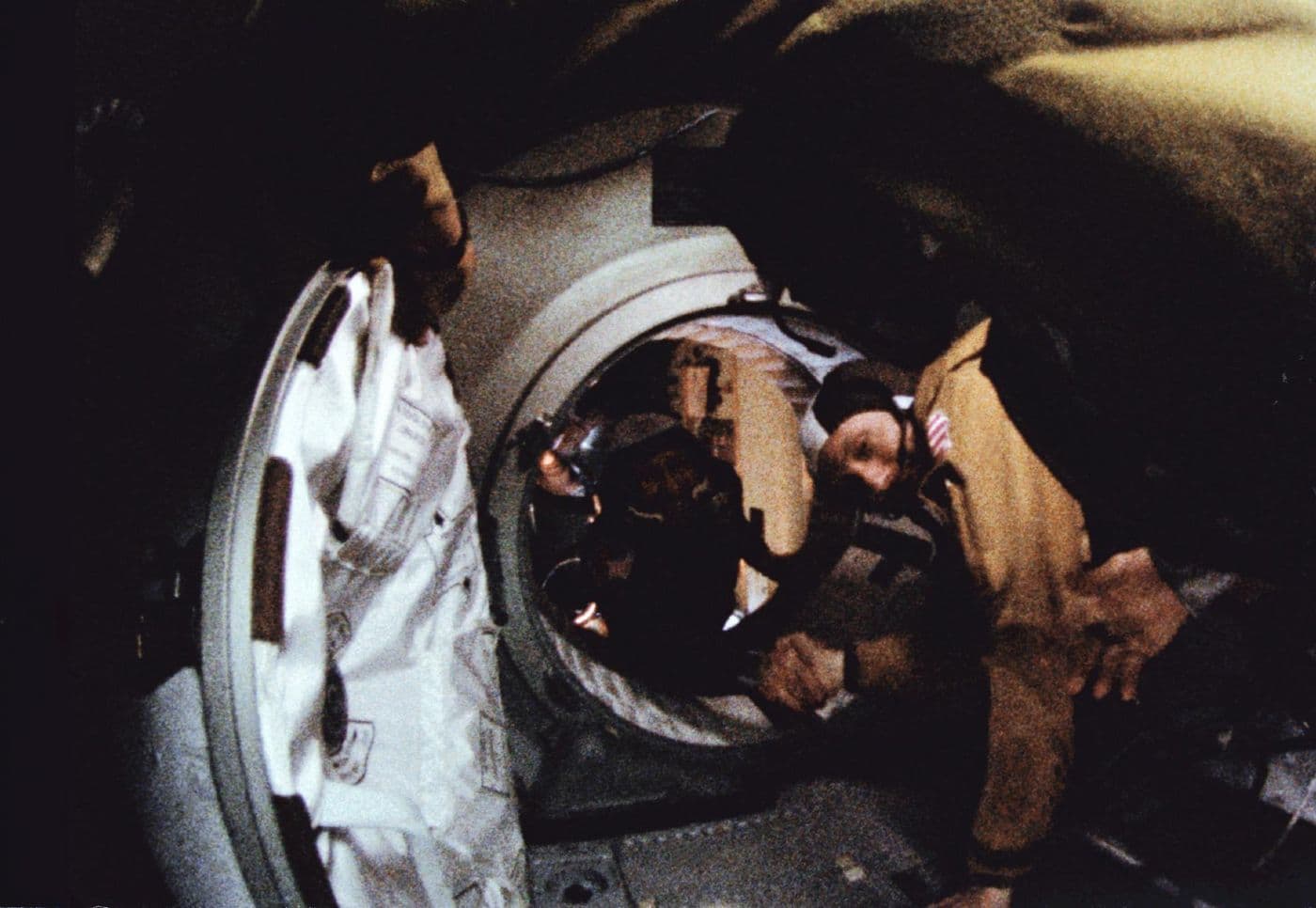
Apollo–Soyuz
Apollo–Soyuz (ASTP) was the first joint Soviet–American crewed flight, on 15–24 July 1975. The American Apollo docked with the Soviet Soyuz 19 and Tom Stafford shook hands with Alexei Leonov — the first international docking and a symbolic end to the space race.
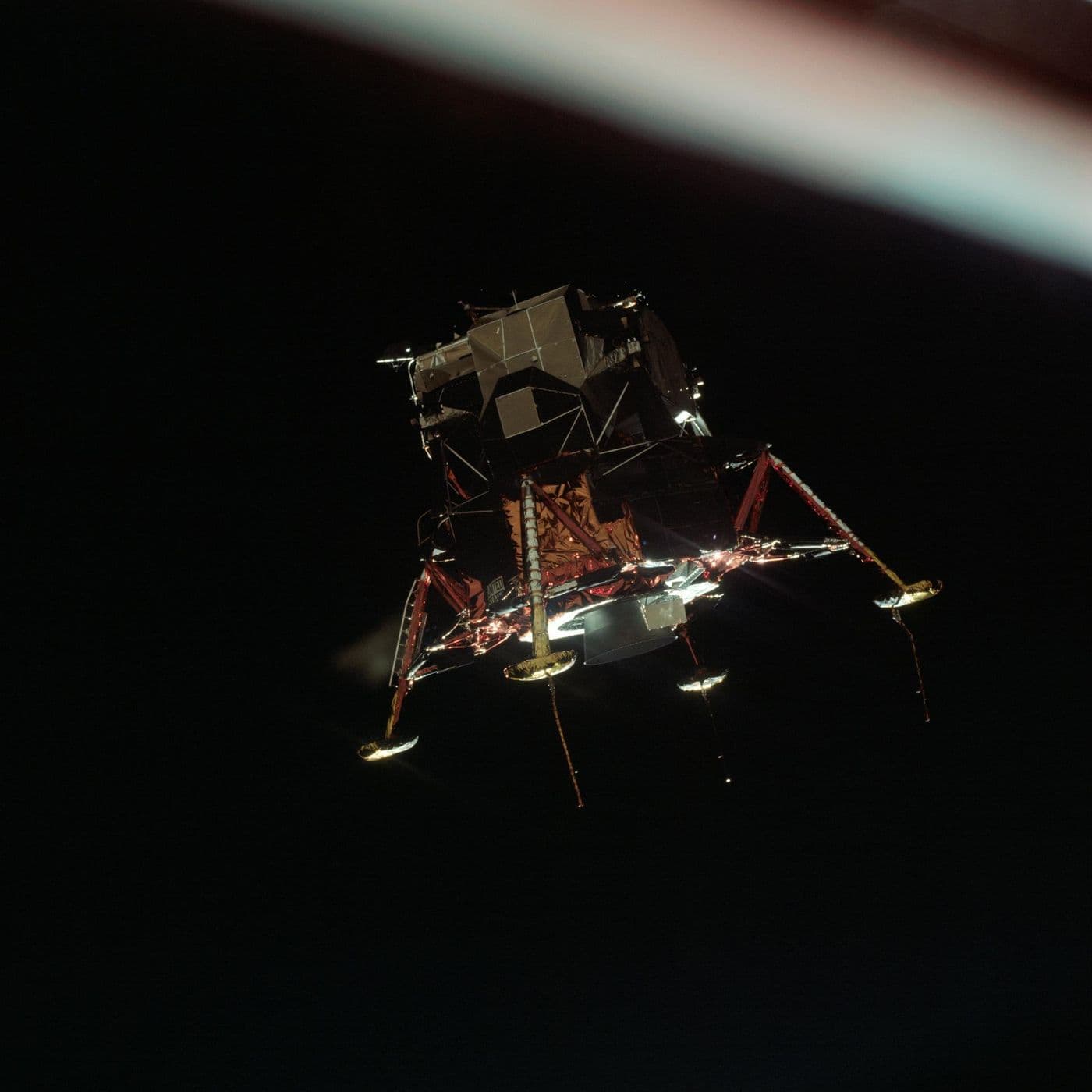
Lunar Module Eagle
Two-stage lunar module built by Grumman — the first crewed spacecraft designed exclusively for flight in vacuum. It had no need to be aerodynamic, hence its angular, spiderlike shape.
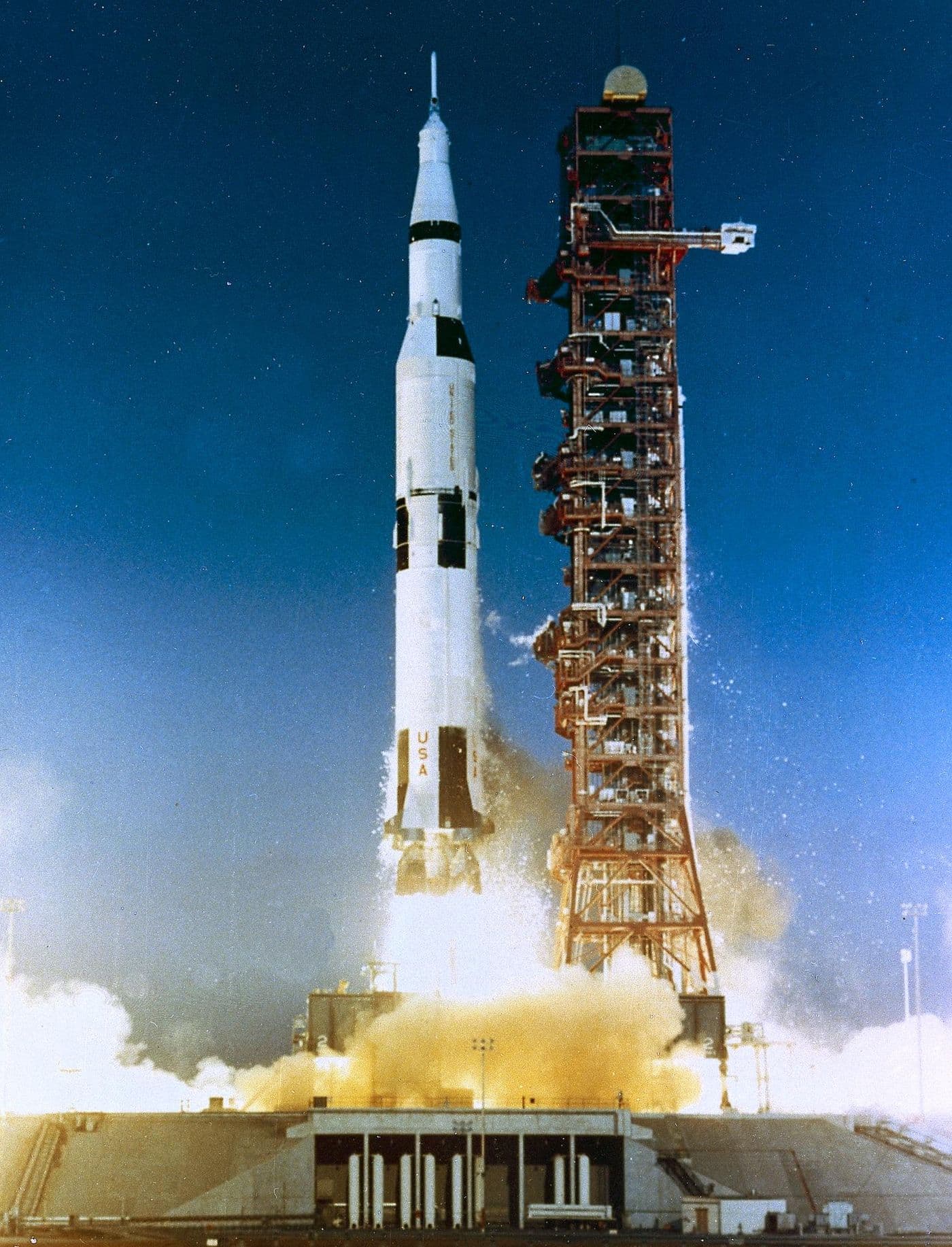
Saturn V
The super-heavy launch vehicle of the Apollo program — three stages, 110.6 meters tall, and nearly three thousand tons at liftoff.
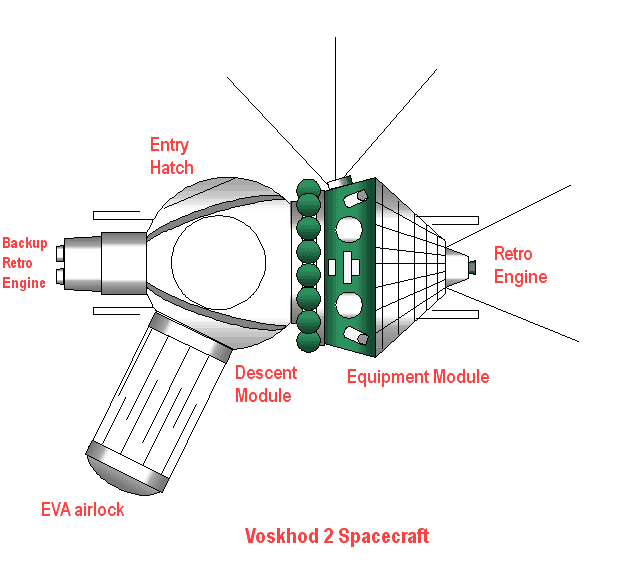
Voskhod 2
On 18 March 1965 Voskhod 2 delivered the first human spacewalk: Alexei Leonov spent 12 minutes and 9 seconds outside the spacecraft. The return nearly ended in tragedy — a ballooned spacesuit, an automatic-system failure and an emergency landing in snowbound taiga hundreds of kilometres off target.
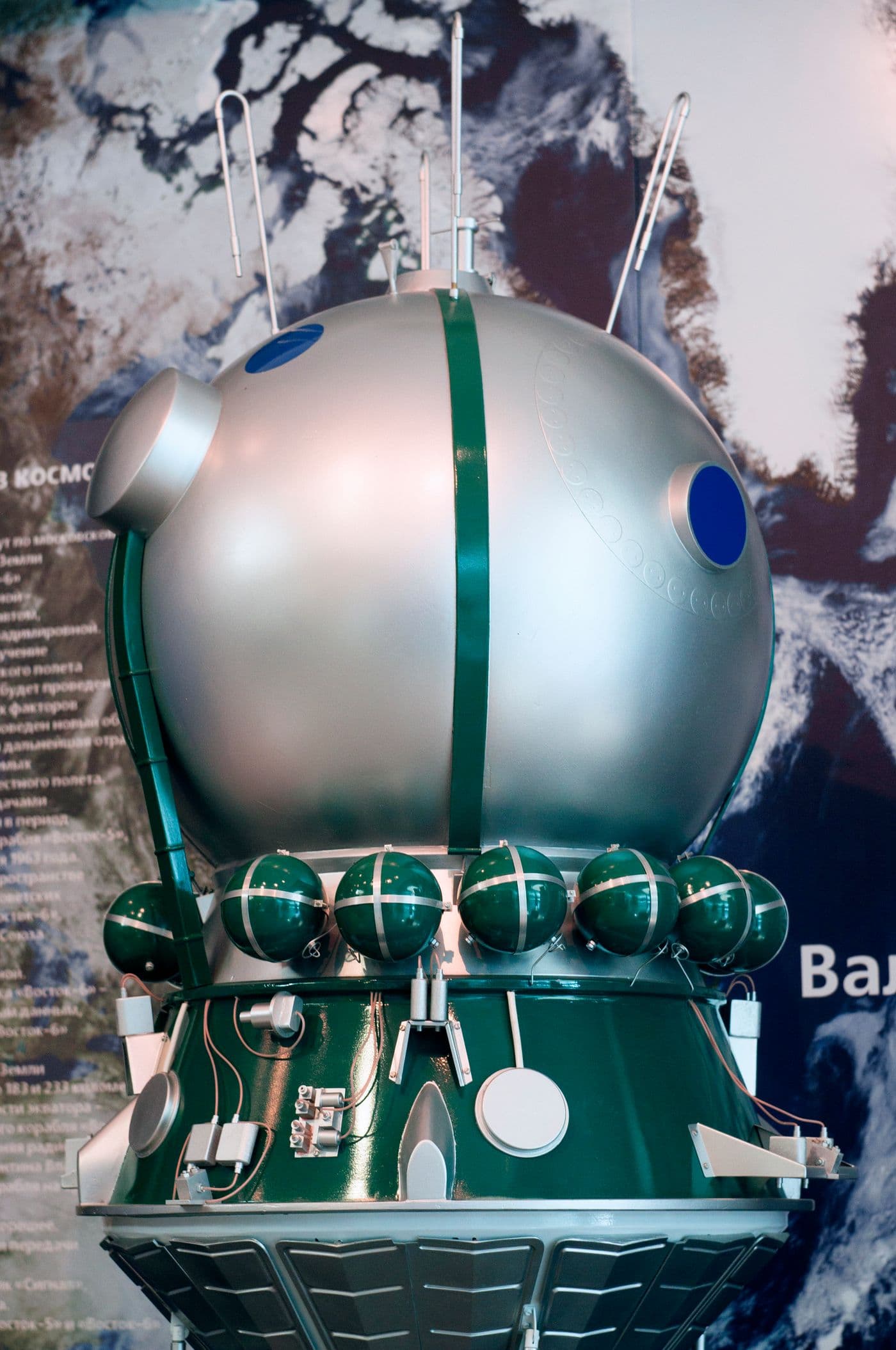
Vostok 6
Vostok 6 carried Valentina Tereshkova into orbit on 16 June 1963 — the first woman in space. In under three days she orbited the Earth forty-eight times and landed on 19 June near Barnaul. It was the final flight of the Vostok program.