#Apollo#Měsíc#mobilita
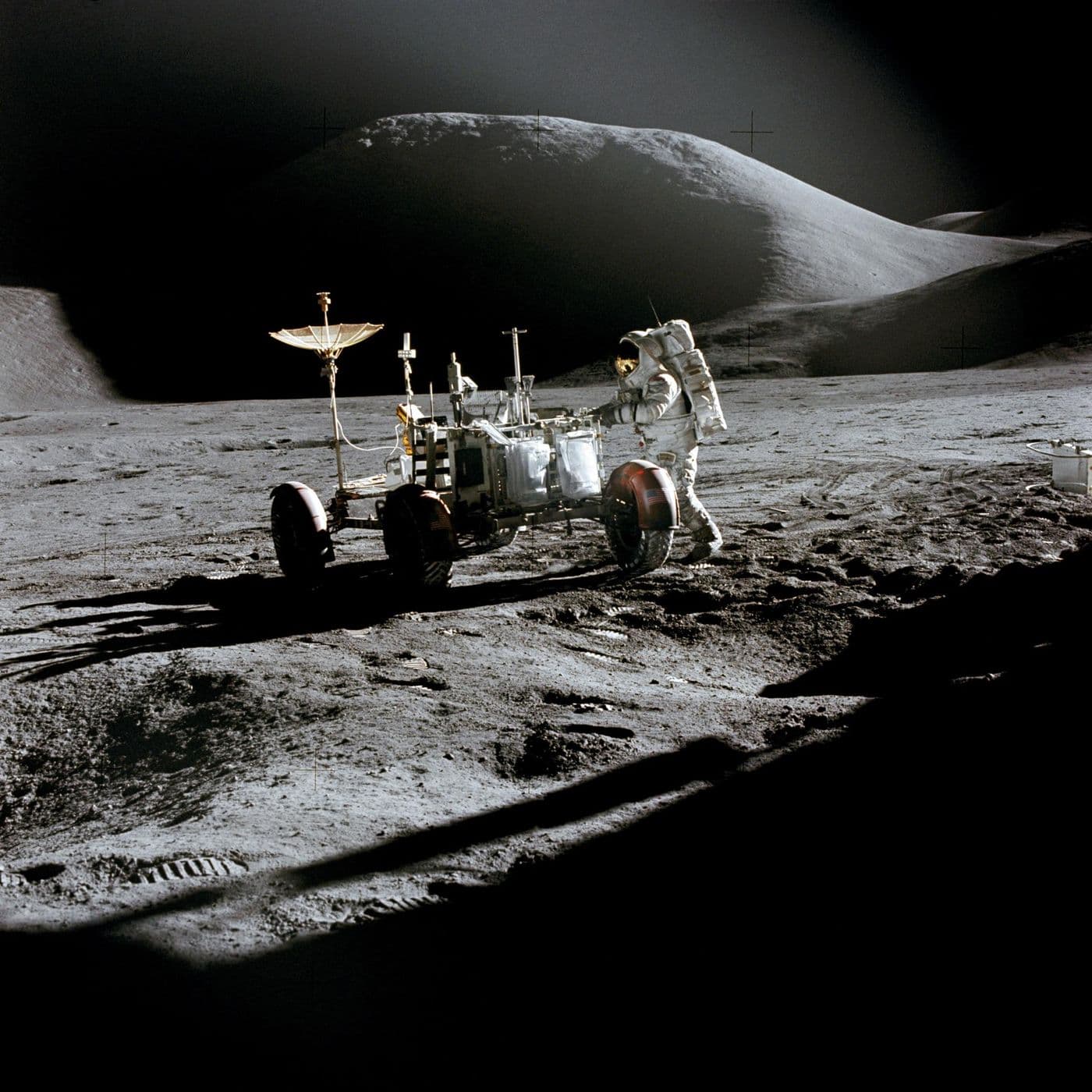
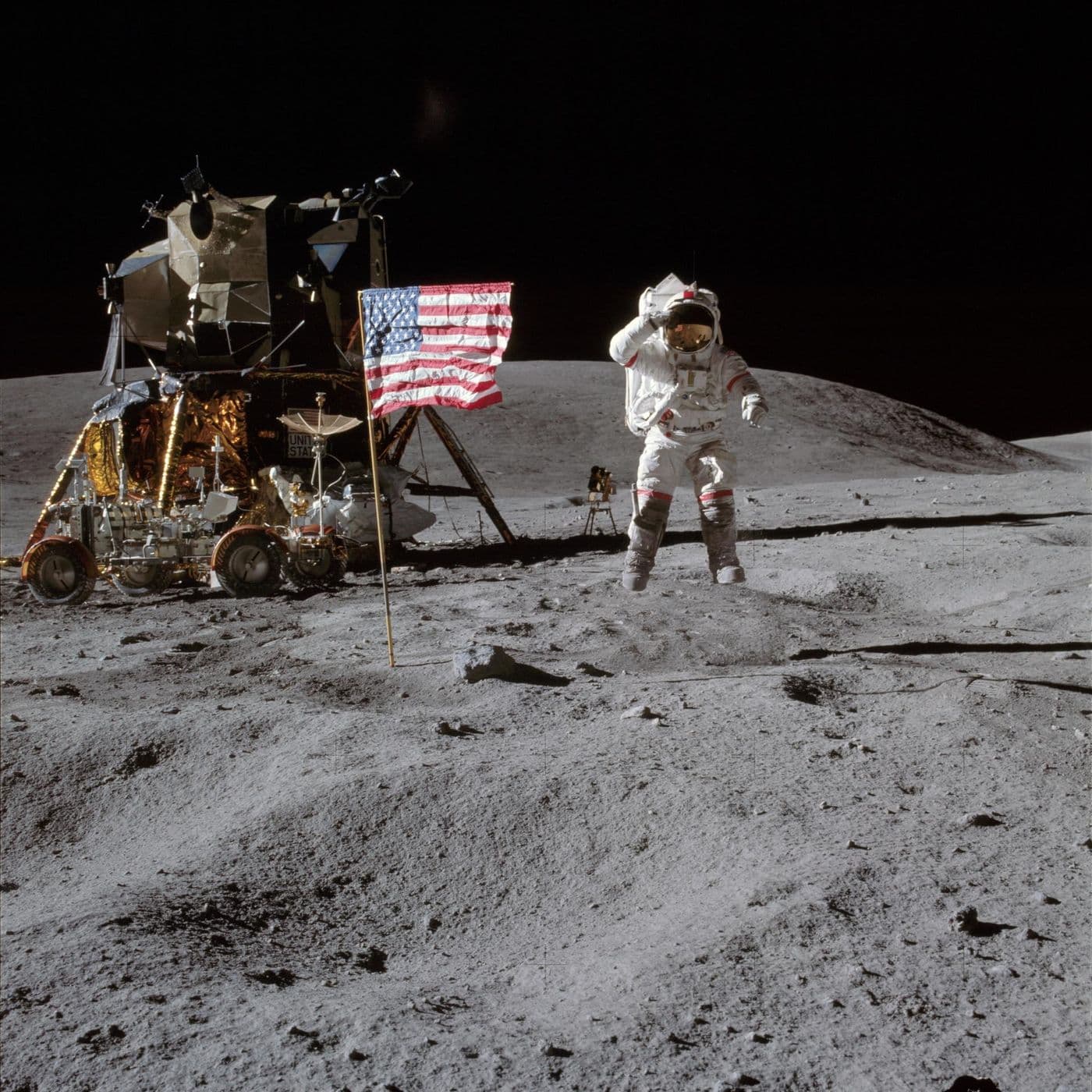
The Lunar Roving Vehicle, or LRV, allowed the Apollo 15, 16, and 17 astronauts to leave the immediate vicinity of their lunar module. The folding four-wheeler fit in the descent stage’s cargo bay and was unfolded by the crew on the Moon.
The vehicle was not a luxury but a scientific tool. It made it possible to collect samples from different geological sites, carry instruments, and plan longer traverses, while astronauts still had to remain within walking range in case it failed. All three LRVs remain on the Moon.
Key facts
- Apollo 15, Apollo 16, and Apollo 17 used the LRV.
- Four independent electric motors powered the vehicle.
- On Apollo 17, the crew drove the LRV more than 35 kilometres.
Sources & further reading
Spaceflightpedia. (n.d.). Lunar Roving Vehicle (LRV). Retrieved 9 October 2026, from https://spaceflightpedia.com/article/lunarni-vozidlo
article text — CC-BY-SA · ◉ NASA photography — public domain · ✦ AI illustration — marked, generated from sources