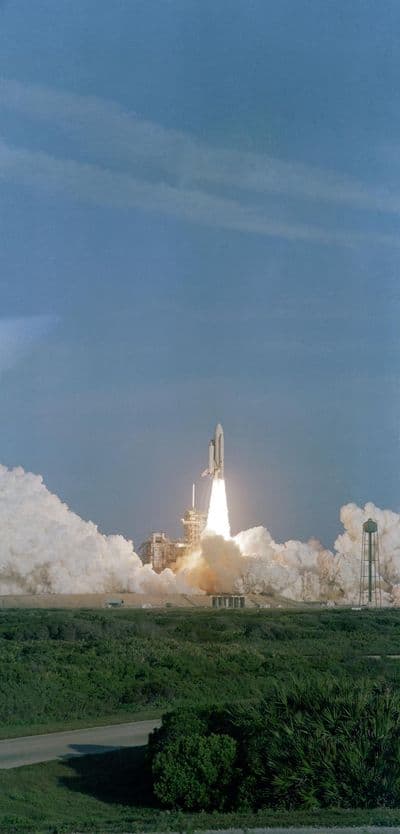
Shuttle-C would have used the external tank, solid rocket boosters, and SSME engines familiar from the shuttle, but without a crewed orbiter. The aim was to use existing production and operating infrastructure for heavy payloads without crew risk.
NASA developed several variants of the concept, particularly for heavy payloads and future space stations. It did not receive funding and never entered production; its studies remain a record of the search for heavy lift before SLS.
Key facts
- Shuttle-C was intended to be uncrewed and expendable.
- The proposal reused elements of the Space Shuttle system.
Context
- Period
- 1984–1995
- Status
- not realised
Follow us
Follow us on social media
New plates, trivia and behind-the-scenes updates as soon as they are ready.
Related articles
Sources & further reading
- NASA NTRS: contemporary overview of the uncrewed Shuttle-C heavy launcher.
- NASA NTRS: technical study of Shuttle-C cargo-vehicle systems.
Spaceflightpedia. (n.d.). Space Shuttle-C. Retrieved 15 October 2026, from https://spaceflightpedia.com/article/shuttle-c
article text — CC-BY-SA · ◉ NASA photography — public domain · ✦ AI illustration — marked, generated from sources