- Date
- 5 May 1961
- Mission
- Freedom 7
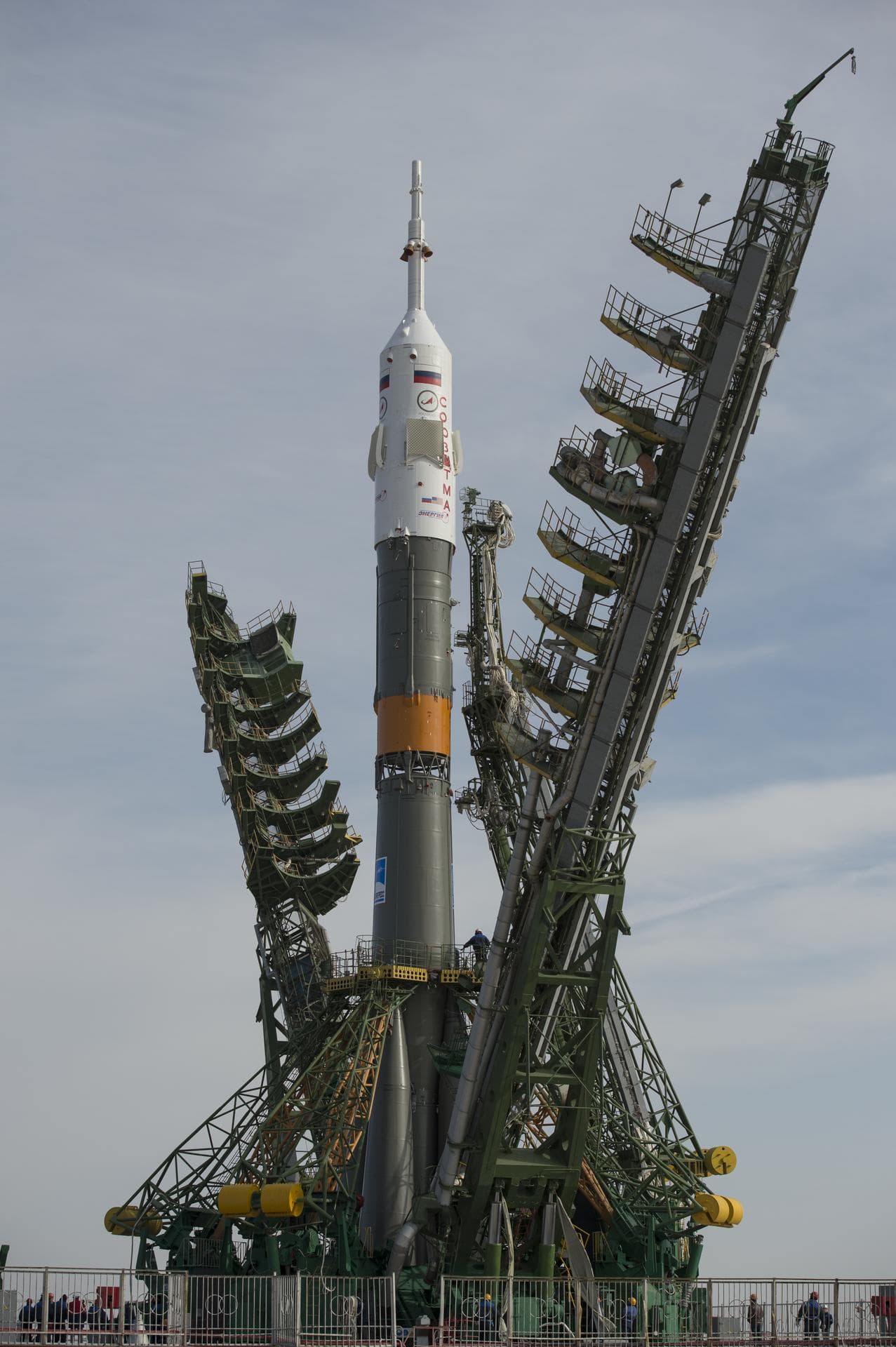
reedom 7 was the first crewed flight of the Mercury program and America’s answer to the shock of the Soviet Gagarin flight. Alan Shepard spent under sixteen minutes in space — no Earth orbit, but American pride in the space race was salvaged.
Pilot
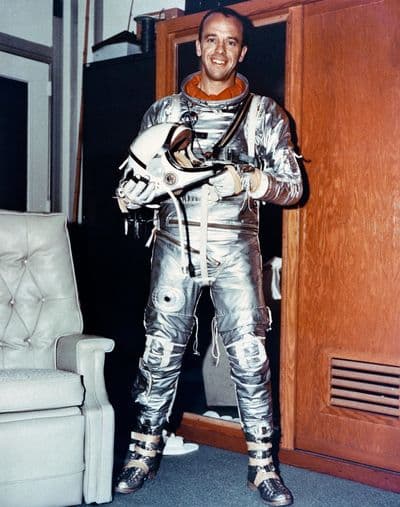
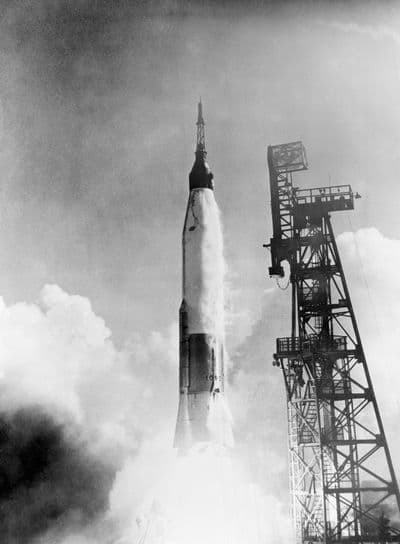
A Redstone rocket, far weaker than the Soviet R-7, carried the capsule. Shepard flew lying on his back, performed manual attitude maneuvers, and experienced over 11 g on reentry. Television broadcasts across the United States followed the Atlantic splashdown.
Mission timeline
Select a phase to read what happened. Every chapter has its own detailed page.
Three hours on his back before liftoff
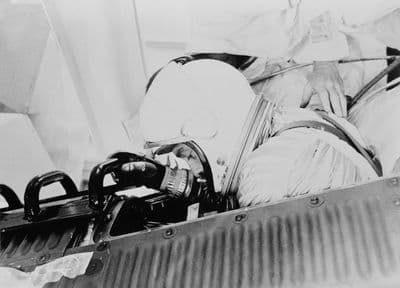
Alan Shepard entered the Freedom 7 capsule at 5:15 a.m. — launch was planned for 7:20. Because of weather and technical delays, he ended up waiting on the pad for more than three hours before the Redstone finally lifted off.
Read the chapterFifteen minutes in space and the first manual piloting
The flight was suborbital — Freedom 7 climbed to 187.5 km and travelled 486 km downrange without ever circling the Earth. Shepard withstood 6.3 g during launch and as much as 11.6 g on reentry.
Read the chapter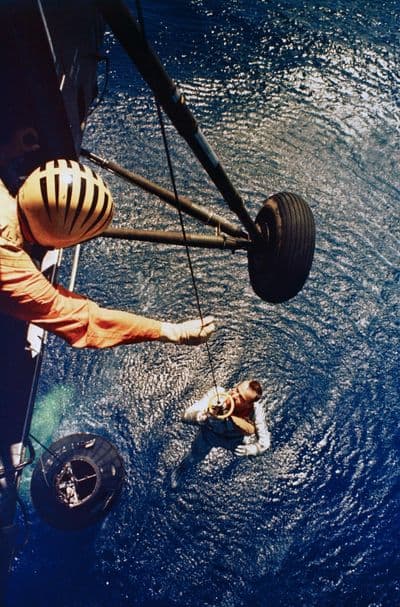
An eleven-minute recovery and a trip to the White House
The capsule came down under parachutes in the Atlantic about 486 km from the launch pad. The impact was comparable to landing a jet on an aircraft carrier — Freedom 7 tipped 60 degrees onto its side but righted itself within a minute, taking on no water.
Read the chapterMission in numbers
- Crew
- 1
- Launch
- 5. 5. 1961, 14:34 UTC
- Duration
- 15 min 22 s
- Flight type
- suborbitální
- Launch vehicle
- Mercury-Redstone (MR-3)
- Peak altitude
- 187,5 km
- Downrange distance
- 486 km
- Max. g-force
- 11,6 g
Follow us
Follow us on social media
New plates, trivia and behind-the-scenes updates as soon as they are ready.
Facts
- Alan Shepard became the first American in space — the second human in history, 23 days after Gagarin.
- The flight was suborbital — the capsule never orbited the Earth, only climbed to 187.5 km before falling back down.
- Because of more than three hours of waiting on the pad, Shepard had to urinate directly into his suit — suits gained a collection device after the mission.
- Shepard became the first person in history to manually pilot a spacecraft in all three axes during flight.
- Only eleven minutes passed between splashdown and being aboard the recovery ship — one of the fastest returns of the Mercury program.
- Less than three weeks after Freedom 7, President Kennedy announced the goal of landing a man on the Moon by the end of the decade — the start of the Apollo program.
Related articles
Sources & further reading
- NASA: Results of the First U.S. Manned Suborbital Space Flight, 1961 — the primary source of mission data.
- Alexander, Grimwood, Swenson: This New Ocean: A History of Project Mercury, NASA, 1966.
- NASA Image and Video Library (images.nasa.gov) — mission photographs, public domain.
- Wikipedia: Mercury-Redstone 3 — the starting structure of the article, CC-BY-SA 4.0.
- NSSDCA Master Catalog (NASA) — technical parameters of the spacecraft (COSPAR ID MERCF1).
Spaceflightpedia. (n.d.). Freedom 7. Retrieved 9 October 2026, from https://spaceflightpedia.com/article/freedom-7
article text — CC-BY-SA · ◉ NASA photography — public domain · ✦ AI illustration — marked, generated from sources