- Date
- 1970–2026
- Launcher
- Long March
#CNSA#Čína#Dlouhý pochod#Wen-čchang#Shenzhou
Long March is a family of launch vehicles thanks to which China has its own access to space — from the simple rockets of the 1970s to today's giants that build a space station. The name refers to the Long March of the Chinese Red Army in 1934–1935, and the rockets carry the abbreviation CZ from the Chinese Chang Zheng. In more than half a century they have made over 500 launches and grown from ballistic-missile derivatives into a modern family of carriers for crewed flights, heavy probes and telecommunications satellites. Today the Long March rockets are the backbone of Chinese spaceflight.
The Long March family began on 24 April 1970, when a Long March 1 rocket placed China's first satellite, Dong Fang Hong 1 ("The East Is Red"), into orbit. This made China the fifth nation able to launch its own satellite on its own rocket. The first rockets were derived from ballistic missiles, but the family grew quickly: ever more powerful Long March 2, 3 and 4 versions were added for different types of orbit. A major generational leap came in 2016 with the heavy-lift Long March 5. In all, the family has made more than 500 launches and ranks among the most frequently used rocket families in the world.
Long march in numbers
- Family since
- 1970
- Built / overseen by
- CASC / CNSA
- Total launches
- 500+
- Crew-rated version
- CZ-2F
- First crewed flight
- 2003
- CZ-5 first flight
- 2016
- CZ-5 to LEO
- ~25t
- CZ-3B to GTO
- ~5,5t
- Spaceports
- 4
- Tianhe module (Tiangong)
- 2021
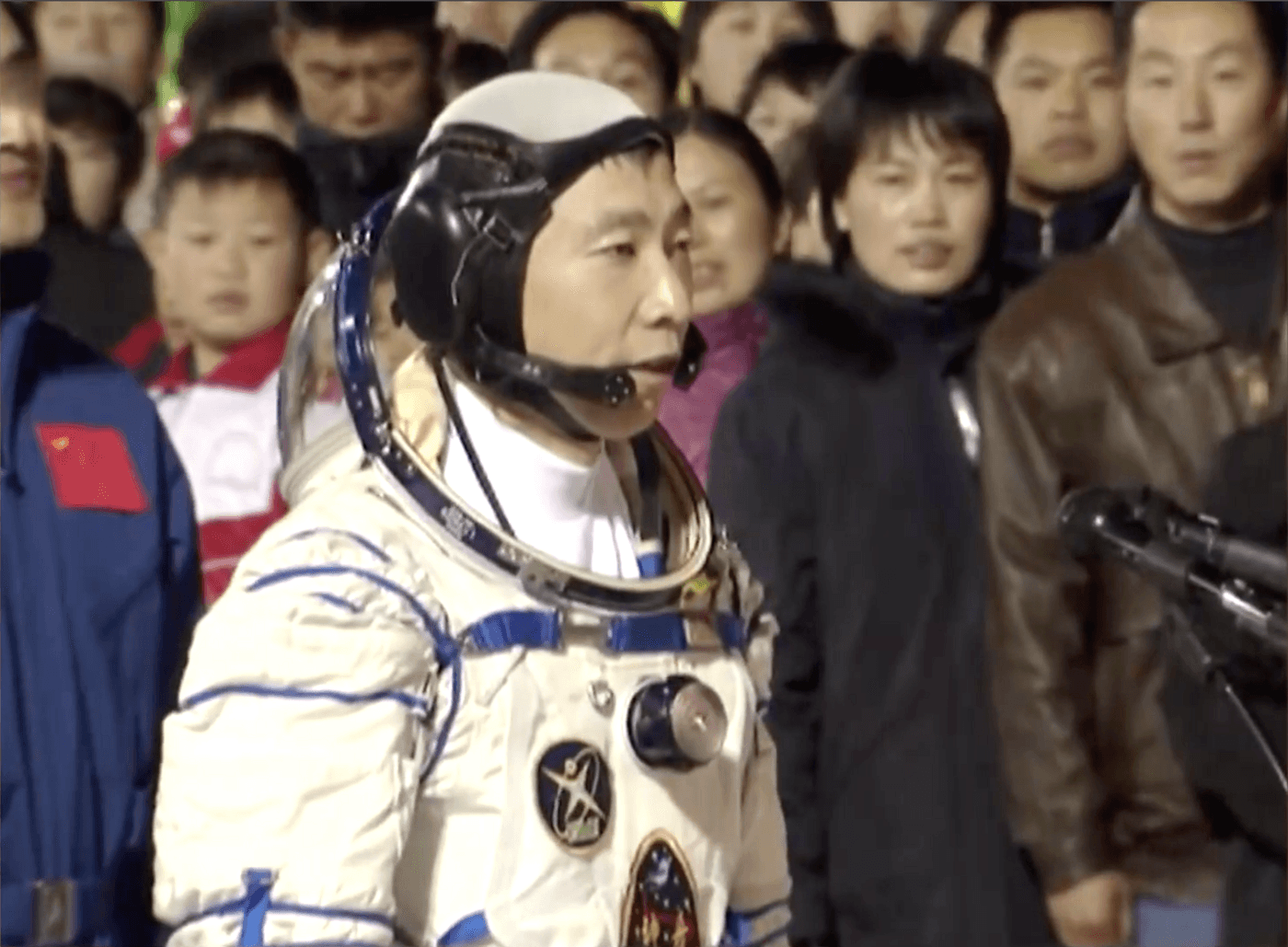
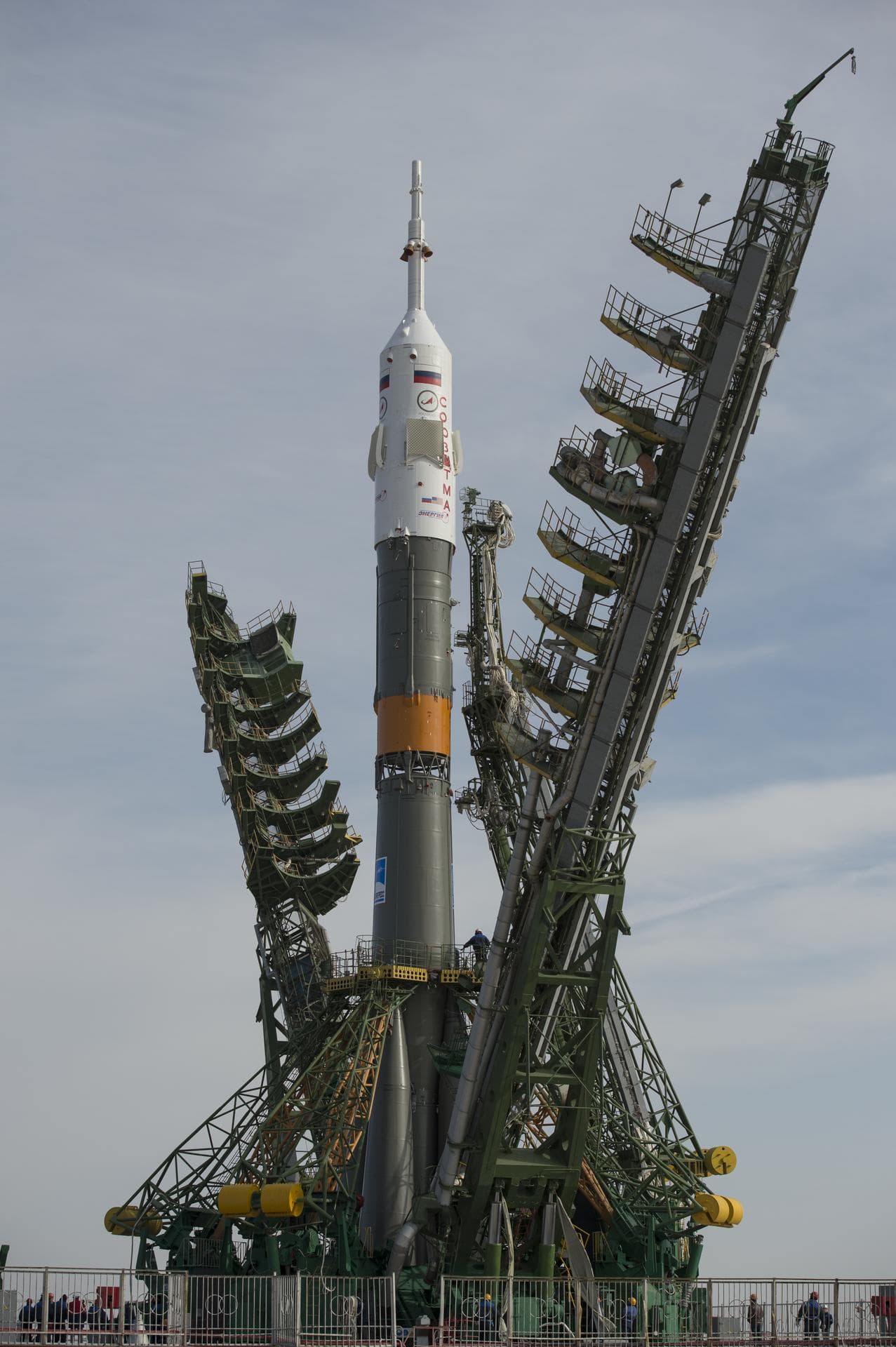
The most famous crewed variant is the human-rated Long March 2F (CZ-2F) — China's only launch vehicle certified for crewed flight. It first flew in 1999 with the uncrewed Shenzhou 1, and on 15 October 2003 it launched China's very first crewed mission, Shenzhou 5 with the astronaut Yang Liwei, from the Jiuquan spaceport in the Gobi Desert. China thus became, after the Soviet Union and the United States, the third nation able to send a human into space on its own. For crew safety the CZ-2F also has a launch-escape tower on top, which in the event of an accident would pull the crew ship away from the rocket. The same rocket today carries crews to China's Tiangong space station.
The most powerful member of the family is the heavy-lift Long March 5 (CZ-5), China's most capable launch vehicle. It first launched on 3 November 2016 from the coastal Wenchang spaceport, and in the CZ-5B version it can carry about 25 tonnes to low Earth orbit. Its second flight on 2 July 2017 ended in failure because of an engine fault; after a two-year pause the rocket returned to service with a successful launch on 27 December 2019. It was the Long March 5 that then enabled China's most demanding missions: the Tianwen-1 probe to Mars, the Chang'e 5 and Chang'e 6 lunar sample returns, and the launch of the modules of the Tiangong space station. For telecommunications satellites bound for high orbits, the reliable Long March 3B rocket carries about 5.5 tonnes to geostationary transfer orbit and also launches satellites of the Beidou navigation system.
Long March rockets launch from four Chinese spaceports. The oldest is Jiuquan in the inland Gobi Desert, from which the crewed Shenzhou ships depart. The Xichang and Taiyuan spaceports serve satellites bound for various orbits. The newest is the coastal Wenchang on the tropical island of Hainan, which entered service in June 2016. Its location near the equator increases the rockets' payload capacity, and thanks to sea access even the largest rockets with a five-metre diameter, such as the Long March 5, can be delivered there by water — they would not fit through the inland rail network.
Follow us
Follow us on social media
New plates, trivia and behind-the-scenes updates as soon as they are ready.
Today the Long March rockets are the foundation of the Chinese space programme across all of its areas. They carry crews and cargo ships to the Tiangong space station, whose core module Tianhe was launched by a Long March 5B on 29 April 2021. They launch probes to the Moon and Mars, build the Beidou navigation system and a network of observation and telecommunications satellites. Alongside them China is developing new launchers, including partially reusable rockets, but the Long March family remains its main workhorse — after more than half a century it is one of the most frequently launched rocket families in the world.
Facts
- The Long March family has flown since 24 April 1970, when it launched China's first satellite, Dong Fang Hong 1.
- The rockets' name refers to the Long March of the Chinese Red Army in 1934–1935; the abbreviation CZ comes from the Chinese Chang Zheng.
- The crew-rated Long March 2F launched China's first crew on 15 October 2003 — the Shenzhou 5 mission with Yang Liwei.
- The heavy-lift Long March 5 first flew in 2016; its second flight in 2017 failed, and it returned to service in December 2019.
- A Long March 5B launched the Tianhe core module of China's Tiangong space station on 29 April 2021.
- Crewed rockets launch from the desert Jiuquan spaceport, while heavy rockets fly from the coastal Wenchang on Hainan island.
Gallery
Related articles
Sources & further reading
- Wikipedia: Long March (rocket family) — history, variants and launches of the Chinese launcher family, CC-BY-SA.
- Wikipedia: Long March 2F — the crew-rated launcher of the Shenzhou ships, technical data, CC-BY-SA.
- Wikipedia: Long March 5 — heavy-lift vehicle, first flight, 2017 failure and return to flight, CC-BY-SA.
- China Manned Space Agency: official overview of China's first crewed mission, Shenzhou 5 (Yang Liwei, 2003).
Spaceflightpedia. (n.d.). Long March. Retrieved 9 October 2026, from https://spaceflightpedia.com/article/dlouhy-pochod
article text — CC-BY-SA · ◉ NASA photography — public domain · ✦ AI illustration — marked, generated from sources