#Hubble#astronomie#dalekohled#STS-31
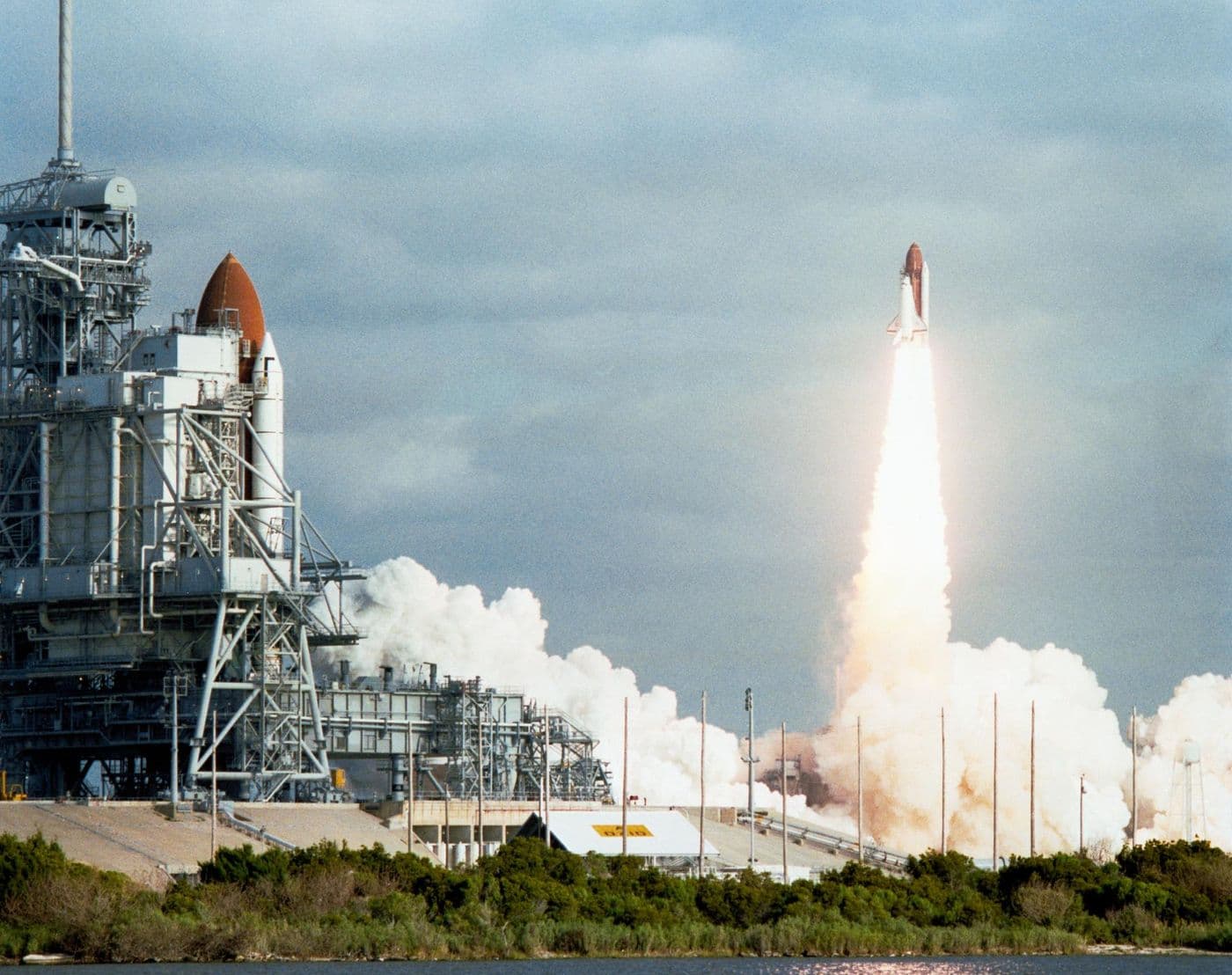
The Hubble Space Telescope launched aboard space shuttle Discovery on 24 April 1990. Above Earth’s atmosphere it obtains sharp images and spectra of objects that ground-based telescopes must observe through turbulent air.
The telescope was designed from the outset to be serviced in orbit. Five shuttle servicing missions repaired and replaced key systems and science instruments. Hubble remains one of the most capable observatories of its generation, and its data have profoundly shaped the study of galaxies, exoplanets, and the expansion of the universe.
Follow us
Follow us on social media
New plates, trivia and behind-the-scenes updates as soon as they are ready.
Facts
- Hubble orbits roughly 483 km above Earth and completes about 15 orbits a day.
- The observatory works at ultraviolet, visible, and near-infrared wavelengths.
- Its data have contributed to more than 23,000 peer-reviewed scientific papers.
Sources & further reading
- NASA Science: Hubble Space Telescope — mission and current observatory overview.
- NASA Science: About Hubble — design, servicing missions, and scientific impact.
Spaceflightpedia. (n.d.). Hubble Space Telescope. Retrieved 9 October 2026, from https://spaceflightpedia.com/article/hubbleuv-vesmírny-dalekohled
article text — CC-BY-SA · ◉ NASA photography — public domain · ✦ AI illustration — marked, generated from sources