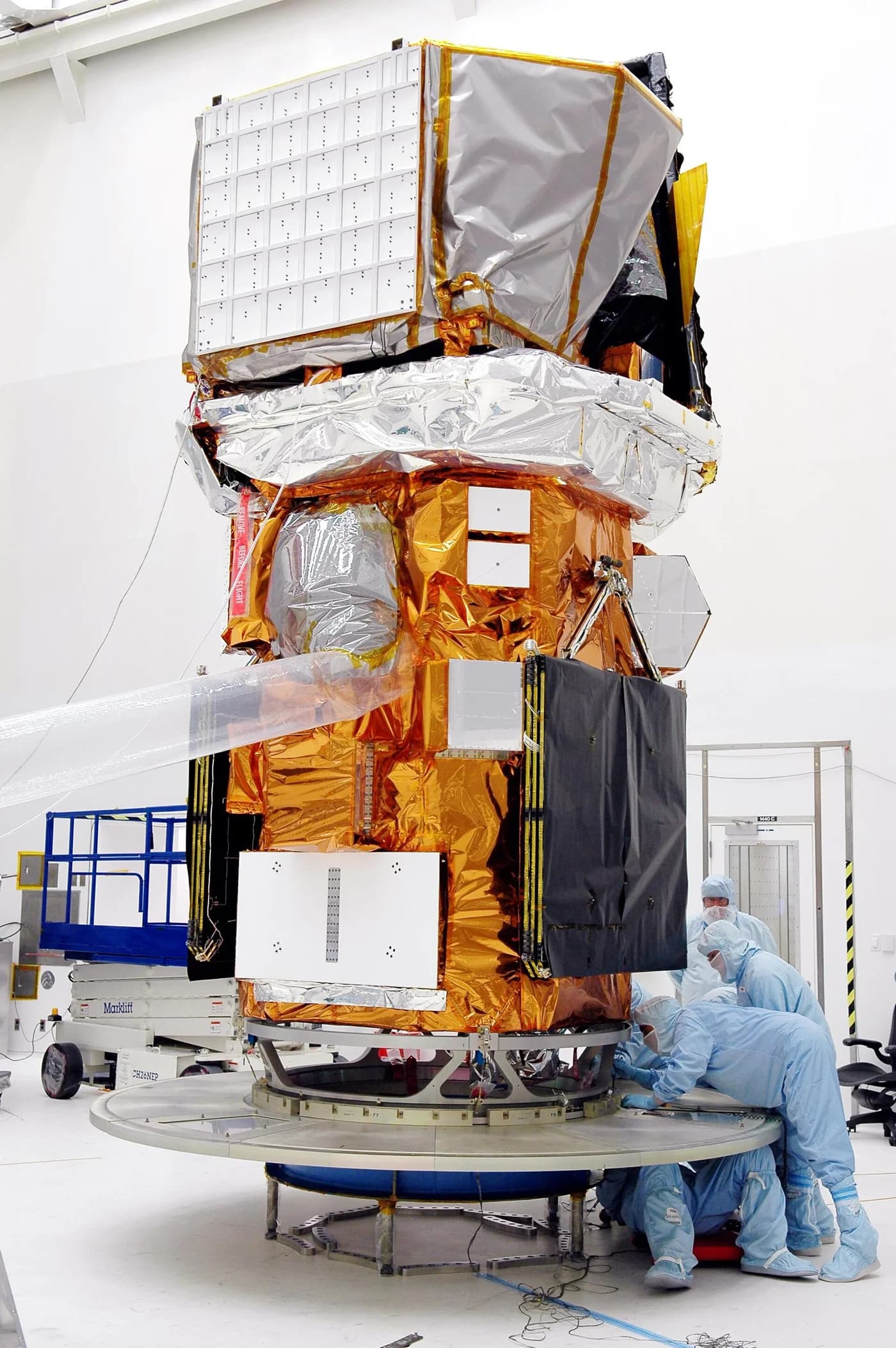
NASA's Neil Gehrels Swift Observatory is nearing the end of its life. As of Monday, U.S. Space Force tracking put the spacecraft's re-entry at about 3:30 a.m. EST on Wednesday, Nov. 4, Spaceflight Now reports.
The predicted re-entry zone covers latitudes up to roughly 21 degrees north and south of the equator. Most of that band is open ocean. Re-entry forecasts often change as the final hours get closer, so the exact time and place may still move.
Swift launched in 2004 to catch gamma-ray bursts, the most powerful explosions in the universe, and quickly point its X-ray and ultraviolet/optical telescopes at them. In 2018 NASA renamed it after Neil Gehrels, the mission's late principal investigator. Over more than two decades the observatory also studied supernovae, black holes and many other fast-changing sources in the sky.
Primary source
Spaceflight Now
We summarise and credit; the reporting belongs to the source.
Read at the source →