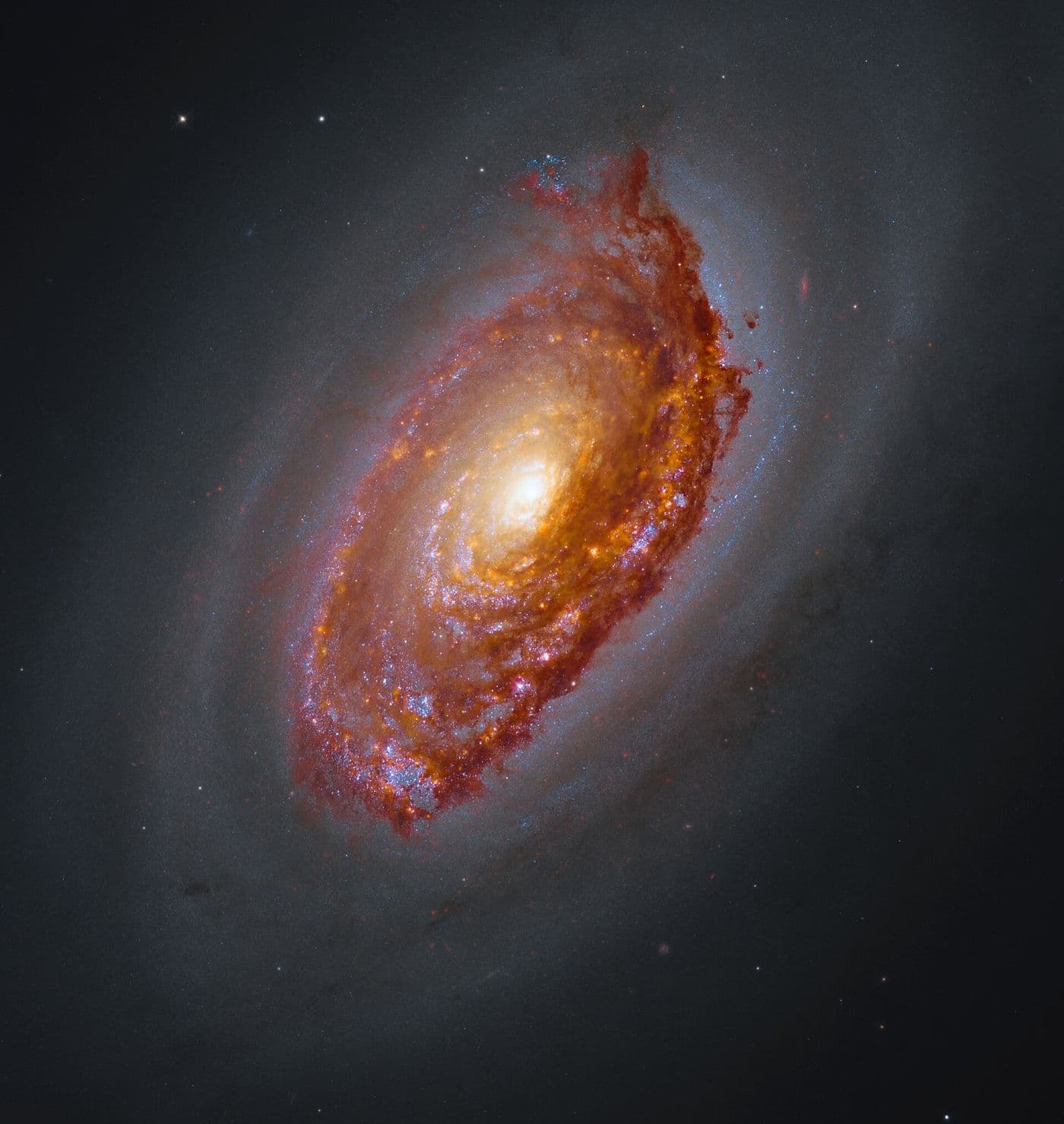
NASA's Astronomy Picture of the Day feature highlighted a new infrared view of Messier 64, nicknamed the Black Eye Galaxy for the dark band of dust that wraps around its bright core, giving it a bruised appearance in visible light.
According to the source, the James Webb Space Telescope's infrared instruments cut through that obscuring dust, revealing intricate structures of gas, young star clusters, and the galaxy's spiral arms in far greater detail than earlier Hubble observations allowed.
M64 sits roughly 17 million light-years away and is notable for an unusual feature: its outer gas disk rotates in the opposite direction to its inner stars and gas, a signature many astronomers attribute to an ancient galactic merger.
The image is part of ongoing joint releases pairing Hubble and Webb data, continuing NASA's daily tradition of presenting a new cosmic image with expert commentary to the public.