NASA has ended the science mission of the Neil Gehrels Swift Observatory. According to the agency, the spacecraft's orbit has decayed to less than 275 kilometers (about 171 miles) above Earth. At that height, the thicker upper atmosphere pushes on the satellite too much for it to hold its instruments steady on a target.
Swift made its final science observation on October 20. Its orbit is still dropping, and the spacecraft will eventually fall back into the atmosphere.
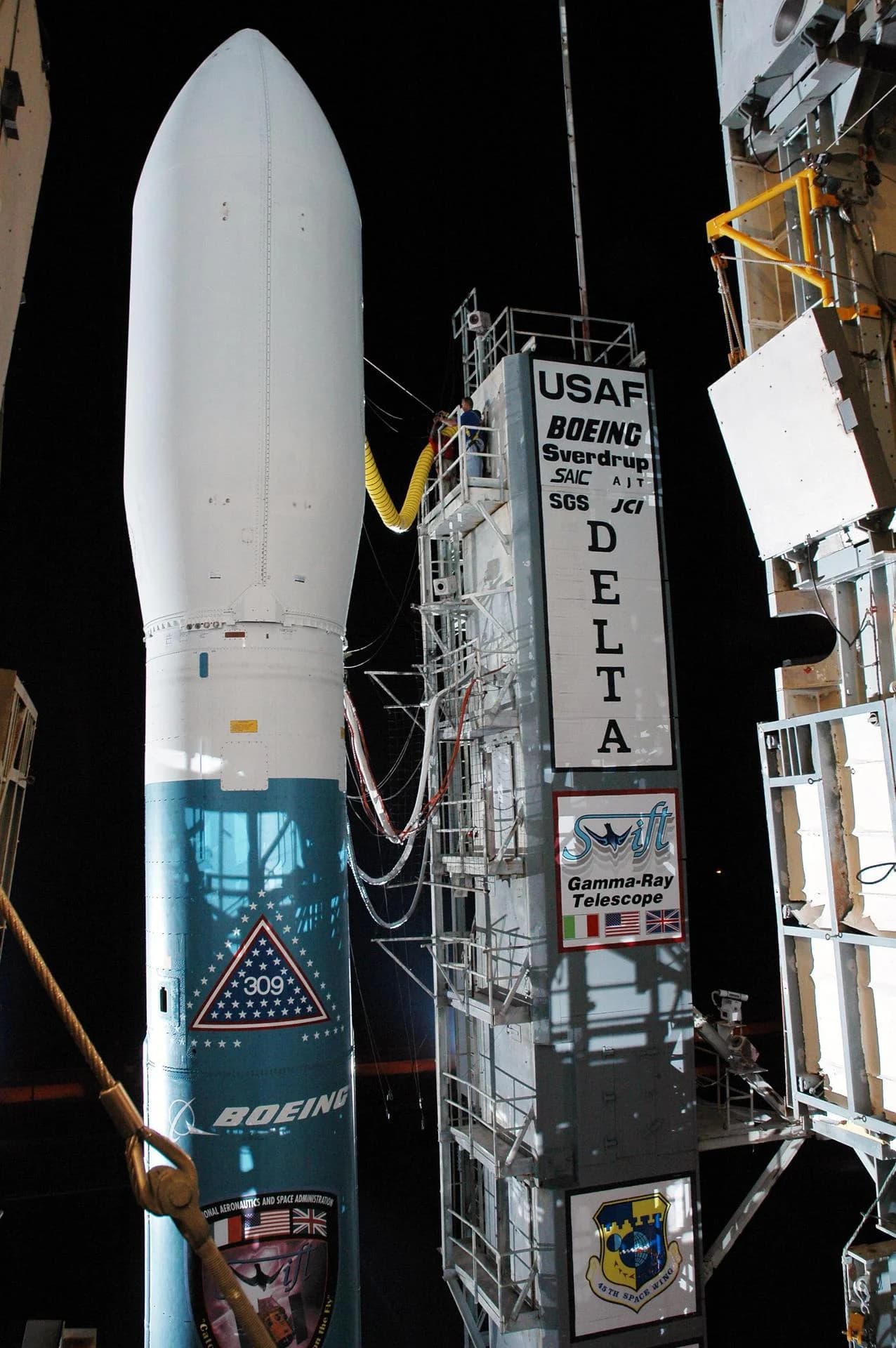
Swift launched in November 2004 to catch gamma-ray bursts, the most powerful explosions known. It could swing toward a new burst within minutes and study it in gamma rays, X-rays, ultraviolet and visible light. Over the years it also became a go-to observatory for supernovae, black holes, comets and other short-lived events in the sky. NASA calls the mission's legacy a scientific bonanza that researchers will keep mining for years.