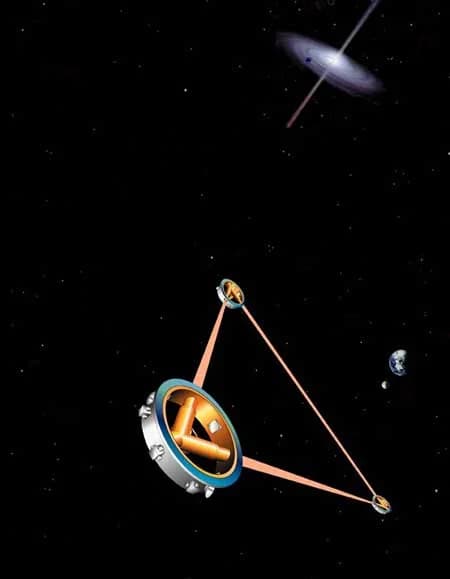
The Laser Interferometer Space Antenna (LISA), a space observatory currently in development, is designed to pick up gravitational waves, the minute ripples in space-time produced by masses orbiting one another. According to NASA, two new studies led by the agency's astrophysicists show that the mission could also find planets.
The studies set out in greater detail than before how LISA's measurements could point to exoplanets, worlds beyond our solar system. NASA describes these as a new and unique population of planets spread throughout our galaxy.
The work suggests that LISA, built mainly to study sources of gravitational waves, could also contribute to exoplanet research once it begins observing.