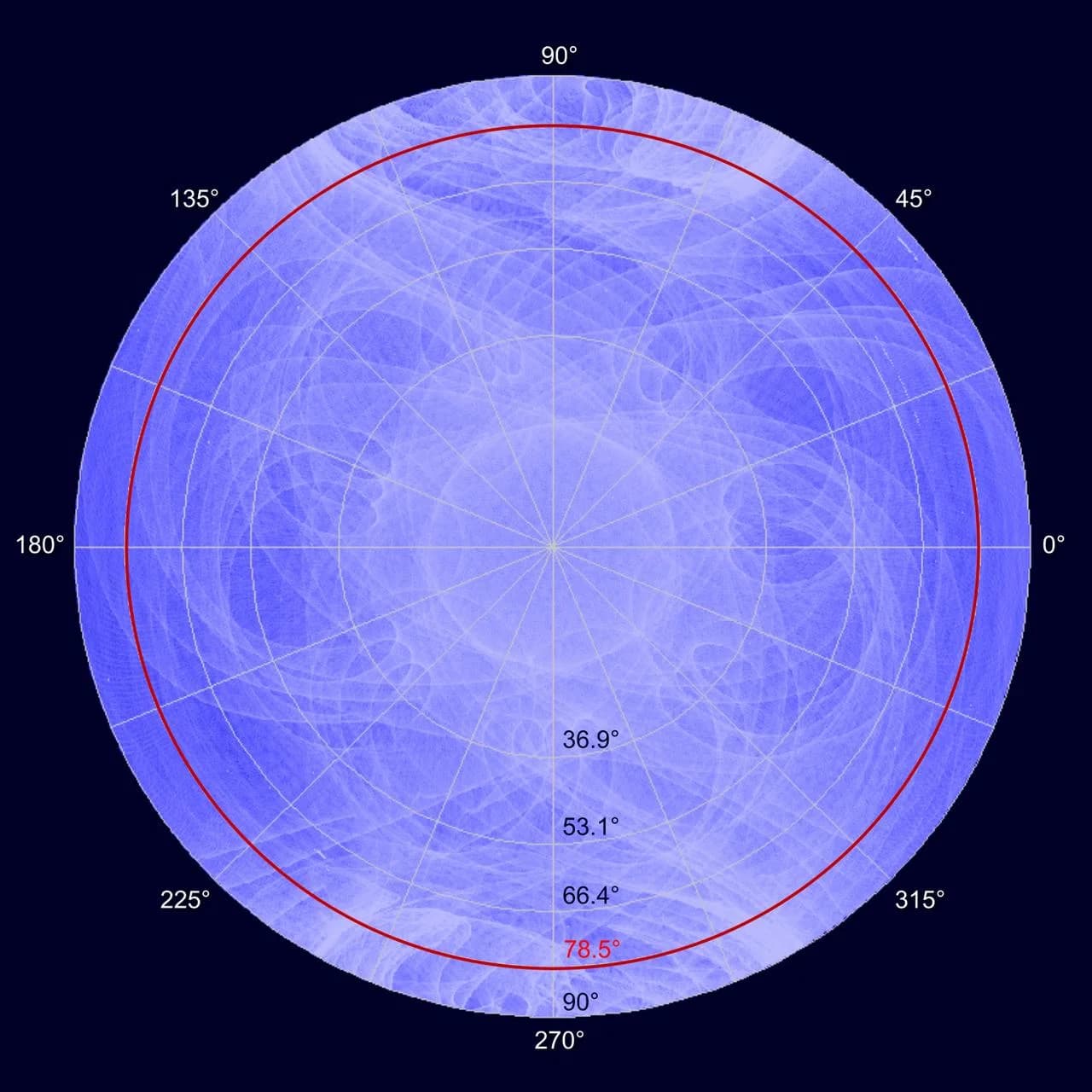
NASA reports that an international group of scientists has developed a new technique for finding pulsars, working from openly available data gathered by the Fermi Gamma-ray Space Telescope. According to the agency, the method runs roughly a million times faster than earlier approaches.
Pulsars are rapidly spinning neutron stars whose beams sweep past Earth as regular pulses. Finding them in gamma rays is computationally demanding: the telescope records only a sparse trickle of photons from each source, and a search has to test a very large number of possible rotation rates and other parameters before a periodic signal emerges.
Fermi has been observing the gamma-ray sky since 2008, and its data are freely available to researchers worldwide. NASA presents the result as an example of what open science makes possible, since teams outside the mission can build new analysis tools on its archive.